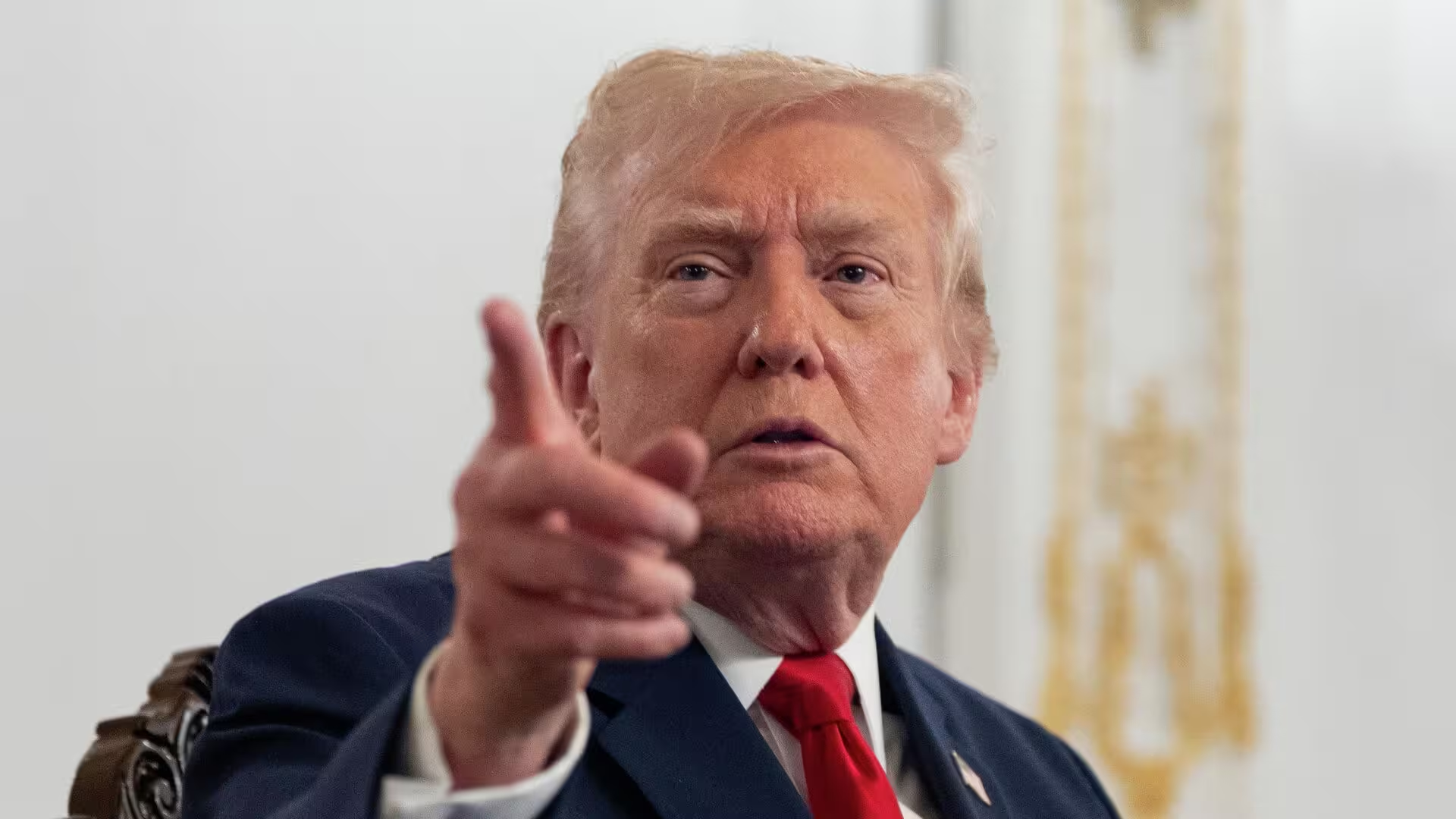
President Donald Trump has announced the reinstatement of a US naval blockade on Iranian ports in the Strait of Hormuz while proposing a new 20% cargo fee for commercial ships using the strategic waterway. The announcement marks a dramatic escalation in US-Iran tensions and has raised concerns over global oil prices, international shipping, and regional security.
The U.S. President declared that the United States will now act as the “Guardian of the Hormuz Strait,” ensuring the waterway remains open to international traffic while specifically preventing Iranian vessels and their customers from entering or leaving ports. Most controversially, President Trump stated that the U.S. would be reimbursed for providing this “safety and security” through a proposed cargo fee equivalent to 20% of a ship’s cargo value transiting the waterway—a proposal that has sent ripples of concern through global shipping and energy markets.
Trump’s Iranian Port Blockade: How the 20% Cargo Fee Would Work
The reinstatement of the US naval blockade of Iranian ports comes after a period of relative ease. On June 17, a memorandum of understanding had seen Washington lift a previous blockade and temporarily ease sanctions on Iranian oil sales. However, this arrangement disintegrated after Iran allegedly targeted commercial shipping in the strait last week.
The new strategy involves a two-pronged approach:
- Restricting Iran’s economic lifeline by blocking its ports
- Implementing a “fairness” fee for other nations.
President Trump emphasized that the U.S. would “probably run” the strait, asserting that “other nations are very wealthy” and should pay for the security provided by the U.S. military. Maritime law experts and the International Maritime Organization have noted that international transit straits are governed by international law, raising legal questions over any unilateral blockade or cargo fee.
US Strikes Iran After Trump Announces Strait of Hormuz Blockade
The announcement follows a weekend of violent exchanges. US Central Command (Centcom) confirmed that American forces conducted overnight strikes targeting a submarine and a ship maintenance facility at the Bandar Abbas Naval Base in southern Iran. Centcom stated these operations were designed to degrade Iran’s capability to attack commercial shipping, using one-way attack surface drones.
Reports from within Iran indicate that the strikes caused significant damage, including a large fire at a hangar at Aghajari Airport in Omidiyeh and plumes of smoke near the Shahid Bahonar Port.
Iranian state media reported that the strikes resulted in at least two deaths and three injuries in the oil-producing Khuzestan province. In response, Iran has targeted U.S. military installations in Jordan, Bahrain, and Kuwait, while also striking radar systems in Oman.
Trump’s Strait of Hormuz Policy – Impact on Global Oil Prices and Financial Markets
The threat of a Strait of Hormuz closure and the introduction of a transit toll have sparked immediate volatility in global markets. Brent crude, the global benchmark, jumped over 4% to approximately $80 per barrel, while U.S. crude surged 5% to over $75. These spikes have halted the decline of gasoline prices in the U.S. and pushed UK pump prices upward.
Wall Street reacted negatively to the instability, with the Dow Jones, S&P 500, and Nasdaq all seeing declines. Investors are grappling with fears of inflation driven by energy costs, compounded by a shaky start for tech giants like Nvidia and Intel.
Shipping analysts warn that if the escalation leads to a prolonged closure of the strait—through which 20% of the world’s energy supplies typically flow—global inventories could be depleted, leading to a “recipe for much tighter supply” and catastrophic economic consequences.
UK Moves to Ban the IRGC
Simultaneously, the United Kingdom has tightened its stance against Iranian influence. The UK government is moving to pass emergency legislation to outlaw the Islamic Revolutionary Guard Corps (IRGC) and two other groups. Home Secretary Shabana Mahmood stated that the move would grant police stronger powers to combat state-backed threats, with potential prison sentences of up to 14 years for those supporting these banned entities.
The Future of US-Iran Diplomacy
The current crisis suggests a complete breakdown of the 60-day interim deal intended to pave the way for a permanent peace treaty. President Trump expressed frustration during a Fox News interview, claiming that Iranian negotiators are “professionals” who constantly change agreed-upon terms.
As the UN Secretary-General António Guterres warns that a return to full-scale hostilities would be catastrophic, the world watches to see if the “Guardian of the Hormuz Strait” policy will force Iran back to the negotiating table or ignite a wider regional war.
Frequently Asked Questions
What is the “Iranian Blockade” mentioned by President Trump?
The Iranian Blockade is a US naval operation designed to prevent ships from entering or leaving Iranian ports, effectively cutting off Iran’s ability to export oil and petrochemicals to generate revenue.
How does the proposed 20% cargo charge work?
President Trump has proposed that any non-Iranian ship using the Strait of Hormuz must pay a fee equivalent to 20% of their cargo value to the U.S. government to cover the costs of providing security and safety in the waterway.
Why is the Strait of Hormuz so important to the global economy?
The Strait of Hormuz is one of the world’s most critical chokepoints, with approximately 20% of the world’s total energy supplies passing through it to reach global markets.
Has the US actually struck targets in Iran?
Yes, US Central Command (Centcom) has confirmed strikes on a submarine and a ship maintenance facility at the Bandar Abbas Naval Base, as well as other targets in response to attacks on commercial shipping.
How have oil prices reacted to the new blockade?
Oil prices have spiked, with Brent crude and U.S. crude both seeing increases of approximately 5%, leading to higher gasoline prices at pumps in the U.S. and UK.
What is the legal standing of the U.S. taking over the strait?
International maritime law generally protects the right of transit passage through international straits. Maritime law experts have raised legal questions about whether any single nation could unilaterally impose a blockade or cargo fee in the Strait of Hormuz.