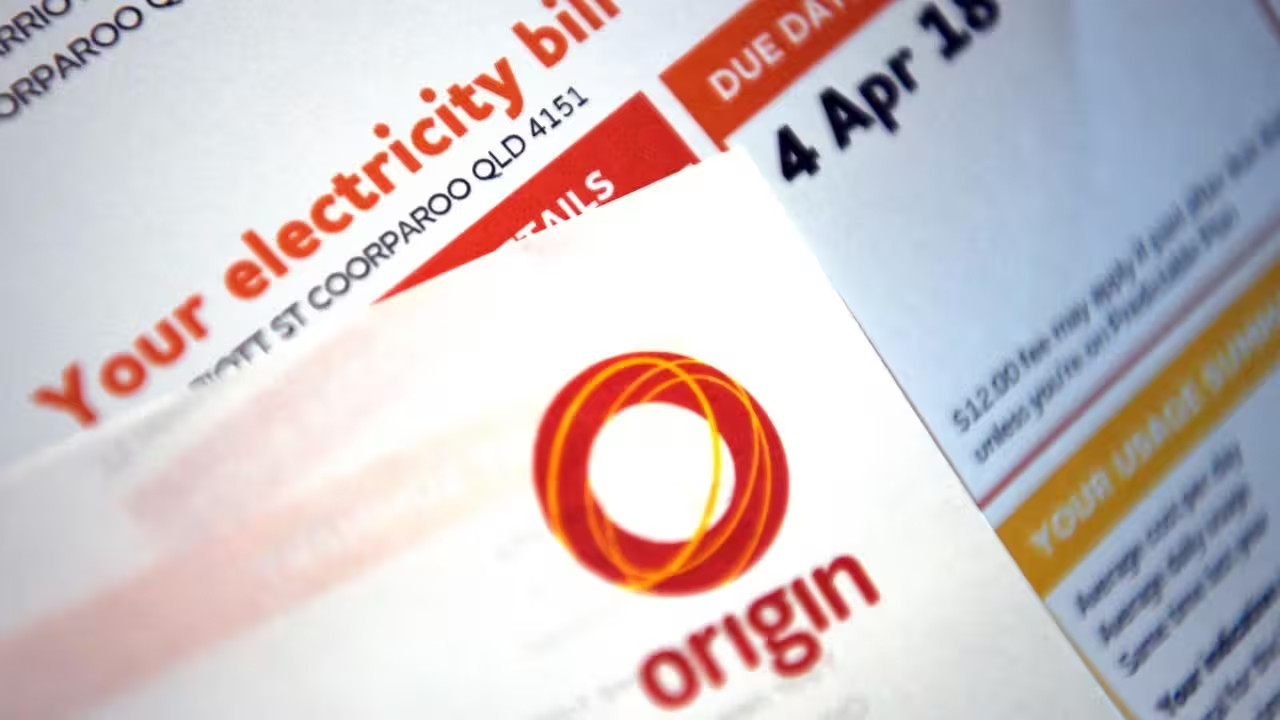
Origin Energy will refund more than 4,500 Australian customers after an Australian Competition and Consumer Commission (ACCC) investigation found that some households paid more on its “Ongoing Saver” electricity plan than they would have on its standard “Basic” plan. The energy retailer has agreed to provide $270,000 in remediation, with affected customers expected to receive an average payment of around $60.
The ACCC investigation followed a complaint lodged by consumer advocacy group CHOICE regarding Origin Energy’s “Ongoing Saver” residential electricity plan. The primary issue centered on the representation of value; while the plan’s name suggested a long-term financial benefit, an analysis revealed that some customers were actually paying more than they would have on the company’s “Basic” plan.
The ACCC Investigation Into Origin Energy Misleading Plan Costs
The CHOICE group alleged that Origin Energy had falsely represented the value of the “Ongoing Saver” plan, claiming it was more economical over the long term than the standard “Basic” option. Upon investigation, the ACCC found that for a segment of the customer base, this was not the case.
ACCC Commissioner Anna Brakey emphasized that the naming of a plan carries a legal weight. According to Brakey, if a retailer suggests savings through a plan’s name or marketing, those savings must be tangibly delivered to the customer for the entire duration of the plan’s life. She noted that the inherent complexity of energy plans—specifically the intricate mix of supply charges and usage rates—makes it incredibly difficult for the average consumer to independently verify potential savings.
While Origin Energy has not formally admitted to breaching Australian Consumer Law, the company opted to provide remediation as part of its cooperation with the ACCC. As a result of this compliance and the offer of refunds, the ACCC has stated it will not pursue further legal action regarding this specific pricing issue.
Breakdown of the Origin Energy Refund Process and Compensation
The total remediation package of $270,000 is designed to compensate more than 4,500 affected customers. On average, each impacted household is expected to receive approximately $60. Origin Energy has clarified that this amount is intended to cover the actual overcharges—which averaged $28 per customer—while providing additional remediation.
The company has outlined different paths for receiving these funds based on the customer’s current status:
- Current Customers: Will be given the choice between receiving a direct refund or applying an automatic credit to their existing account.
- Former Customers: Will be contacted directly by Origin Energy to discuss the specifics of their compensation.
Origin Energy described the situation as a “mistake,” noting that only 0.5 per cent of the customers on that specific plan were affected. In a public statement, the company offered a sincere apology to those impacted and confirmed that improvements have been made to their pricing structures to prevent a recurrence.
Changes to Energy Plan Naming and Consumer Protections
As a direct result of the investigation, Origin Energy has announced significant changes to its product offerings. The company will discontinue the “Ongoing Saver” plan entirely. Furthermore, Origin has pledged that it will no longer use plan names that suggest savings to customers unless those savings are explicitly and structurally built into the plan’s pricing mechanism.
This move aligns with the ACCC’s broader goal of ensuring that electricity retailers provide clear, accurate, and honest information. The regulator argues that without such transparency, consumers cannot make informed decisions about their essential utility services.
Warning Against “Loyalty” and Tips for Finding Cheaper Energy Deals
Beyond the specific case of Origin Energy, the ACCC has issued a broader warning to all Australian energy consumers: loyalty to a single provider rarely pays off. The watchdog pointed out that staying with one retailer out of habit often benefits the provider rather than the consumer, who may be missing out on significantly cheaper market rates.
To combat this, Commissioner Anna Brakey strongly encourages households to take the following steps to lower their utility bills:
- Use Government Comparison Sites: Utilize official energy comparison tools to find the best deal tailored to specific household usage patterns.
- Request a Better Deal: Contact current retailers directly to ask for a more competitive rate.
- Compare Against the Safety Net: Retailers are legally required to provide information on how a current plan compares to the regulated safety net price.
Additional Legal Challenges: The Centrepay Overcharging Allegations
The pricing controversy is not the only legal hurdle currently facing Origin Energy. The company is also embroiled in a court battle with the Australian Energy Regulator (AER) over allegations of systemic overcharging involving Centrepay accounts.
Centrepay is a government service that allows individuals to use their Centrelink payments to settle regular bills. The AER alleges that between December 2019 and March 2025, Origin Energy committed approximately 77,000 breaches by continuing to charge customers through their Centrepay accounts even after the accounts were closed and all debts had been paid in full. The scale of these alleged overcharges is significantly higher than the ACCC case, with one specific customer reportedly being overcharged by as much as $11,000 over a two-year period.
Frequently Asked Questions
How much will I receive from the Origin Energy refund?
Impacted customers are expected to receive an average remediation payment of approximately $60, though the actual amount overpaid averaged around $28.
How do I know if I am eligible for the Origin Energy pricing refund?
Origin Energy is responsible for identifying the 4,500 affected customers. Current customers will be notified with options for credit or refund, while former customers will be contacted directly by the company.
What was the issue with the “Ongoing Saver” plan?
The ACCC found that the “Ongoing Saver” plan was marketed as being cheaper than the “Basic” plan over the long term, but in reality, some customers were charged more than they would have been on the Basic plan.
How can I find a cheaper electricity plan in Australia?
The ACCC recommends using official government energy comparison websites and contacting your current provider to ask for a better deal or a comparison against the regulated safety net price.
What is the difference between the ACCC and AER investigations into Origin?
The ACCC investigation focused on misleading marketing and pricing of the “Ongoing Saver” plan. The AER investigation is a separate legal matter concerning allegations that customers were overcharged via Centrepay after their accounts were closed.
News Sources – Nine, Yahoo Finance