
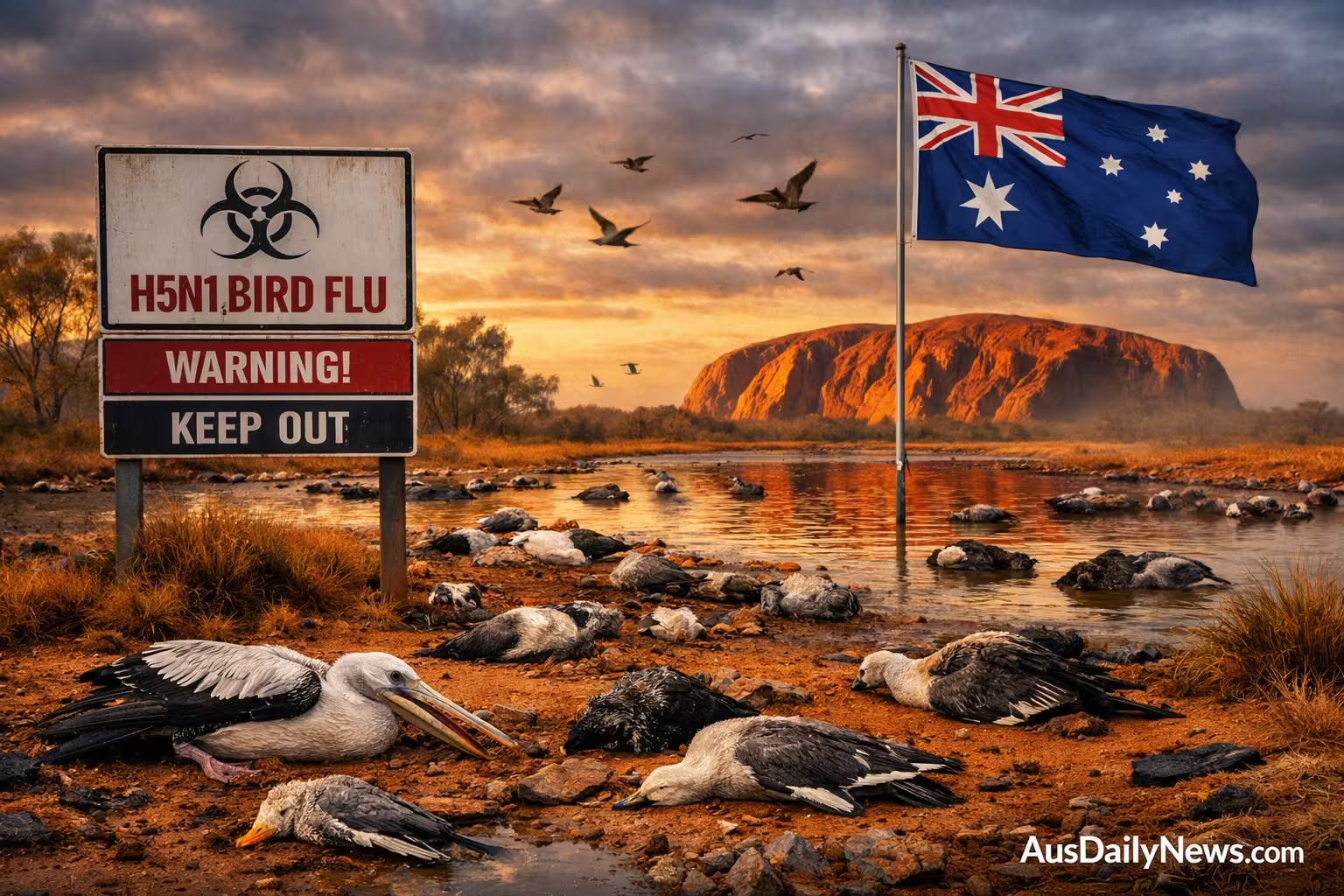
Australia has recorded its first suspected case of H5N1 bird flu on the mainland, with a wild migratory bird in Western Australia testing positive for avian influenza. Confirmation from CSIRO laboratories is pending.
Federal Agricultural Minister Julie Collins revealed on Friday that a brown skua bird, found on a remote beach at Cape Le Grand National Park near Esperance—approximately 700 kilometers southeast of Perth—returned a suspected positive result for avian influenza. While initial testing in a Western Australian laboratory indicated the presence of the virus, confirmatory results from the CSIRO’s Australian Centre for Disease Preparedness are expected on Saturday to determine if the virus is specifically the highly pathogenic H5 strain.
Also Read – H5N1 Bird Flu Australia: First Mainland Case Confirmed in Western Australia
The Threat of H5N1 Avian Influenza in Mainland Australia
The H5N1 strain is a highly contagious and lethal form of avian influenza that has devastated bird and mammal populations globally since 2021. If the suspected case in Western Australia is confirmed, it would signify that the virus has officially reached every continent on Earth.
- The strain is known for its ability to cause mass mortality in wild seabirds and has increasingly shown a capacity to infect mammals, including cats, dogs, foxes, and polar bears.
The arrival of the virus on the mainland was anticipated by experts, though its timing remains a concern. Australia has already seen the effects of the virus in its remote territories; the H5 strain was detected on Heard Island and the McDonald Islands in October of the previous year. Reports indicate a catastrophic impact on those remote regions, with an estimated 13,359 baby elephant seals killed out of a population of 17,364.
Government Response and H5N1 Bird Flu Preparedness
In response to the suspected detection, Minister Julie Collins stated that the Australian government is well-prepared to manage the situation. The federal government has already invested significant resources into biosecurity, with total preparedness funding reaching 113 million AUD. This includes a recent additional allocation of 11.2 million AUD specifically aimed at protecting native species from a potential H5N1 outbreak.
The current response is being led by the Western Australian government, with national coordination provided by the Department of Agriculture, Fisheries and Forestry. A high-level meeting involving state and territory authorities and industry experts has been convened to strategize the next steps should the case be confirmed. This includes increasing surveillance across other states to ensure any further spread is detected early.
Impact of H5N1 Bird Flu on Australian Wildlife and Agriculture
Environmental advocates and agricultural leaders have expressed deep concern over the potential impact of H5 bird flu on Australian wildlife. Carol Booth, policy director of the Invasive Species Council, described the possibility of the virus reaching the mainland as “deeply concerning.” She noted that the mass deaths of seals on Heard Island served as a “harbinger” of the potential catastrophe for native birds and marine mammals if the virus spreads unchecked.
The agricultural sector is equally wary. Michael Guerin, CEO of the National Farmers Federation, emphasized that the cross-species risk means all livestock sectors must be prepared. While Minister Collins noted that there is currently no evidence of infection in poultry or mass mortality events on the mainland, the economic and ecological stakes remain high.
Public Safety and Bird Flu Reporting in Australia
The Australian government has issued a stern warning to the public to avoid direct contact with sick or dead animals. While the risk to the general public is considered low—especially for those who do not work directly with birds—the “one health” approach is being utilized to monitor any potential zoonotic transmission to humans.
To assist in surveillance, authorities have established clear protocols for bird flu reporting in Australia. Citizens are urged to follow these steps if they encounter suspicious wildlife:
- Do Not Touch: Avoid all contact with sick or dead birds or other animals.
- Document from Afar: Take photographs or record the animals from a safe distance.
- Note the Location: Precisely record the geographic location of the find.
- Report Immediately: Submit all findings and documentation via the official government portal at birdflu.gov.au.
Recognizing H5 Bird Flu Symptoms in Birds
Understanding the H5 bird flu symptoms in birds is crucial for early detection. Typically, the virus affects entire flocks, but individual signs may include sudden illness, disorientation, or death. The discovery of a second unwell bird in the same area as the brown skua in Western Australia suggests that local monitoring must be intensified.
Health professionals advise that anyone who believes they have been in contact with infected birds and is experiencing flu-like symptoms should seek medical advice immediately, although human infections remain exceptionally rare.
Also Read – Capital Tax Gain Changes made by Albanese Government
Frequently Asked Questions
What is H5N1 bird flu and why is it dangerous?
H5 bird flu, specifically the H5N1 strain, is a highly pathogenic avian influenza that causes severe respiratory distress and death in birds. It is dangerous because it can jump to mammals and has caused millions of deaths in wildlife and poultry globally.
Is there a risk to humans in Australia?
The risk to the general public is low. Human infections are rare and typically occur only in individuals with direct, intense exposure to infected birds. The government is monitoring the situation using a comprehensive health approach.
Where was the suspected case found in Western Australia?
The suspected case was identified in a brown skua bird found on a remote beach at Cape Le Grand National Park near Esperance, in the south-west region of Western Australia.
How can I report a sick bird in Australia?
If you find sick or dead birds, do not touch them. Take a photo from a distance, note your location, and report the sighting online at birdflu.gov.au.
Has H5 bird flu affected other animals in Australia?
While it has not been confirmed on the mainland, the virus has had a devastating impact on Australia’s remote territories, specifically killing thousands of baby seals on Heard Island.



One thought on “First Suspected Case of H5N1 Bird Flu Detected in Mainland Australia: Authorities on High Alert”