
Ukraine launched one of its largest drone attacks of the war overnight, sending more than 400 unmanned aerial vehicles toward Moscow and surrounding regions. The strike came after Russia intensified ballistic missile attacks on Kyiv and launched deadly assaults on commercial shipping in the Black Sea.
Massive Drone Onslaught Targets Moscow and Russian Oil Infrastructure
Moscow Mayor Sergei Sobyanin confirmed that the Ukrainian aerial assault lasted from late Sunday until early Monday morning. According to official reports, more than 400 drones were launched toward the Moscow region. While the majority were intercepted far from the city center, 85 drones were downed in the immediate vicinity of the capital. Moscow Regional Governor Andrei Vorobyov reported that the strikes resulted in 10 injuries, including a child and three Chinese citizens.
The strategic focus of the attack appeared to be Russian energy and logistics networks. Ukrainian President Volodymyr Zelenskyy stated that the operation successfully targeted logistics facilities and an oil depot in the Moscow region, located over 400 kilometers from the Ukrainian border. Specific reports indicate fires broke out at the Yuzhnye Vrata industrial park and an oil depot in Podolsk. Furthermore, the logistics center of Wildberries, Russia’s largest online retailer, was evacuated in the Podolsk district following the strikes.
This surge in long-range drone capabilities represents a significant evolution in Kyiv’s military strategy. By targeting oil facilities and energy infrastructure, Ukraine aims to create fuel shortages and apply economic pressure on the Kremlin, bringing the realities of the war home to the Russian population.
Russian Ballistic Missile Attacks on Kyiv and Odesa
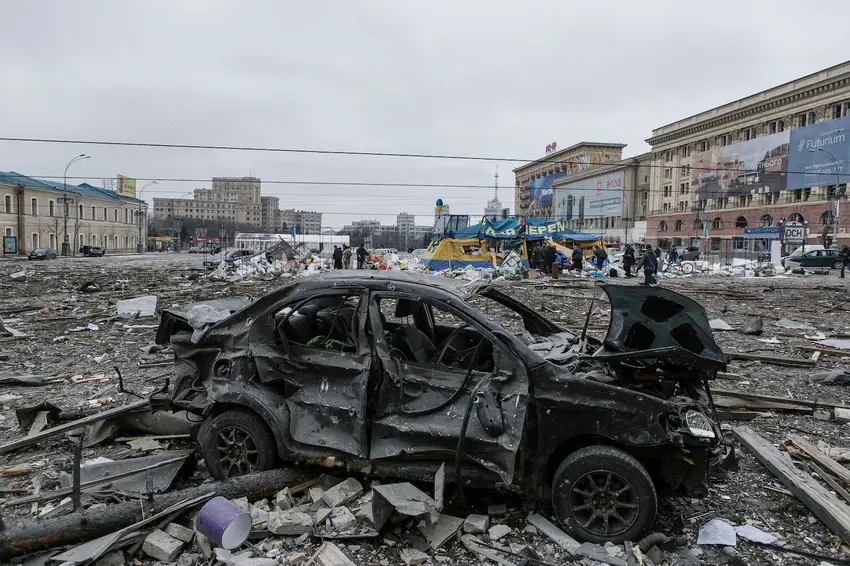
Simultaneously, Russia has intensified its use of ballistic missiles, targeting Kyiv and other major Ukrainian urban centers. Military analysts note a worrying trend: Russia is currently firing more ballistic missiles than it is reportedly producing per month, suggesting the Kremlin is dipping deep into strategic stockpiles. This tactic exploits a critical vulnerability in Ukraine’s defense, as Kyiv is currently facing a shortage of Patriot interceptor munitions necessary to stop these high-speed projectiles.
The impact has been severe in the south, particularly in Odesa. Regional Governor Oleh Kiper reported that the Odesa region has been under constant daily shelling throughout July, with some days seeing up to 15 air raid alerts. The Russian Defense Ministry claimed its forces successfully struck fuel reservoirs at the port of Odesa, continuing a pattern of targeting critical infrastructure to cripple Ukrainian exports.
Black Sea Escalation and Attacks on Commercial Shipping
The conflict has extended significantly into the maritime domain. A devastating Russian strike targeted a cargo vessel flying the flag of Guinea-Bissau shortly after it departed from the port of Odesa. The ship, which was transporting Ukrainian corn, suffered heavy casualties; 10 crew members were killed, including five Syrian sailors and four Indian nationals. India’s foreign ministry has formally condemned the attack, while Syria’s General Authority for Borders and Customs expressed strong condemnation of repeated strikes on commercial vessels in the Black Sea.
In retaliation, Ukraine’s drone forces have expanded their maritime targeting. Commander Robert Brovdi reported that Ukrainian forces struck seven Russian vessels in the Black Sea and the Sea of Azov on Sunday night. These targets included three tankers belonging to Russia’s “shadow fleet”—used to bypass sanctioned oil exports—and four dry cargo ships. According to Brovdi, the total number of Russian vessels struck in July has reached 183, alongside attacks on seven electrical substations in occupied Crimea.
Also Read – Ukraine Launches 660-Drone Attack on Russia as Crimea Declares Emergency
Internal Political Pressures Facing President Zelenskyy
Amidst the external military chaos, President Volodymyr Zelenskyy is navigating a domestic political crisis. Recent government reshuffles have sparked public unrest and street protests, centered on the sacking of the popular defense minister, Mykhailo Fedorov. The move has highlighted a rift between the “old guard” of Soviet-trained military leadership, represented by General Oleksandr Syrskyi, and a younger generation of innovators.
Zelenskyy is now engaged in “key talks” to stabilize the government and reassure the Ukrainian public that the shift in leadership will not derail the war effort. The intersection of internal political instability and an intensified Russian missile campaign places significant pressure on the Ukrainian administration.
The Strategic Evolution of the Air War
The current phase of the war is characterized by a technical “arms race” in the air. Ukraine is increasingly relying on locally-produced, sophisticated long-range drones to bypass Russian air defenses and hit high-value targets deep within Russian territory. Conversely, Russia is utilizing the speed and destructive power of ballistic missiles to overwhelm Ukrainian air defenses during windows of munition shortages.
This cycle of escalation makes a diplomatic settlement appear increasingly distant. As both sides prove their ability to strike deep behind enemy lines—whether through drones in Moscow or missiles in Kyiv—the operational reach of the conflict continues to expand, affecting not only military targets but also civilian infrastructure and international commercial shipping.
Frequently Asked Questions
What was the scale of the Ukraine Moscow drone strike?
Ukraine launched over 400 drones toward the Moscow region, resulting in the interception of 85 drones near the capital and causing fires at oil depots and logistics facilities in Podolsk and Yuzhnye Vrata.
Why are Russian ballistic missile attacks more effective currently?
Russia is utilizing its missile stockpiles at a rate higher than current production, taking advantage of a reported shortage of Patriot interceptor munitions in Ukraine.
Who was affected by the attack on the ship near Odesa?
A Guinea-Bissau-flagged vessel carrying corn was struck, killing 10 crew members, including citizens of India and Syria.
What targets is Ukraine prioritizing in Russia?
Ukraine is focusing on “shadow fleet” tankers transporting sanctioned oil, oil depots, and logistics centers to disrupt Russia’s economy and fuel supplies.
What is the internal political situation in Ukraine?
President Zelenskyy is facing protests following the removal of Defense Minister Mykhailo Fedorov, reflecting a divide between traditional military leadership and newer innovators.
How many Russian vessels have been hit in July?
According to Ukraine’s drone forces commander Robert Brovdi, a total of 183 Russian vessels have been struck during the month of July.
News Sources – ABC News, Al Jazeera