
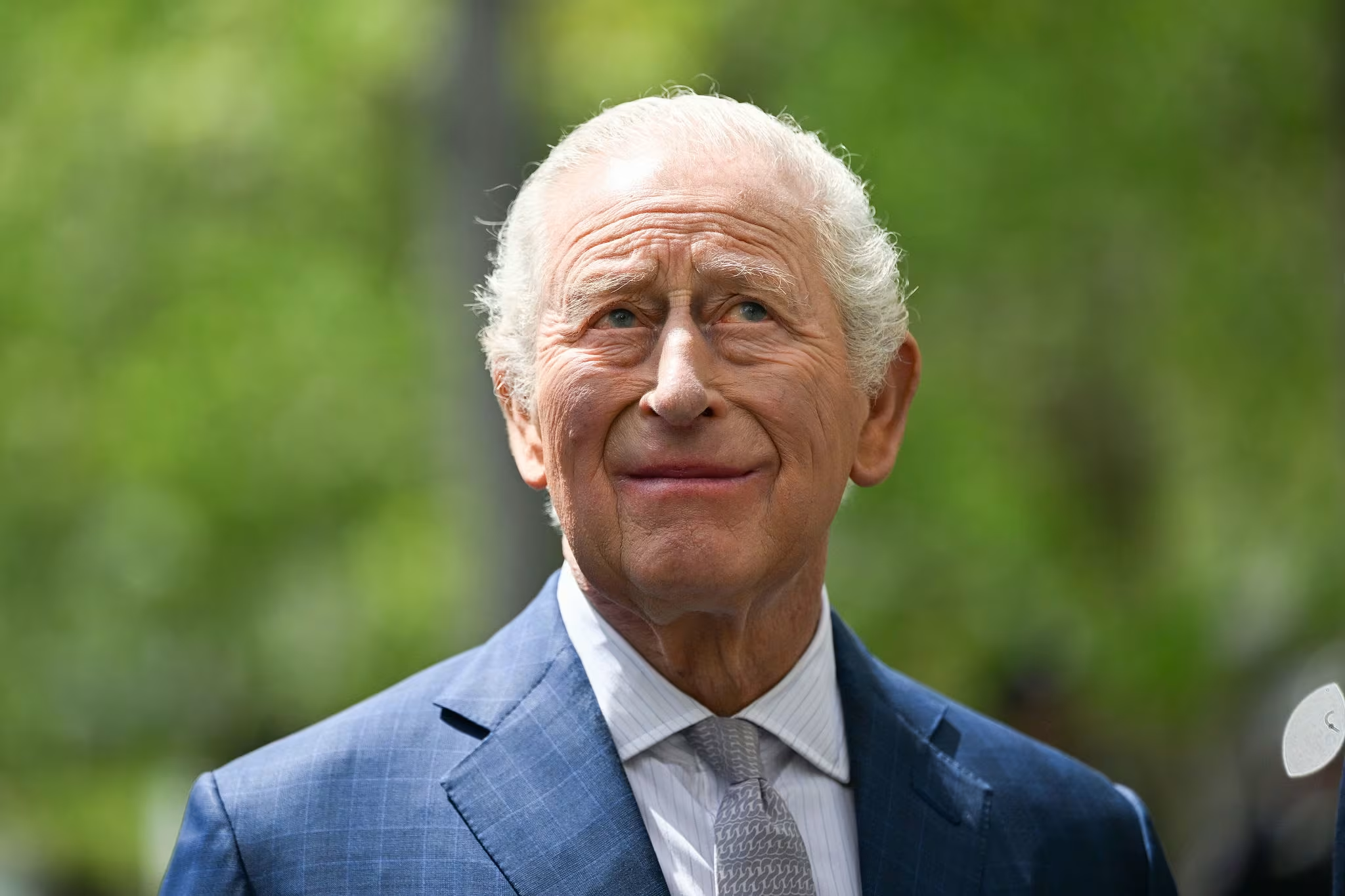
King Charles III will become the first modern British monarch to publicly disclose his personal tax bill, marking a major step toward greater transparency in royal finances. The disclosure will be included in the annual royal financial accounts and comes amid increased scrutiny of the monarchy’s wealth, tax payments and public funding. It will cover the 2024-25 tax year.
By sharing these details, the King seeks to align the monarchy with contemporary standards of openness, ensuring that the financial dealings of the Crown are accessible and transparent to the British public and Parliament.
Understanding the Components of Royal Finances and Tax Payments
What Taxes Does King Charles Pay?
While the British monarch (King Charles) is not legally obligated to pay income tax, capital gains tax, or inheritance tax on assets received from a predecessor, King Charles has long maintained a practice of voluntary payment. This commitment to fiscal responsibility began during his tenure as the Prince of Wales and continues in his role as sovereign.
What Will Be Included in King Charles’ Personal Tax Bill?
The upcoming financial report will detail taxes paid on several key revenue streams, including:
- The Duchy of Lancaster: This private portfolio of land, investments, and commercial properties provides a significant portion of the monarch’s personal income. In the 2024-25 financial year, the Duchy generated approximately £24 million to £26.8 million.
- Private Estates: Income derived from the King’s private holdings, most notably the estates at Balmoral and Sandringham.
- Personal Investments: Tax payments related to private savings, trading profits, and other personal investment portfolios.
The Palace has confirmed that this will not be a one-time event; the King’s tax payments will be published annually going forward, with the 2025-26 figures expected to be released following the completion of the next audit cycle.
The Sovereign Grant and Public Funding Scrutiny
Alongside the personal tax disclosure, the public will receive updated details regarding the Sovereign Grant.
What is the Sovereign Grant?
This annual sum of public funding is designated to cover official royal duties, including staff salaries, travel for official engagements, and the maintenance of royal properties. For the 2024-25 period, the Sovereign Grant reached a record high of £137.9 million.
This increase was primarily attributed to a temporary allocation of funds required for essential renovations at Buckingham Palace. However, the grant is currently under review by the Treasury, Downing Street, and the Royal Household. For the first time since its inception in 2012, the grant is expected to be reduced, a move that will be subject to parliamentary debate when the relevant legislation is presented.
Driving Transparency Amidst Royal Family Controversies
The push for greater financial accountability comes at a time of heightened public and political scrutiny. Members of Parliament and the public have called for more openness regarding the wealth and spending habits of the royal family, particularly following controversies surrounding Andrew Mountbatten-Windsor.
Why is the British royal family facing increased scrutiny over its finances?
The royal family is facing greater public and political scrutiny due to demands for more transparency about its wealth and spending, particularly following controversies involving Andrew Mountbatten-Windsor. There have also been calls for clearer distinctions between private royal finances and publicly owned assets.
What did the National Audit Office report reveal about Princess Beatrice and Princess Eugenie?
The report found that Princess Beatrice and Princess Eugenie, who are not working royals, have been living in properties at St James’s Palace and Kensington Palace. Their rent has been paid by King Charles from his private income, raising questions about the use of royal residences and financial arrangements.
In response to these pressures, the Public Accounts Committee has announced a formal inquiry into royal property and leases from the Crown Estate. By voluntarily disclosing his personal tax bill, King Charles appears to be preempting further criticism and signaling a commitment to a more “evolved” and transparent monarchy.
Comparing the Financial Disclosures of the King and Prince of Wales
The King’s decision to be transparent stands in contrast to the current approach of his son and heir, the Prince of Wales.
While Prince William also voluntarily pays the highest rate of income tax on the funds he receives from the Duchy of Cornwall—a hereditary estate that provided him with nearly £23 million in the last financial year—he does not publicly disclose the specific amount paid.
The Duchy of Cornwall remains a separate financial entity from the Duchy of Lancaster, ensuring the heir to the throne maintains financial independence from the monarch.
However, the King’s move to publish his tax returns sets a new precedent for the British head of state, potentially shifting the expectations for future generations of the royal family.
A Commitment to Modernization and Public Service
A spokesperson for Buckingham Palace emphasized that the goal is to “explain all elements of royal finances in a way that further enhances clarity and accessibility,” while maintaining the necessary historical and constitutional context. The Palace asserts that these adaptations are part of a broader strategy to ensure the monarchy remains relevant and aligned with public service priorities.
By shifting from a culture of financial secrecy to one of disclosure, the King is attempting to bridge the gap between the traditional privileges of the Crown and the modern demand for accountability. As the monarchy continues to evolve, these financial disclosures will likely serve as a benchmark for how the institution manages its wealth in the eyes of the taxpayers who fund the Sovereign Grant.
Frequently Asked Questions About Royal Taxes
Does King Charles have to pay taxes?
No, the British monarch is not legally obligated to pay income tax, capital gains tax, or inheritance tax on assets received from a previous monarch. However, King Charles III chooses to pay these taxes voluntarily on his private income and assets.
What is the Duchy of Lancaster?
The Duchy of Lancaster is a private portfolio of land, investments, and commercial properties (including retail and industrial sites) that provides the monarch with an annual private income.
What is the Sovereign Grant and how is it used?
The Sovereign Grant is annual public funding provided by the government to the Royal Household. It is used to cover official costs, such as the upkeep of royal palaces, staff salaries, and official travel.
Why is King Charles revealing his taxes?
The decision is part of a modernization drive to increase transparency and public accountability, following calls from MPs and public pressure for more openness regarding royal finances.