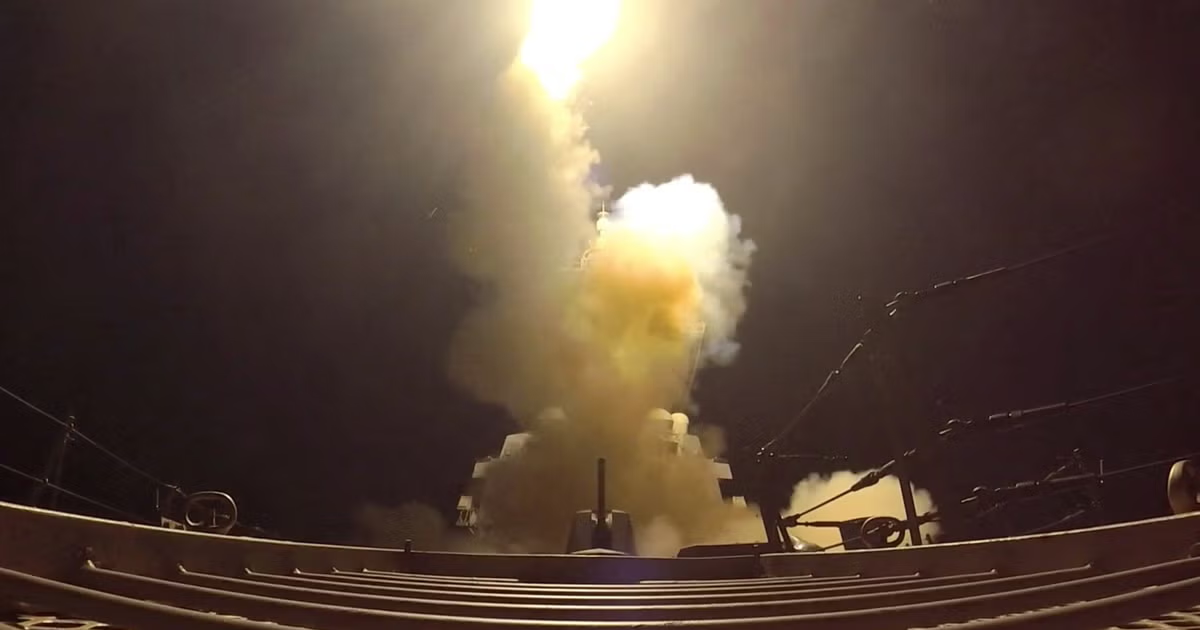
The US-Iran conflict escalated sharply on Wednesday after the US military launched precision strikes on Greater Tunb Island and multiple Iranian military sites, targeting coastal missile systems near the Strait of Hormuz. The latest attacks came as President Donald Trump intensified pressure on Tehran following renewed naval restrictions and growing concerns over global oil supplies.
The interim deal, known as the Islamabad Memorandum, had aimed to pause fighting and establish a 60-day window for negotiations regarding Iran’s nuclear program and regional security. However, the ceasefire agreement has effectively collapsed as both nations continue fighting over control of the Strait of Hormuz.
US Military Strikes Hit Greater Tunb Island
U.S. Central Command confirmed that it launched a 90-minute wave of precision munitions targeting Greater Tunb Island, a strategically vital location in the Persian Gulf seized by Iran in 1971. According to Centcom, these strikes were specifically designed to degrade Iran’s ability to attack commercial shipping within the Strait of Hormuz by destroying cruise missile storage and launch sites, as well as coastal defense systems.
The aggression extended beyond the islands. Iranian officials reported a devastating strike on a barracks for the 388th Mechanised Infantry Brigade in Sistan and Baluchestan province. State-run media in Tehran indicated that at least 13 missiles were fired during this specific operation, resulting in the deaths of seven personnel, including both conscripts and career soldiers.
Iranian government spokesperson Fatemeh Mohajerani stated that more than 30 people have been killed in recent days, while Health Ministry spokesperson Hossein Kermanpour reported over 260 injuries from overnight strikes alone—a casualty count significantly higher than previous engagements.
The Strait of Hormuz Blockade and Global Oil Price Impact
A central flashpoint in this escalation is the Strait of Hormuz blockade. On Tuesday evening, the United States reinstated a naval blockade of Iranian ports, prohibiting vessels from transiting to and from coastal areas. This move was a direct response to Iranian attacks on commercial ships attempting to use a US-overseen route near Oman.
In a fierce retaliation, Iran’s Islamic Revolutionary Guard Corps (IRGC) threatened to shut down the Strait of Hormuz entirely, warning that energy exports from the region would be “either for everyone or for no one.” The IRGC further cautioned that other regional oil and gas export channels serving the interests of the U.S. and its allies could also be closed.
The economic ripples were immediate. Global oil prices edged higher as Brent crude futures held above the $85 per barrel mark. Analysts from the International Monetary Fund (IMF) warned that while large oil reserves previously cushioned the global economy from price shocks, that spare capacity is now shrinking.
Trump’s Ultimatum: Threats to Power Plants and Bridges
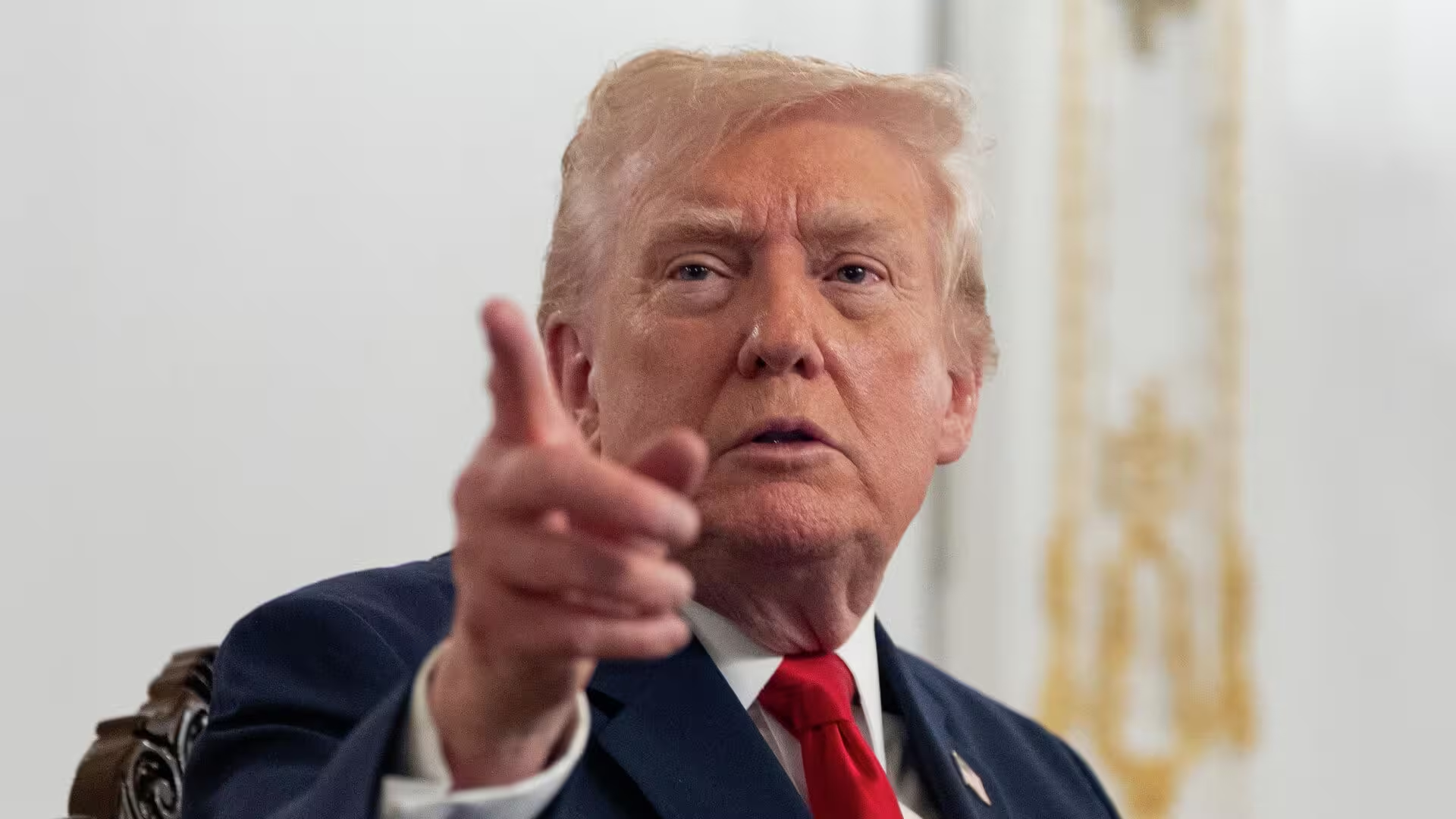
President Donald Trump has adopted a high-pressure strategy, suggesting that military operations will only intensify unless Tehran returns to the negotiating table. In an interview with Fox News, Trump stated, “We’re going to hit them really hard,” warning that the coming week would see the targeting of critical civilian and military infrastructure. The President specifically threatened to “knock out all their power plants” and “all their bridges” if a diplomatic breakthrough is not achieved.
Also Read – Trump Announces Iranian Port Blockade and 20% Cargo Fee for Ships in Strait of Hormuz
Regional Spillover and the Path to Diplomacy
The conflict is no longer contained between the US and Iran. Iran has launched drones and missiles at neighboring Gulf countries that host US forces. Bahrain and Kuwait reported missile alert warnings, and Jordan confirmed the interception of three Iranian missiles. US Navy Admiral Brad Cooper confirmed that dozens of Iranian projectiles have targeted neighboring Arab states in recent days.
Experts suggest that the Islamabad Memorandum failed because its terms were unrealistic, with both sides seeking an agreement that allows them to claim a total victory.
Some analysts, including those from IESE Business School, suggest that the US may have underestimated Iranian resolve, leaving the administration with few face-saving exits. The current trajectory suggests a risk of a “forever-war,” characterized by low-level but persistent conflict unless regional mediators can successfully facilitate a new joint plan of action.
Frequently Asked Questions
Why is the Strait of Hormuz so important to the global economy?
The Strait of Hormuz is one of the world’s most critical chokepoints, with approximately one-fifth of the world’s total oil and natural gas trade passing through it during peacetime.
What happened at Greater Tunb Island?
The US military launched a 90-minute precision strike on the island to destroy Iranian cruise missile sites and coastal defenses to protect commercial shipping lanes.
What was the Islamabad Memorandum?
It was an interim deal signed on June 14 intended to pause hostilities and provide a 60-day window for negotiations regarding Iran’s nuclear program and regional security.
How have oil prices reacted to the conflict?
Oil prices have risen due to uncertainty over shipping safety, with Brent crude staying above $85 per barrel as concerns grow over a total blockade of energy exports.
Which other countries are affected by the US-Iran strikes?
Jordan, Kuwait, and Bahrain have all faced Iranian missile and drone attacks, as these nations host US military assets.