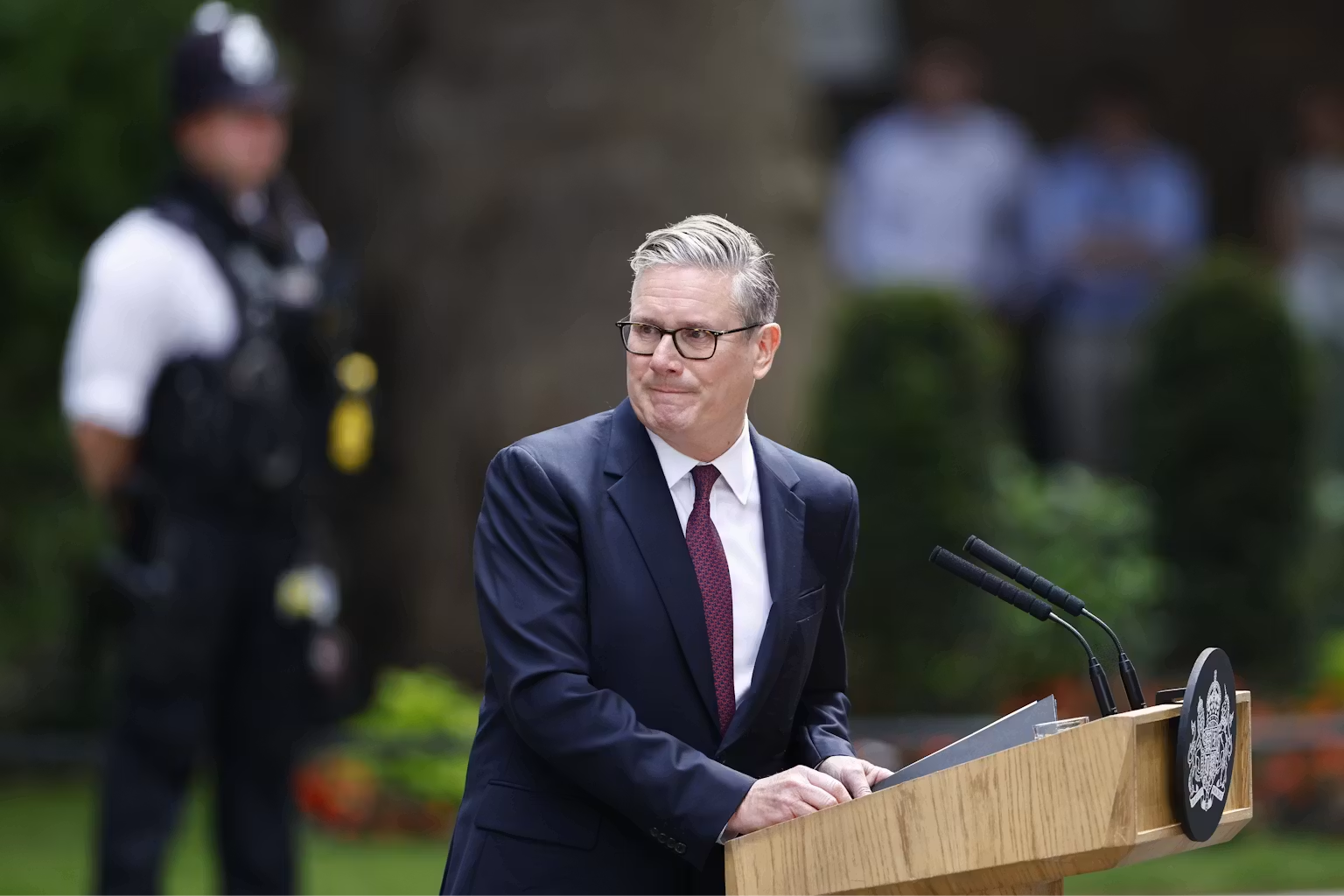
Keir Starmer announced his resignation as UK Prime Minister on June 22, 2026, following mounting pressure within the Labour Party and declining approval ratings. Andy Burnham has emerged as the leading contender to replace him. His departure comes less than two years after leading his party to a landslide victory in July 2024, ending 14 years of Conservative rule. Starmer will remain as the caretaker Prime Minister until a new leader is chosen, ensuring an orderly transition of power before the UK Parliament returns in September.
Critical Analysis: Why did Keir Starmer Resign?
Despite the massive parliamentary majority of 2024, Starmer’s tenure struggled with a “mandate paradox.” While he held the seats, the popular vote share remained historically low, leaving the government susceptible to the “Farage Factor” and a volatile electorate.
Cabinet Friction and the “Clean Break” Image
Internal stability crumbled as the “clean break” image of the new government was tarnished. The appointment of Peter Mandelson as Ambassador to the US backfired when the government’s inability to distance itself from Mandelson’s past associations with Jeffrey Epstein became a focal point for critics, damaging the administration’s moral authority.
The Electoral Pincer Movement
Labour found itself squeezed between two flanks. To the right, Nigel Farage’s Reform UK eroded support in post-industrial towns. To the left, the Green Party and independent candidates tapped into urban progressive discontent, creating a “pincer movement” that depleted the party’s core support.
Policy Stagnation and Immigration
The failure to implement a definitive solution to illegal immigration and unpopular welfare adjustments led to a perceived lack of competency, which eventually manifested as a rebellion within the Labour parliamentary party.
Who Will Replace Keir Starmer as UK Prime Minister?
As the political landscape shifts, Andy Burnham has emerged as the clear favorite to replace Keir Starmer as UK Prime Minister. The former Mayor of Greater Manchester made a strategic return to Westminster by winning the Makerfield seat in a high-profile by-election on June 19, 2026.
Shortly after Starmer’s address, Burnham announced his intention to put himself forward for the leadership of the Labour Party via X (formerly Twitter), describing the current moment as the “beginning of a transition.”
Burnham’s trajectory is seen as a radical departure from typical Westminster leadership spills. Usually, challengers emerge from within the existing cabinet; however, Burnham entered the race as a newly sworn-in MP with no recent cabinet experience. His momentum was further bolstered when Wes Streeting, the former Secretary of State for Health and Social Care, announced he would not challenge for the top job and instead threw his full support behind Burnham.
Labour officials have confirmed that the National Executive Committee (NEC) will draft the timetable for the leadership contest. Nominations are scheduled to open on July 9 and close on July 16. If no other viable candidates emerge to challenge Burnham, he may secure the premiership by default, marking a rapid rise to power.
A Legacy of Stability Amidst Global Crisis
Despite the domestic turmoil, Starmer’s departure has been met with praise from international allies.
European Commission President Ursula von der Leyen and representatives of German Chancellor Friedrich Merz credited Starmer with strengthening European and Ukrainian security. His commitment to supporting Ukraine and rebuilding ties with European allies remains a cornerstone of his foreign policy legacy.
Achievements of Keir Starmer During his Two Year Tenure-
In his resignation speech, Starmer highlighted several achievements of his two-year tenure, including:
- The fastest reduction in NHS waiting lists in 17 years.
- A significant uplift in defense spending, the largest since the Cold War.
- Economic measures that saw wages rise above inflation.
- A reduction in small boat crossings and efforts to lift half a million children out of poverty.
Starmer noted that he inherited a party that was “politically, spiritually, morally and financially bankrupt” and felt he had successfully purged the “poison of anti-Semitism” from the party’s ranks.
The “Revolving Door” of British Leadership Since Brexit
The resignation of Keir Starmer continues a troubling trend of leadership instability in the United Kingdom. He becomes the sixth Prime Minister in a decade to leave office prematurely, highlighting a “revolving door” of leadership since the 2016 Brexit referendum. This cycle of instability has included:
- David Cameron: Resigned in 2016 following the EU referendum.
- Theresa May: Resigned in 2019 after failing to pass a Brexit deal.
- Boris Johnson: Resigned in 2022 following “Party Gate” and mass government rebellions.
- Liz Truss: Served only 49 days in 2022, the shortest tenure in UK history.
- Rishi Sunak: Resigned in 2024 following the Conservative Party’s collapse in popularity.
The recurring nature of these departures has led to criticism from opposition leaders, such as Ed Davey of the Liberal Democrats, who argued that the British public is “sick of being let down by an endless merry-go-round of prime ministers.”
Opposition Reactions and the Call for a General Election
The political vacuum created by Starmer’s resignation has been seized upon by Nigel Farage and the Reform UK party. Farage has called for an immediate general election, claiming that “Britain is broken” and asserting that the public should have a direct say in who replaces Starmer. Current polling suggests Reform UK holds a significant edge in national sentiment, with some surveys placing them ahead of both Labour and the Conservatives.
However, a general election is deemed unlikely in the immediate future. With Labour holding 403 seats in the House of Commons, the party has little incentive to risk its parliamentary majority by calling an early vote. Instead, the party will rely on its internal mechanisms to select a new leader who can navigate the complexities of a polarized electorate.
Frequently Asked Questions (FAQ)
Why did Keir Starmer resign as Prime Minister?
Keir Starmer resigned due to intense pressure from within the Labour Party and a significant decline in his personal and party approval ratings. The win of Andy Burnham in the Makerfield by-election further signaled that the party was ready for a transition in leadership.
Who is likely to replace Keir Starmer?
Andy Burnham, the former Mayor of Greater Manchester and newly elected MP, is the primary front-runner. He has officially declared his candidacy and received the support of key figures like Wes Streeting.
Will there be a general election in the UK now?
While Nigel Farage and Reform UK have called for a general election, it is unlikely to happen. British political systems allow parties to change leaders mid-term without triggering a national vote, and Labour’s large majority in the House of Commons makes an early election risky.
When will the new Prime Minister be appointed?
Sir Keir Starmer will serve as caretaker Prime Minister until the Labour leadership contest is finalized. Nominations for the new leader will open on July 9 and close on July 16, with a new leader expected to be in place by mid-September.
What was Keir Starmer’s impact on foreign policy?
Starmer was praised by international leaders for his steadfast support of Ukraine and for strengthening the UK’s security partnerships with European allies and the US, focusing on stability and reliability in foreign affairs.
News Sources – ABC News, The Nightly, SMH