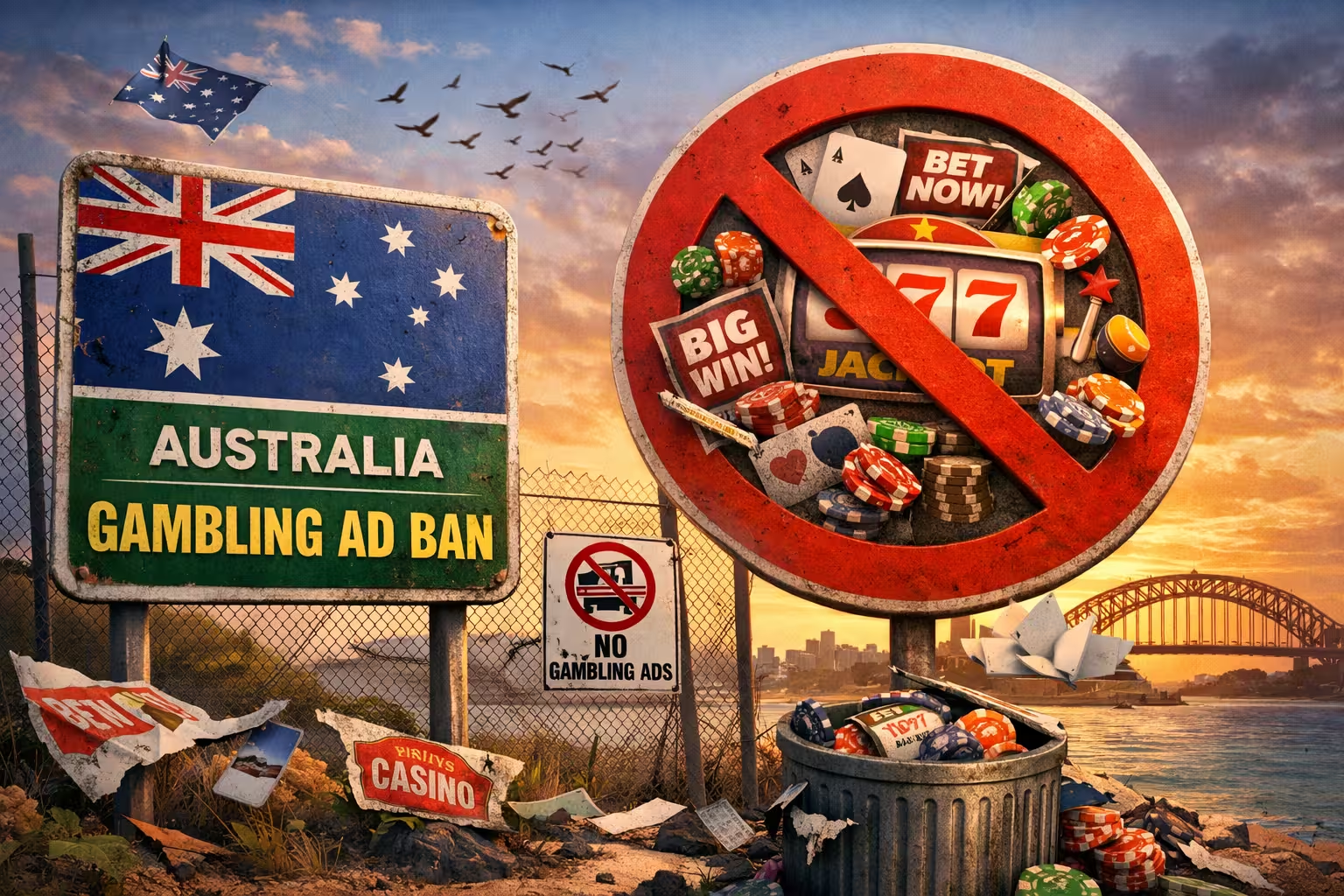
Australia’s Labor government has introduced new gambling advertising reforms that would restrict TV, radio, digital, and sports betting promotions beginning January 1, 2027. While the government says the measures will better protect children from gambling harm, the Coalition, Greens, and crossbench senators argue the legislation falls well short of the comprehensive advertising ban recommended by the Murphy Report three years ago.
Key Details of the Proposed Gambling Advertising Restrictions
The centerpiece of the government’s strategy is a series of targeted limitations designed to reduce the “incidental” exposure of children to gambling content. According to Communications and Sport Minister Anika Wells, the reforms seek to break the pervasive link between sports and wagering. The core components of the draft legislation include:
- Television Limits: Restricting gambling advertisements on TV to a maximum of three per hour between 6:00 am and 8:30 pm.
- Live Sports Ban: A prohibition on gambling ads during live sporting broadcasts within the 6:00 am to 8:30 pm window.
- Radio Restrictions: Banning gambling promotions on the radio during school drop-off and pick-up times to protect students.
- Digital and Social Media: A total ban on gambling ads for users under the age of 18 and the mandatory implementation of an “opt-out” system for adults on online platforms.
- Sponsorship and Influencers: Prohibiting the use of celebrity or social media influencer endorsements and banning gambling logos from player uniforms and inside sporting venues.
Why Are Labor’s Gambling Advertising Reforms Facing Criticism?
Despite the government’s insistence that these changes are “significant,” opposition members argue the loopholes are too wide. Members of the Coalition have expressed deep concern that the current plan does not go far enough to protect Australian families.
Simon Kennedy, Member for Cook and co-chair of the parliamentary friends group on gambling harm, cited personal experiences with gambling addiction to highlight the industrial scale of the harm caused by the industry.
The Coalition is currently debating amendments that would extend broadcast restrictions to all sports—including replays and lead-in coverage—regardless of the time of day. This mirrors a previous policy proposed by former opposition leader Peter Dutton.
Furthermore, some Liberal MPs are pushing for an “opt-in” system for online advertising, which would require adults to actively choose to see gambling ads, rather than the government’s proposed “opt-out” mechanism.
Senator Hanson-Young pointed out the flaw in the 8:30 pm cutoff, noting that many children remain awake and engaged with sports broadcasts long after that time.
How Will ACMA Enforce Australia’s New Gambling Advertising Laws?
The Australian Communications and Media Authority (ACMA) is expected to play a pivotal role in the enforcement and compliance phase of these gambling advertising restrictions throughout 2026 and 2027. ACMA has already signaled a crackdown on illegal operators and the unregulated promotion of gambling by streamers and influencers.
A particular point of contention is the rise of prediction markets. ACMA has clarified that platforms such as Polymarket, which often claim to be financial instruments, are indistinguishable from traditional gambling and must hold a local license to operate within Australia.
While some industry stakeholders warn that overly strict regulations could push consumers toward unregulated offshore operators, the government remains committed to a measured, methodical rollout of the law.
Also Read – NDIS Fraud Crackdown: 26 Convicted as Offenders Receive 60 Years in Jail
What Is BetStop and How Will It Be Funded?
To complement the restrictions, Minister Anika Wells revealed that the reform package will include a new levy imposed on wagering companies. The funds generated from this levy will be used to finance a comprehensive public advertising campaign for BetStop, the national self-exclusion register.
BetStop is regarded as one of the most effective tools for harm reduction, allowing gamblers to voluntarily exclude themselves from all licensed wagering services. However, a statutory review indicated that awareness remains low, with only one in three gamblers being aware of the service.
The government aims to use the industry-funded campaign to bridge this gap, although advocates note that some users on the register are still receiving ads or managing to open new accounts.
When Will Australia’s New Gambling Advertising Laws Take Effect?
The legislation is expected to face a rigorous challenge in the Senate. Independent Senator David Pocock has proposed a raft of amendments aligned with the “You Win Some, You Lose More” report, including a total ban on gambling ads across all platforms within three years and a complete ban on “inducements” such as bonus bets.
Minister Wells has expressed hesitation regarding a formal Senate inquiry, warning that further consultation could be used as a tactic by the industry to delay the implementation of the laws.
With a target start date of January 1, 2027, the government is balancing the need for a workable legal framework with the urgent demand from health advocates to stop the “relentless targeting” of the Australian public by betting companies.
Frequently Asked Questions
When do the new gambling advertising laws take effect?
The Australian government intends for the proposed gambling advertising reforms to come into effect starting January 1, 2027.
What is BetStop and how is it funded?
BetStop is Australia’s national self-exclusion register that allows individuals to opt out of all licensed gambling platforms. The government plans to fund a new awareness campaign for BetStop via a levy imposed on wagering companies.
Will gambling ads still be seen during live sports?
Under the current proposal, gambling ads will be banned during live sports between 6:00 am and 8:30 pm. However, critics argue this leaves a loophole for ads to appear during late-night broadcasts or replays.
Are social media influencers banned from promoting gambling?
Yes, the proposed legislation specifically targets the influence of social media personalities and prohibits the use of celebrity or influencer endorsements to promote gambling services.
What is the difference between “opt-in” and “opt-out” for online ads?
An “opt-out” system (proposed by Labor) means ads are shown unless the user chooses to hide them. An “opt-in” system (suggested by some Coalition MPs) means no ads are shown unless the user explicitly gives permission to see them.
News sources – ABC News, The Guardian