
A nationwide Telstra network outage left hundreds of thousands of Australians without mobile, internet, and data services on Wednesday, July 8, 2026. The Telstra outage affected phone calls, mobile data, payment systems, public transport, and even some Triple Zero (000) emergency calls, raising fresh concerns about the reliability of Australia’s telecommunications infrastructure. While Telstra has restored most services and says a software fault is the likely cause, investigations into the outage remain ongoing.
Widespread Impact of the Telstra Network Outage on Essential Services
The scale of the disruption was felt immediately across the nation. From the moment the network began to fail at approximately 4:30 am, Australians found themselves unable to make calls, send messages, or access data.
- Payment processing systems for countless businesses went offline, leaving vendors unable to process transactions and consumers unable to pay for goods.
- Transport networks were similarly affected; regional train services, including the NSW Hunter Line between Newcastle and Maitland, experienced significant disruptions, and taxi services in major cities like Melbourne struggled to operate effectively.
- In the medical sector, the reliance on connected health technology became a point of failure. For instance, caregivers relying on continuous glucose monitors (CGM) for children with diabetes found themselves without critical real-time health data. When these devices failed to transmit alerts to smartphones, caregivers were forced to revert to manual testing methods to prevent life-threatening hypoglycaemia, highlighting a dangerous over-reliance on a single network for life-critical health monitoring.
Triple Zero Failure and the Crisis of Emergency Communication
The most alarming aspect of the Telstra network outage was the failure of some calls to reach the Triple Zero (000) emergency line. While Communications Minister Anika Wells stated that “camp-on” arrangements—which allow a phone to jump to an alternative network during an emergency—were largely functional, the reality on the ground was more complex.
Telstra confirmed that a “secondary issue” emerged later in the day, further complicating connectivity to emergency services. This prompted a massive welfare operation.
By Wednesday evening, Telstra reported that 333 welfare checks had been conducted for individuals whose emergency calls had dropped. Of these, 79 individuals could not be reached and were subsequently referred to state authorities for urgent follow-up. Victoria Police were tasked with 32 checks, and NSW police followed up on 13 callers, underscoring the potentially lethal consequences of a telecommunications collapse.
The Root Cause: Software Faults and Infrastructure Vulnerability
Telstra Group Chief Financial Officer Michael Ackland revealed that the company believes a software fault is the likely cause of the massive outage. According to Ackland, the crash was triggered by malfunctioning “nodes” within the network, although the precise root cause of why those nodes failed remains under investigation.
The incident has drawn sharp criticism from infrastructure experts. Adjunct Associate Professor Graeme Hughes of Griffith University warned that the outage proves Australia’s digital infrastructure is dangerously vulnerable. Hughes argued that too much of the nation’s commerce, transport, and logistics rely on a single mobile network without mandated, automated fail-over systems.
While parliament had previously legislated backup arrangements for Triple Zero following a similar failure in 2024, Hughes pointed out that payments and public transport systems enjoy no such protection. He urged Australia to follow the lead of technologically resilient nations like the United States, Japan, and South Korea by introducing robust systems to protect against nationwide telecommunications outages.
Political Fallout and Allegations of Foreign Interference
The telco network crash quickly evolved from a technical failure into a political firestorm. Tensions flared between the Labor government and the Coalition over the handling of the crisis and the possible causes of the outage.
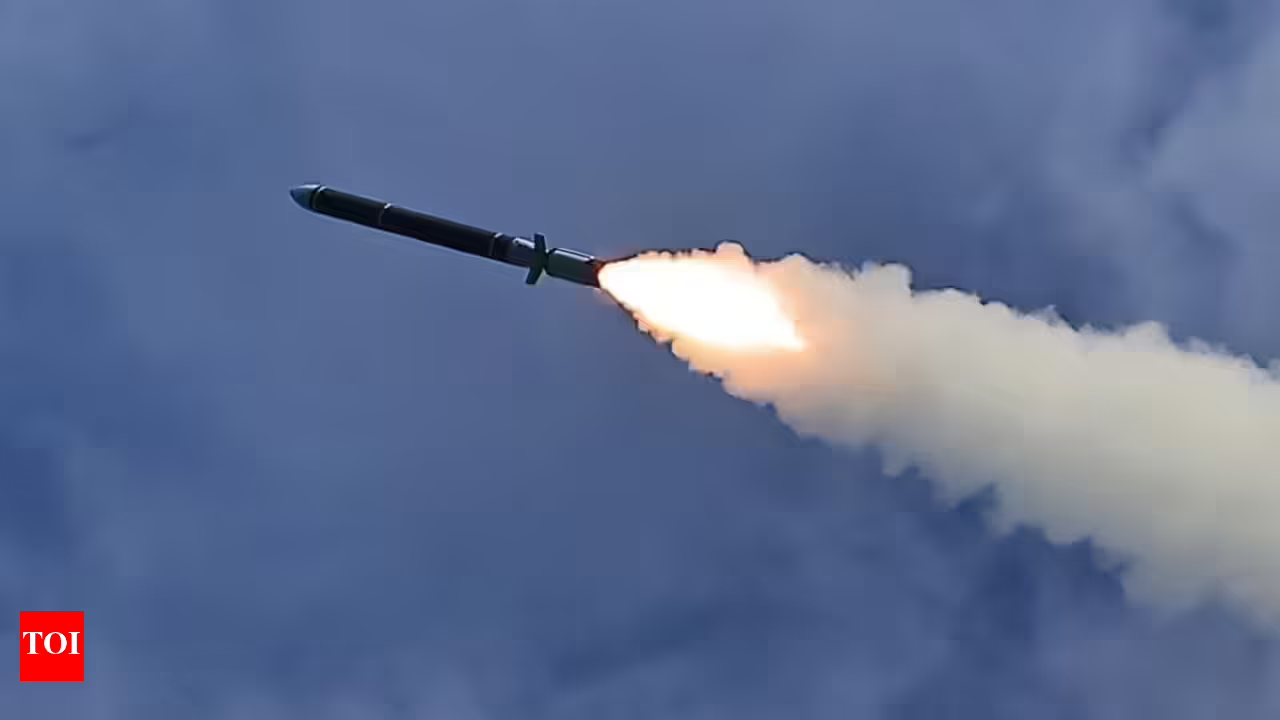
One Nation MP Barnaby Joyce and Opposition Leader Angus Taylor raised concerns regarding the timing of the outage, questioning if there was any link to a Chinese missile test conducted in the Pacific earlier that Monday.
While Mr. Joyce cautioned against being a “conspiracy theorist,” he noted the capacity for foreign entities to affect software and networks. However, Minister Anika Wells dismissed these claims as “irresponsible,” stating that the government had been assured by Home Affairs Minister Tony Burke that there was no evidence of foreign interference.
Further controversy erupted when Shadow Communications Minister Sarah Henderson admitted to making “test calls” to the Triple Zero line to verify the outage. The Labor party slammed this move as “outrageous,” arguing that non-emergency calls during a crisis clog the system and hinder genuine welfare checks. Senator Henderson defended her actions, stating she was performing her duties and had “very low trust” in telecommunications carriers following previous industry failures.
Telstra’s Response and Communication Failures
Telstra has faced significant backlash regarding its transparency and the speed of its communication. While the company insists it informed the government “very, very early,” records suggest a gap.
Telstra first detected the issue at 4:30 am, posted a brief notice on its website at 6:15 am, and gave media comments at 6:35 am—yet the office of Minister Anika Wells was not directly notified until approximately 7:00 am.
The company’s estimation of the impact also shifted. Initial suggestions that “thousands” were affected were later expanded to “hundreds of thousands” as the scale of the disaster became apparent. Telstra Group CEO Vicki Brady, who was overseas at the time, was ordered to return to Australia early to manage the aftermath.
Beyond the technical recovery, Telstra warned the public to be vigilant against opportunistic fraudsters. The company noted that scammers were pretending to be Telstra representatives, calling affected customers to steal personal information under the guise of “fixing” their connection issues.
Long-Term Implications for Australia’s Digital Resilience
As Australia moves toward an increasingly cashless and connected society, the Telstra network outage serves as a stark warning. The incident highlights the “single point of failure” risk inherent in the current telecommunications landscape. When the largest provider fails, it does not just silence phones; it halts trains, stops payments, and potentially blocks life-saving emergency calls.
The demand for mandated redundancy is now louder than ever. For businesses and individuals, experts recommend diversifying communication methods and maintaining offline backups for critical services.
The government now faces pressure to regulate telecommunications resilience more aggressively, ensuring that no single software fault can once again bring a modern nation to a standstill.
Frequently Asked Questions (FAQ)
What caused the massive Telstra network outage?
Telstra Group CFO Michael Ackland stated that the outage was likely caused by a software fault involving malfunctioning “nodes” within the network, though the specific root cause is still being investigated.
Were emergency Triple Zero (000) calls affected?
Yes, some Triple Zero calls failed to connect. While “camp-on” arrangements allowed some phones to use other networks, Telstra confirmed a secondary issue led to dropped emergency calls, resulting in over 300 welfare checks by police.
How many people were impacted by the Telstra crash?
While initial estimates were lower, Telstra later conceded that “hundreds of thousands” of customers were affected, with some reports suggesting the potential for millions of disrupted services.
What other services were disrupted besides phone calls?
The outage impacted mobile data, internet services, banking payment systems, and public transport, including regional train services on the NSW Hunter Line.
Is there any evidence of foreign interference or cyberattacks?
Despite suggestions from some politicians regarding a link to Chinese missile tests, Communications Minister Anika Wells and the Home Affairs Minister have stated there is currently no evidence to suggest foreign interference.
What should I do if I receive a call from someone claiming to be from Telstra after the outage?
Be cautious. Telstra has warned that fraudsters are attempting to take advantage of the situation. Never provide personal or financial details over the phone unless you have verified the caller’s identity through official channels.
Is Telstra Still Down?
As of Wednesday evening, Telstra said most mobile and internet services had been restored following the nationwide Telstra network outage. However, investigations into the software fault remain ongoing, and some customers may still experience intermittent connectivity while engineers complete network recovery.
News Sources – ABC News
One thought on “Telstra Outage Hits Thousands Across Australia as Network Failure Disrupts Services”