Adelaide’s reservoirs have received a major boost after heavy rain across the Mount Lofty Ranges sent about 18 billion litres of water into the metropolitan system in just 24 hours.
The rainfall, which hit parts of South Australia on Sunday, produced the biggest daily inflow into the city’s reservoirs in almost a decade. It has significantly improved water storage levels ahead of the warmer months, although SA Water says the outlook will continue to depend on rainfall over the coming months.
The storm brought heavy rain, lightning and hail to parts of the state, with waterways rising rapidly across the Adelaide Hills. In areas such as Morialta Conservation Park, normally calm creeks turned into fast-flowing torrents.
Reservoir storage rises to 73 per cent
SA Water data showed that the combined storage level of Adelaide’s metropolitan reservoirs increased by about 9 percentage points following the rainfall, reaching 73 per cent of total capacity by Monday morning. That puts the system in a considerably stronger position than it was at the same time last year. In 2025, the combined storage level was around 55 per cent. The difference gives SA Water greater flexibility heading into spring and summer, when demand for water typically increases.
The latest rainfall is also part of a much larger inflow recorded since the start of winter. More than 71 billion litres of water have now entered the metropolitan reservoir system since June.
SA Water executive Dr Daniel Kingsborough said the wet start to winter helped prepare the catchments for the latest rainfall. Higher soil moisture levels meant more of the recent rain was able to make its way into waterways and ultimately the reservoirs.
Mount Bold receives more than 5 billion litres
The rainfall was not evenly distributed across the metropolitan catchments, with some reservoirs recording much larger increases than others.
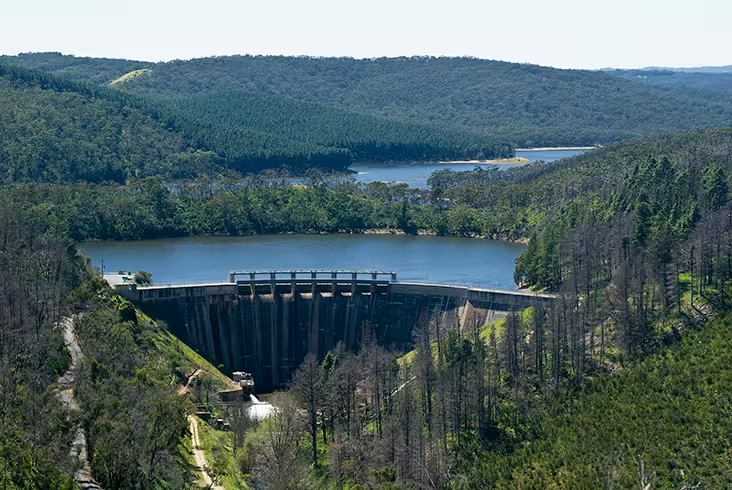
Mount Bold Reservoir, the largest reservoir in Adelaide’s system, received more than 5 billion litres of water. Its storage level increased by about 13 percentage points to 82 per cent.
Kangaroo Creek Reservoir also recorded a significant increase, with its storage level rising by around 19 percentage points. Little Para and South Para reservoirs recorded increases of approximately 7 and 10 percentage points respectively. Mount Bold has a capacity of about 46.4 gigalitres and is now relatively close to its upper operating range.
Further rain could lead to controlled releases
The sharp rise in storage also means SA Water will need to keep a close watch on conditions at Mount Bold. Controlled releases are generally considered when the reservoir reaches more than 95 per cent capacity. The last significant release from Mount Bold occurred in November 2022.
If another major rainfall system moves through the catchments, water could eventually need to be released into the Onkaparinga River. Such releases are carefully managed because of the potential impact on downstream areas, particularly properties and agricultural land in Adelaide’s southern suburbs.
For now, however, the increased storage is being viewed as a positive development for the city’s water supply.
Heavy rain creates dangerous conditions
While the rainfall has benefited the reservoirs, it also caused dangerous conditions across parts of the Adelaide Hills and surrounding areas.
Morialta Conservation Park saw particularly strong flows through Fourth Creek, producing spectacular waterfalls and rapidly moving water.
Authorities have warned visitors not to approach flooded waterways or leave designated walking tracks. Fast-moving water can remain dangerous even after rainfall has stopped.
Several people were also rescued after attempting to drive through floodwaters during the storm. Rainfall totals were particularly high in parts of the Adelaide Hills and other areas of South Australia. Lenswood recorded around 110mm, while Coromandel East received about 101mm. Some areas in the state’s far north recorded totals of up to 150mm.
The Department for Environment and Water has reminded visitors to follow warning signs, stay behind safety barriers and take advice from park rangers.
Water outlook remains dependent on spring rainfall
Despite the substantial improvement in reservoir levels, SA Water is not treating the latest inflow as a reason to stop monitoring the system. The Bureau of Meteorology is expecting drier conditions later in winter and into spring, meaning the additional water will need to carry the system through a period when rainfall may be limited.
The 18 billion litres captured during the latest storm nevertheless gives Adelaide a useful buffer heading into the warmer months. For now, the combination of strong winter rainfall and higher reservoir levels leaves South Australia in a much better position than it was a year ago.
Frequently Asked Questions
How much water entered Adelaide’s reservoirs?
Around 18 billion litres of water entered the metropolitan reservoir system during the 24-hour period following the heavy rainfall.
What are Adelaide’s reservoirs currently holding?
The combined storage level rose to about 73 per cent of capacity, up from approximately 55 per cent at the same time last year.
Which reservoir received the most water?
Mount Bold Reservoir received more than 5 billion litres, lifting its storage level to around 82 per cent.
Is Morialta Conservation Park safe after the rain?
Visitors should take care around waterways, remain on designated tracks and follow safety warnings. Flooded creeks and waterfalls can become dangerous after heavy rainfall.