
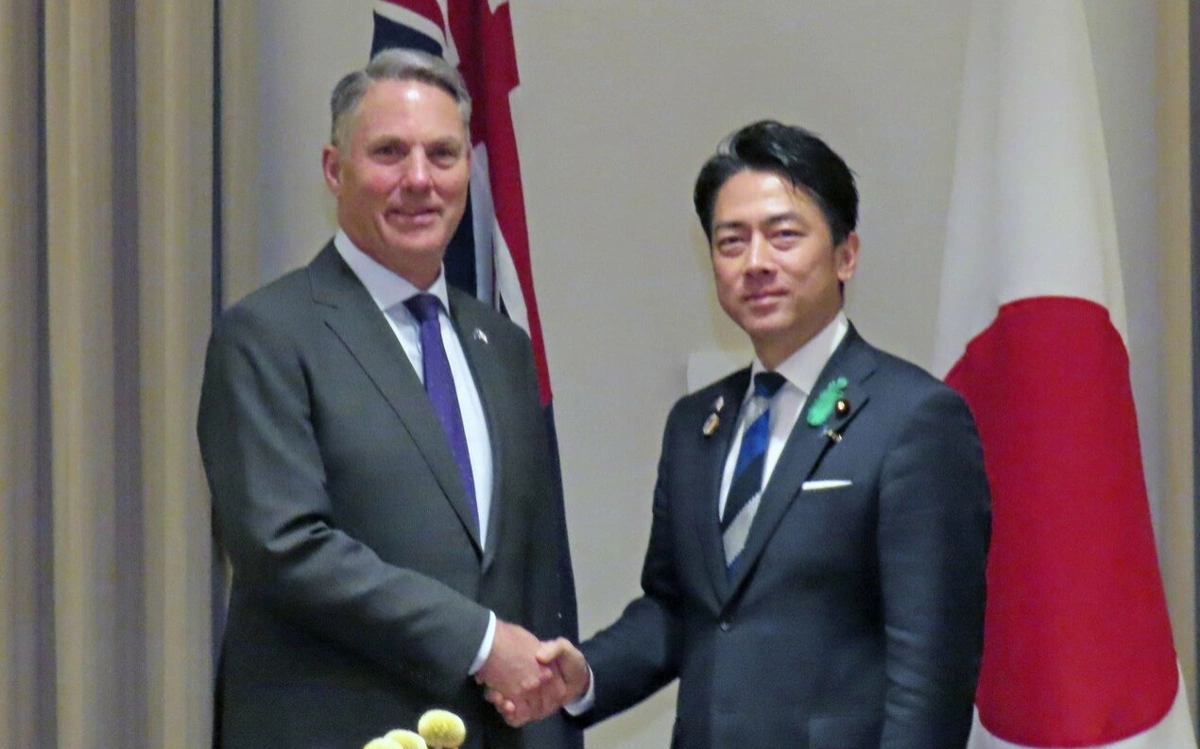
Australia and Japan have signed a $10 billion dollar deal for next generation Mogami Frigate Warships, designed to enhance the Royal Australian Navy’s operational capability in an increasingly complex Indo-Pacific security environment. The confirmation was announced during a meeting in Melbourne between Japanese Defence Minister Shinjiro Koizumi and Australian Defence Minister Richard Marles. With an estimated value of around A$10 billion, the agreement also represents Japan’s largest-ever defence export since it relaxed its military export rules in 2014. The deal marks a significant shift in regional security cooperation and defence strategy in the Indo-Pacific.
Australia–Japan Warship Deal Summary:
- Value : $10 billion
- Ships : 11 Mogami-class Frigates
- First Delivery : 2029
- Builder : Mitsubishi Heavy Industries + Australia
- Purpose : Strengthen Indo-Pacific naval security
What is the Australia–Japan Warship Deal?
Australia and Japan have signed a multi-billion-dollar agreement for the construction of 11 advanced Mogami-Class Frigates for the Royal Australian Navy.
- The deal is valued at around A$10 billion (approx. $6.5–7 billion USD).
- It is Japan’s largest defence export deal since easing its military export restrictions in 2014.
- The ships are based on the upgraded Mogami-class multi-role stealth frigate design.
These warships will replace Australia’s ageing Anzac-class frigates and significantly boost naval capability.
Why is this deal important?
The agreement comes amid rising geopolitical tensions, particularly concerns about China’s growing influence in the Indo-Pacific region. This deal will:
- Strengthening Indo-Pacific Security – The frigates will enhance Australia’s ability to secure maritime trade routes and conduct anti-submarine and air defence operations
- Modernizing Australia’s Navy – Australia is undergoing one of its largest naval upgrades in decades. The new fleets will not only expand missile capabilities but also replace outdated ships and improve operational flexibility.
- Deepening Australia–Japan Strategic Ties – This deal signals a major shift in Japan’s defence policy—from post-war pacifism toward global security cooperation. It also strengthens bilateral defence collaboration beyond traditional alliances.
- Economic and Industrial Benefits – The agreement will create thousands of jobs and boost local defence manufacturing in Australia. Around 10,000 jobs are expected over time through shipbuilding in Western Australia.
How Will the Deal Be Implemented?
The execution of the deal is divided into two major phases:
In Phase 1: The first three frigates will be built by Mitsubishi Heavy Industries in Japan and will be delivered by 2029.
In Phase 2: The remaining eight ships will be constructed in Western Australia, particularly at the Henderson shipyard.
Key Features of the Mogami Frigates
These advanced ships are designed for multi-role operations:
- Range: ~10,000 nautical miles
- Crew: Around 90–92 personnel
- Equipped with:
- 32-cell vertical launch missile system
- Anti-submarine warfare capabilities
- Helicopter operations (MH-60R Seahawk)
This makes them among the most advanced general-purpose frigates globally.
When Will the Warships Be Delivered?
According to the initial commitment, the first three Mogami Frigates are expected to be delivered in 2029. However, the full fleet rollout will continue into the 2030s and beyond. This timeline makes it the fastest peacetime naval acquisition in Australian history.
Conclusion
The Australia–Japan warship deal represents a major milestone in defence cooperation, naval modernization, and regional security strategy. By combining advanced Japanese shipbuilding technology with Australian industrial capability, both nations are preparing for a more complex and competitive security environment.
This agreement is not just about ships—it is about long-term strategic alignment, economic growth, and military readiness in the Indo-Pacific era.
One thought on “Australia signed $10 billion dollar deal with Japan for 11 Mogami Frigate warships”