
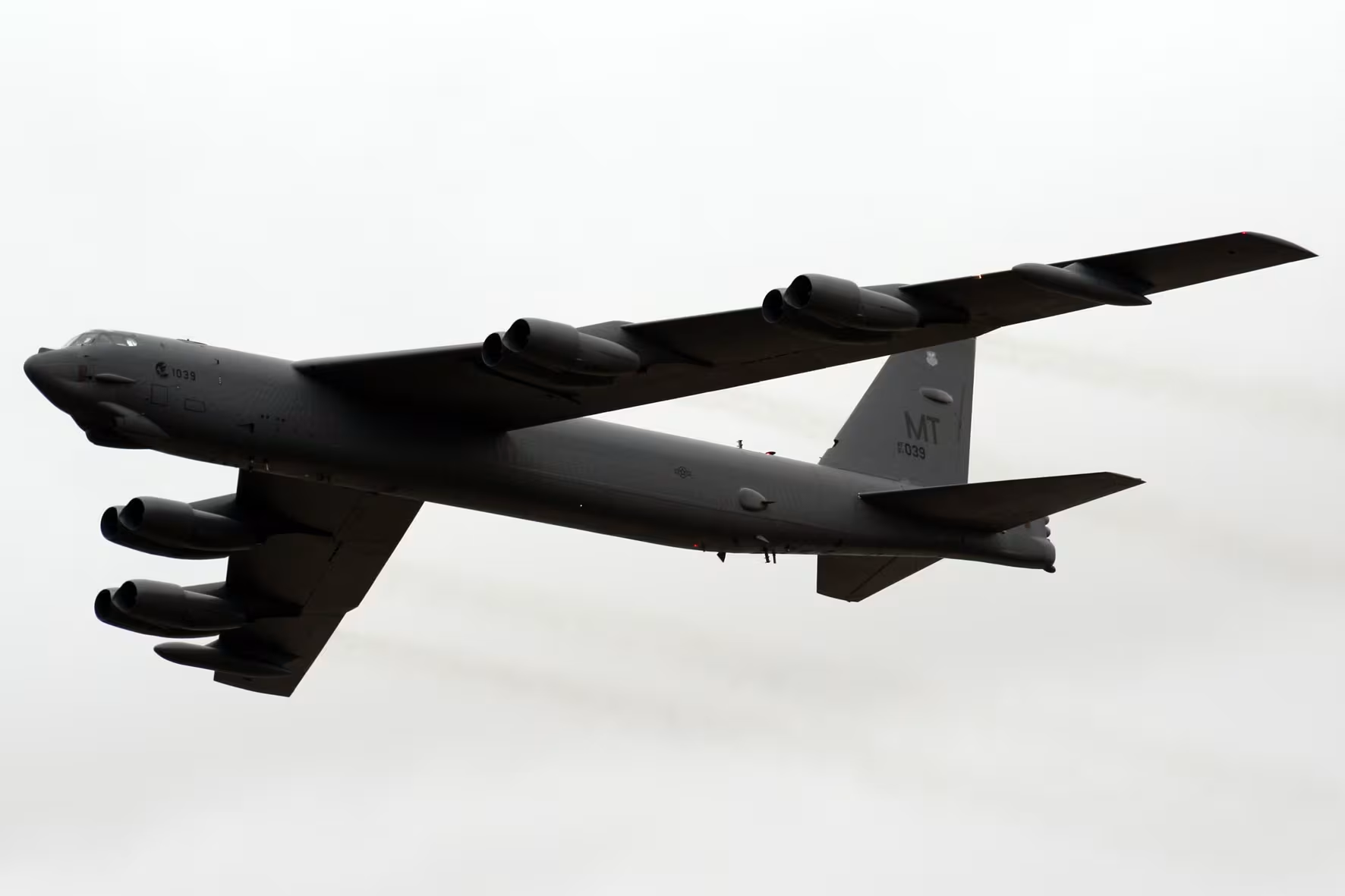
A Boeing B-52 Stratofortress crashed shortly after takeoff during a test flight at Edwards Air Force Base in California, killing 8 people aboard on June 15, 2026. The aircraft was operating on a routine test mission when the crash happened and it marks the deadliest B-52 crash since 1982. Military officials have launched an investigation into the cause which has left the airfield partially restricted as recovery efforts continue.
B-52 Bomber Crash: What Happened at Edwards Air Force Base?
How did the B-52 crash happen ?
The aircraft departed at approximately 11:20 a.m. local time. According to flight tracking data provided by AirNav Systems, the bomber initially turned northeast before executing a sharp right and nearly completing a 180-degree turn. The plane then entered a catastrophic descent, falling at a rate of 1,541 meters per minute—nearly ten times the standard descent speed for a landing aircraft. This rapid plunge led to a violent impact on another runway, leaving the wreckage virtually unrecognizable and creating a massive charred scar on the desert landscape.
Who was on Board the Crashed B-52 ?
Military officials, including Colonel James Hayes of the 412th Test Wing, confirmed that all eight people on board perished. The crew consisted of a mix of uniformed military personnel, government-employed civilians, and private contractors. Boeing, the aircraft’s manufacturer, confirmed that two of its employees were among the victims. One casualty has been publicly identified as Jeromy Smith, a civilian flight test engineer for the Department of Defense and a father of two, who had served at the base for a decade.
Why was the B-52 Test Flight Taking Place?
The B-52 was operating as part of the “radar modernization program.” This initiative involves replacing antiquated 1960s-era radar with the Active Electronically Scanned Array (AESA) system, designed by Raytheon.
The goal of these upgrades is to enhance navigation and targeting capabilities, ensuring the B-52 fleet remains viable through 2050 as a strategic complement to the new B-21 Raider stealth bomber. While a modernized B-52 had been sent to the base in 2025 for ground and flight testing, officials have not yet confirmed if the crashed aircraft was the specific unit equipped with the new AESA radar.
Investigation and Expert Analysis
The U.S. Air Force has stated that a full investigation could take up to six months to complete. Aviation safety expert Jeff Guzzetti, a former investigator for the NTSB and FAA, suggests that the nature of the crash—occurring quickly after takeoff without gaining significant altitude—points toward a “controllability issue.” Potential causes may include a flight control malfunction, incorrect rigging during maintenance, a catastrophic engine failure, or a malfunction of the specific equipment being tested.
The Legacy and Role of the B-52 Stratofortress
First entering service in 1955, the B-52 Stratofortress has been a cornerstone of the U.S. strategic bomber force for over seven decades. Capable of carrying both conventional and nuclear munitions, it has seen action in various conflicts ranging from the Vietnam War to recent operations in Iran. Because the B-52 is no longer in production, the Air Force relies on life-extension initiatives, including a $48.6 billion project to install new engines, as well as scavenging parts from decommissioned airframes stored at the Davis-Monthan Air Force Base “Boneyard.”
Edwards Air Force Base, located roughly 100 miles northeast of Los Angeles, is the premier site for such testing. Known for its vast desert lakebeds and historic milestones—such as Chuck Yeager breaking the sound barrier in 1947—the base is where the 412th Test Wing evaluates aircraft, software, and weapons systems throughout their operational lifespans.
Conclusion
The loss of eight lives at Edwards Air Force Base is a sobering reminder of the inherent risks associated with flight testing. While modernization programs are essential for maintaining national security and extending the life of legacy aircraft like the B-52, the complexity of integrating new technology into old airframes can create unforeseen challenges. As the military continues its recovery efforts and the formal investigation proceeds, the focus remains on honoring the service of the fallen airmen and contractors and determining the exact failure that led to this catastrophic event.
Frequently Asked Questions (FAQ)
How many people died in the B-52 crash?
Eight people were killed in the incident, including military members, government civilians, and Boeing employees.
Where did the crash take place?
The crash occurred at Edwards Air Force Base in the Mojave Desert, California, approximately 100 miles northeast of Los Angeles.
What was the purpose of the flight?
The aircraft was on a routine test mission supporting the B-52 radar modernization program, specifically testing new AESA radar technology.
When will the cause of the crash be known?
Air Force officials stated that the full investigation could take up to six months to complete.
Is the B-52 still in use today?
Yes, the B-52 is still a primary part of the U.S. Air Force fleet, with plans to keep the aircraft operational through 2050 via extensive upgrades.



One thought on “8 Dead in B-52 Bomber Crash at Edwards Air Force Base in California”