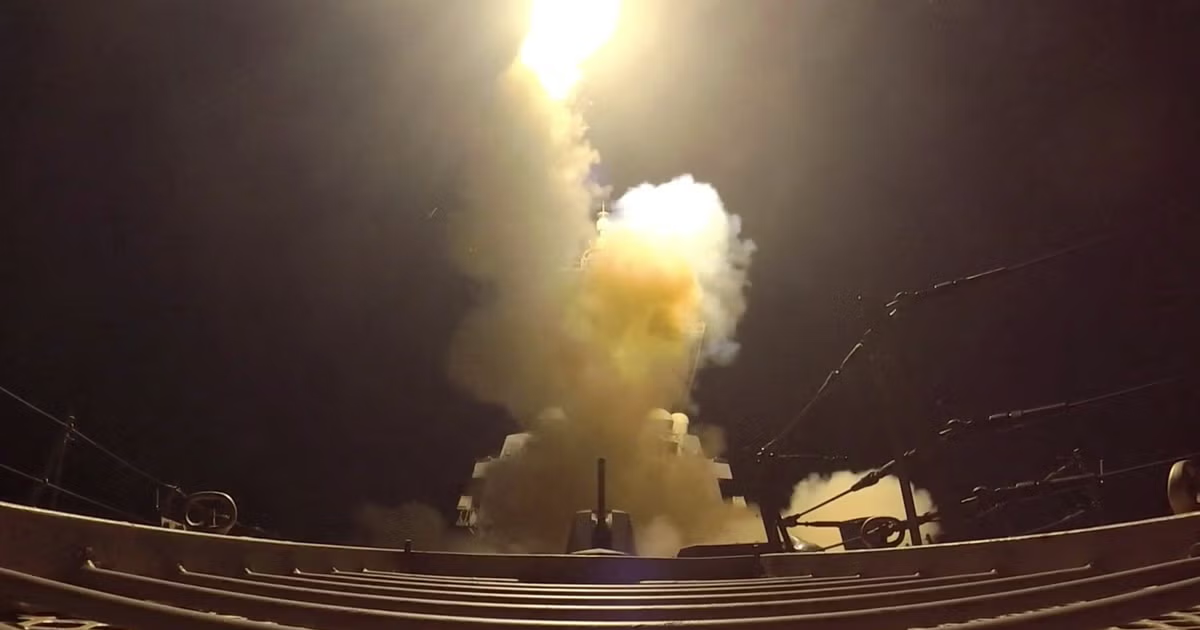
Iran’s decision to close the Strait of Hormuz has pushed the Middle East into a fresh crisis, testing the newly signed US-Iran memorandum of understanding just days after it was announced. Iran has announced the closure of the Strait of Hormuz, citing a “clear breach” of commitments by Washington. This escalation comes in direct response to continued Israeli military operations in southern Lebanon, which have resulted in significant casualties and raised urgent questions about the viability of the ceasefire framework.
The Impact of Israeli Military Action in Lebanon on Regional Stability
The primary catalyst for the current tension is the ongoing conflict between Israel and Hezbollah. Only hours after a ceasefire between the two parties took effect on Friday –
- Israeli air strikes hit multiple locations in southern Lebanon and the Bekaa Valley.
- According to Lebanon’s health ministry, the death toll from the latest war has surpassed 4,000, with reports indicating that at least 16 to 47 people were killed in Saturday’s strikes alone, including women and children.
The violence has created a paradoxical diplomatic situation. While the US-Iran memorandum of understanding calls for an “immediate and permanent end to the war on all fronts,” Israel is not a signatory to the agreement.
Why Did Israel Attack Lebanon After the Ceasefire?
Israeli officials maintain that their operations are defensive, responding to over 50 projectiles fired by Hezbollah overnight.
Prime Minister Benjamin Netanyahu has vowed to keep forces in southern Lebanon until all threats are eliminated, though some military officials suggest they are operating under updated directives to maintain a ceasefire where possible.
Read Also – Israel and Hezbollah Agree to Ceasefire as US-Iran Peace Talks Face Delays
Diplomatic Efforts and the Switzerland Technical Talks
Despite the volatility, high-level diplomatic efforts are proceeding in Bürgenstock, Switzerland. US Vice President JD Vance has arrived to lead technical-level discussions with an Iranian delegation that includes Parliamentary Speaker Mohammad Bagher Ghalibaf and Foreign Minister Abbas Araghchi.
These talks, mediated by Pakistan and Qatar, are intended to refine the 14-point interim deal and move toward a final nuclear agreement within a 60-day window.
Vice President Vance has maintained an optimistic tone, stating that discussions involving special envoys Jared Kushner and Steve Witkoff are “going well.”
He emphasized that the primary goals are to secure Iran’s enriched uranium stockpile and ensure the safety of both Israel and Lebanon.
However, Iranian Foreign Ministry spokesperson Esmail Baghaei warned that negotiations for a final deal will only begin once the US ensures that key commitments—specifically the cessation of hostilities in Lebanon—are upheld.
Why the Strait of Hormuz Matters to the Global Economy?
The potential for a prolonged closure of the Strait of Hormuz poses a severe risk to the global economy, as the waterway handles roughly one-fifth of the world’s oil and liquefied natural gas shipments. The economic implications are particularly acute for nations like India, China, Japan and several European nations which rely heavily on energy supplies that transit through the strait, making its stability critical to the global economy.
Analysts warn that prolonged disruption in the Strait of Hormuz can increase crude oil prices, raise transportation costs and create uncertainty across global financial markets.
What Happened When Iran Closed the Strait of Hormuz?
The strategic waterway, a critical chokepoint for global energy, became the center of a diplomatic tug-of-war on Saturday.
While Iran’s Islamic Revolutionary Guard Corps (IRGC) warned vessels to stay away, the United States military swiftly disputed the claim.
US Central Command (CENTCOM) asserted that Iran does not control the Strait of Hormuz and that commercial traffic continues to flow, reporting that 55 merchant ships—carrying over 17 million barrels of oil—transited the area despite the Iranian declaration.
Threat of Transit Tolls
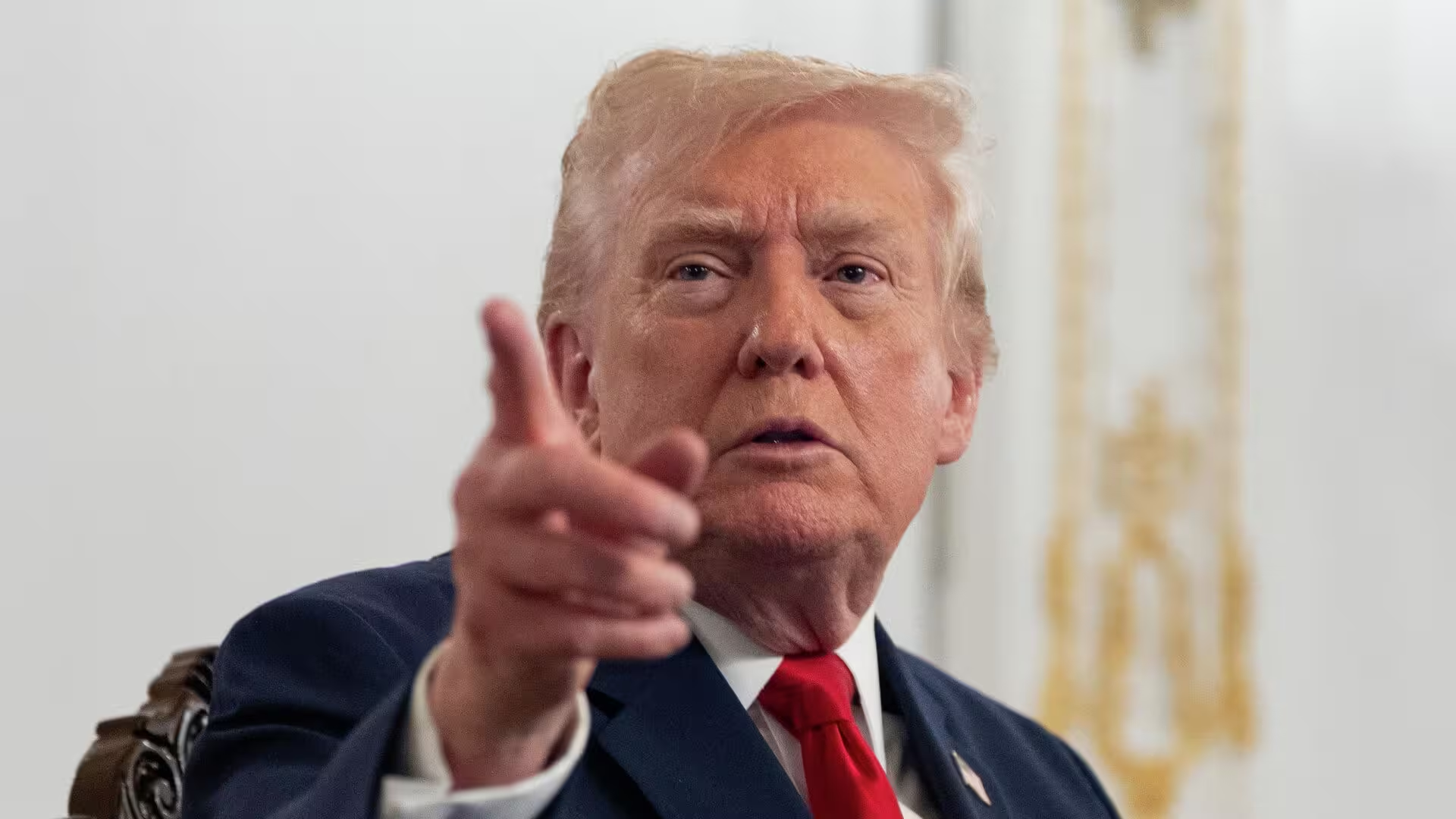
In a provocative move, US President Donald Trump responded to Iran’s closure by suggesting that the United States might impose its own tolls on the strait if a final agreement is not reached.
In a post on Truth Social, Trump declared there would be no tolls during the 60-day ceasefire period, but hinted that the US could charge for “services rendered as the Guardian Angel to the countries of the Middle East” should the deal fail.
This prospect has alarmed international observers and Australian officials, with Shadow Foreign Minister Ted O’Brien warning that a permanent toll would set a “dangerous precedent” for international waterway management.
International Perspectives: Australia’s Divided Stance
The crisis and Israel’s attacks on Lebanon have sparked political debate within Australia, highlighting a divide between the government and the opposition.
- Opposition’s Shadow Foreign Minister Ted O’Brien defended Israel’s right to defend itself against Hezbollah, arguing that the presence of a “terrorist organisation” complicates the peace process.
- Conversely, the Australian government has emphasized Lebanon’s sovereignty. Foreign Minister Penny Wong previously stated that Australia does not wish to see an Israeli occupation of southern Lebanon.
Prime Minister Anthony Albanese has remained firm on sanctions, stating that Australia will act as a sovereign nation and will not automatically lift sanctions on Iran, citing previous Iranian-orchestrated attacks on Australian soil.
The Path Forward for the US-Iran Deal
The success of the 60-day interim period depends on whether the US can leverage its influence to halt Israeli strikes and whether Iran can be convinced to maintain the openness of the Strait of Hormuz. The US has already lifted its blockade on Iranian ports and resumed allowing oil exports as a gesture of good faith. However, Hezbollah has indicated it will only honor a ceasefire if Israel fully withdraws from Lebanese territory—a condition that Iran has also linked to the success of the broader memorandum.