
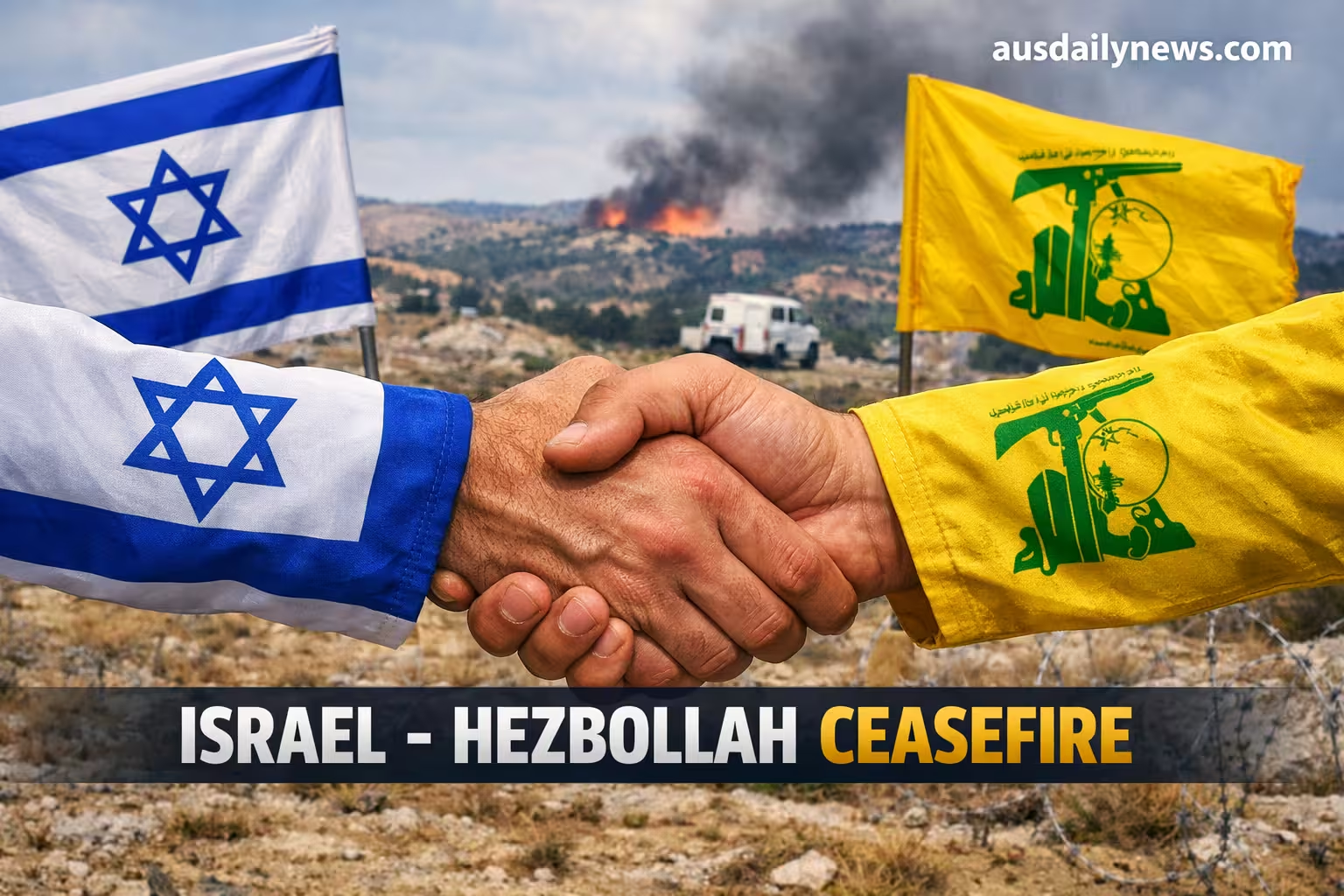
A fragile Israel-Hezbollah ceasefire has officially taken effect following a period of deadly escalation in southern Lebanon that threatened to derail a broader geopolitical effort to end the West Asia war. The truce, which began at 4 p.m. local time on Friday, June 19, 2026, was brokered through intense mediation by the United States and Qatar, with significant involvement from Iran. This emergency agreement comes as a desperate attempt to stabilize the region after a surge in hostilities nearly collapsed a landmark interim peace deal between Washington and Tehran.
The recent spike in violence occurred just days after U.S. President Donald Trump and Iranian President Masoud Pezeshkian signed a Memorandum of Understanding (MoU) intended to halt all military operations across all fronts. However, the agreement was immediately put to the test when Israeli forces and the Iran-backed Hezbollah militia engaged in heavy combat, resulting in significant casualties on both sides and the postponement of high-level diplomatic summits in Switzerland.
Also Read – Pete Hegseth Unveils NATO 3.0 Plan as US Reviews Military Presence in Europe
Impact of the Israel-Hezbollah Ceasefire on US-Iran Negotiations
The renewed truce was necessitated by a violent flare-up that saw the Israeli military strike over 80 Hezbollah targets, while Hezbollah targeted Israeli tanks near the city of Nabatiyeh.
According to reports from Lebanese health officials and international news agencies, the fighting resulted in dozens of deaths in Lebanon, while the Israel Defense Forces (IDF) confirmed the loss of four soldiers, including a lieutenant colonel. The volatility of the situation led to the immediate cancellation of planned talks in the Swiss resort of Bürgenstock.
U.S. Vice President JD Vance was scheduled to lead a delegation to Switzerland to meet with Tehran’s top negotiator, Mohammad Bagher Ghalibaf. The goal of these discussions was to transition the interim agreement into a permanent peace treaty over a 60-day negotiation window. However, Iranian officials refused to travel to Switzerland, insisting that the fighting in Lebanon must cease before substantive talks on nuclear programs and security could proceed. While Switzerland’s foreign ministry stated it remains ready to facilitate these discussions, no new date has been set.
The tension within the U.S. administration has become evident. Vice President Vance issued a sharp rebuke to hardline elements within the Israeli government who criticized the Iran deal, reminding them that President Trump is currently the only global head of state remaining sympathetic to Israel. In a briefing to the White House, Vance cautioned that national security problems cannot be solved solely through military force, urging Israel to respect a peace process that is fundamentally beneficial for the entire region.
Geopolitical Strains and the Role of the ‘Security Zone’
Despite the ceasefire, significant friction remains regarding the territorial integrity of Lebanon. A central point of contention is Israel’s continued occupation of portions of southern Lebanon. Prime Minister Benjamin Netanyahu has remained firm, stating that the IDF will remain in a self-declared “security zone” for as long as Israel’s security needs require it. This stance directly contradicts the 14-point MoU signed between the US and Iran, which calls for the respect of Lebanon’s sovereignty.
Israeli officials, citing “blatant ceasefire violations” by Hezbollah, have argued that the militant group must pay a heavy price for attacks on Israeli troops. Conversely, Hezbollah has accused Israel of never adhering to the spirit of the deal, claiming that Israeli forces continue to attempt deeper incursions into Lebanese territory.
The fragility of the truce is further highlighted by statements from far-right Israeli National Security Minister Itamar Ben Gvir, who called for a more aggressive approach, suggesting that “all of Lebanon must burn” in response to soldier casualties.
Economic Recovery and the Reopening of the Strait of Hormuz
While the military situation in Lebanon remains precarious, the interim deal has achieved a critical economic milestone: the reopening of the Strait of Hormuz. This vital shipping bottleneck, which handles approximately one-fifth of the world’s oil and liquefied natural gas exports, had been largely closed during the conflict, triggering a global energy crisis and spiking fuel prices.
Recent maritime data shows a gradual increase in commercial traffic. On Thursday, 25 commercial vessels crossed the strait—the highest volume since mid-April. The U.S. military has also lifted its parallel naval blockade of Iranian ports, although warships remain in the general vicinity to ensure stability. To manage this transition, the Persian Gulf Strait Authority has implemented new guidelines requiring ships to submit transit requests 48 hours in advance to navigate around mines and other safety risks.
In a gesture of goodwill during the 60-day negotiation period, the Iranian authority has announced it will waive tariffs for security, safety, and environmental services. This move is designed to encourage the return of global shipping and stabilize Brent crude prices, which have already seen a decline following the news of the diplomatic breakthrough.
The Road to a Permanent Peace Treaty
The ultimate objective of the current diplomatic effort is to reach a comprehensive agreement within 60 days. The core of these future negotiations will focus on Iran’s nuclear program, a primary catalyst for the war that began on February 28 following US-Israeli strikes that killed the former supreme leader, Ayatollah Ali Khamenei. The new supreme leader, Ayatollah Mojtaba Khamenei, has approved the current accord despite admitting he holds different views on certain aspects.
The proposed long-term deal includes –
- Significant incentives for Tehran
- Eventual lifting of all international sanctions
- $300 billion reconstruction fund.
In exchange, the U.S. and its allies seek strict limits on Iran’s enrichment of uranium to prevent the development of atomic weapons.
While Republican hawks and some Democrats in the U.S. have criticized the deal as overly generous, President Trump has defended the agreement, claiming that Iran is now “diminished” and was the party acting out of desperation to secure the deal.
Beyond the Middle East, the resolution of this conflict has ripple effects globally. European leaders, including German Chancellor Friedrich Merz, have emphasized that stability in Lebanon is crucial for broader international security.
Furthermore, the G7 has indicated that a stabilized Middle East could allow the U.S. to shift its focus and increase pressure on Russia regarding the war in Ukraine, potentially reinstating oil sanctions that were previously paused to manage global energy volatility.
Frequently Asked Questions
Why was the US-Iran meeting in Switzerland postponed?
The talks were postponed because of a deadly escalation in fighting between Israel and Hezbollah in southern Lebanon. Iranian negotiators refused to travel to Switzerland until they received guarantees that hostilities in Lebanon would end, as stipulated in the interim peace agreement.
What are the main terms of the Israel-Hezbollah ceasefire?
The ceasefire, mediated by the US, Qatar, and Iran, calls for an immediate halt to hostilities. However, it remains fragile as Israel maintains a “security zone” in southern Lebanon, while Hezbollah demands a full Israeli withdrawal and an end to airstrikes.
What is the significance of the Strait of Hormuz reopening?
The Strait of Hormuz is one of the world’s most important shipping lanes for oil and gas. Its reopening is critical for lowering global energy prices and ending the economic instability caused by the blockade during the war.
What is the ’60-day window’ mentioned in the peace deal?
The 60-day period is a negotiated timeframe during which the United States and Iran aim to finalize a permanent peace treaty, specifically focusing on restricting Iran’s nuclear program in exchange for sanctions relief and reconstruction funds.
How has the US government reacted to the Israeli military’s actions in Lebanon?
While the US remains a key ally of Israel, top officials like Vice President JD Vance have expressed frustration, urging the Israeli government to avoid “going wild” in Lebanon and to respect the peace process to ensure long-term regional stability.
News Sources – TimeofIndia, ABC News, TheHindu, DW

One thought on “Israel and Hezbollah Agree to Ceasefire as US-Iran Peace Talks Face Delays”