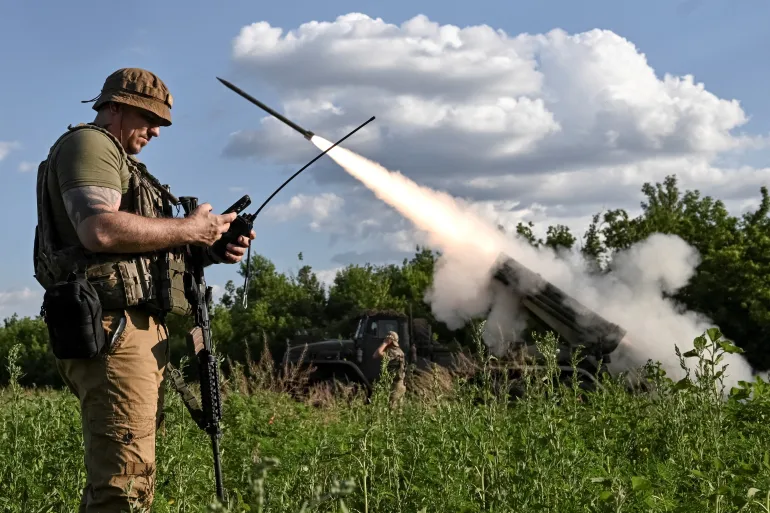
Ukraine launched one of its largest aerial offensives of the war overnight, with Russia claiming to have intercepted 660 drones targeting Russian territory, occupied Crimea, and strategic sites across the Black and Azov seas. The massive overnight operation targeted a dozen Russian regions, the illegally annexed Crimean peninsula, and strategic maritime zones in the Black and Azov seas.
This surge in long-range strikes is part of a broader strategic shift by Kyiv to degrade Russian energy infrastructure and disrupt military logistics, forcing the Kremlin to confront critical vulnerabilities deep within its own borders.
Massive Scale of the Ukrainian Drone Assault
The sheer scale of the operation has stunned observers and strained Russian air defense networks.
According to the Russian Defense Ministry, air defenses intercepted a staggering 660 Ukrainian drones during the night. This surpasses the previous record for the past year, which saw 556 drones deployed on May 17, signaling a rapid acceleration in Ukraine’s domestic drone production and sophistication.
The targets were varied and strategic. In the Tula region, approximately 180km south of Moscow, a “massive” attack resulted in the damage of a residential home and left one woman injured. Further south in Novomoskovsk, reports from the independent outlet Astra indicate that a chemical plant (identified as the Azot plant) and a hydroelectric plant were hit, sparking large fires.
President Volodymyr Zelenskyy has previously described the Azot plant as a critical component in Russia’s production of explosives, highlighting the intent to cripple the Russian military’s munitions supply chain.
The Russian capital was also a focal point of the operation. Moscow Mayor Sergei Sobyanin confirmed that 47 drones were downed as they approached the city, though no casualties or immediate damages were reported in the capital.
Crimea Emergency Situation and Energy Infrastructure Collapse
The intensity of the aerial campaign has forced authorities in Russian-annexed Crimea to declare a regional-level emergency situation. Moscow-installed governor Sergey Aksyonov signed decrees for both the Republic of Crimea and the city of Sevastopol to manage the fallout from increasing strikes on the peninsula’s logistics and energy grids.
The declaration comes as Crimea grapples with severe fuel shortages and widespread power cuts. These disruptions are a direct result of Ukrainian strikes on energy infrastructure and oil facilities across southern Russia and the peninsula. Governor Aksyonov admitted on social media that no air defense system is “absolutely perfect,” acknowledging the Russian military’s inability to fully protect the territory.
Beyond the energy grid, Ukraine’s Security Service (SBU) reported successful strikes in the port city of Kerch. The SBU claims that long-range drones targeted air defense radars and three Russian naval vessels: the reconnaissance and mine-laying ships Volga and Vyatka, and the cargo-passenger ferry Petropavlovsk. These strikes reportedly ignited large fires, further compromising Russian naval capabilities in the Black Sea.
Zelenskyy’s ’40-Day Influence Operation’ and Global Support
The timing of this onslaught is not coincidental. The attacks followed an announcement by President Volodymyr Zelenskyy on X (formerly Twitter), where he revealed he had ordered a “40-day influence operation.” This phrase is widely interpreted by analysts as a calculated escalation of military strikes intended to compel Russia to end the war, particularly after previous U.S.-led peace efforts failed to produce a breakthrough.
Zelenskyy has indicated that this intensified effort is backed by renewed foreign support. Following a recent G7 summit, the Ukrainian leader noted promises of further aid, including support from U.S. President Donald Trump.
This international backing is seen as a critical catalyst for Ukraine to step up pressure on Vladimir Putin and force him toward the negotiating table. Additionally, an upcoming NATO summit is expected to be a pivotal moment for further beefing up Ukraine’s military capabilities.
Russia’s Retaliation and the Belarus Border Tension
Russia responded with its own barrage of strikes across Ukraine.
In the northeastern Kharkiv region, Russian forces used guided aerial bombs and drones to strike the city of Kharkiv and 16 other settlements, killing two people and wounding seven.
In downtown Izium, another drone attack killed a woman and injured three others.
Further attacks struck the capital, Kyiv, as well as Odesa, Sumy, and the Zaporizhzhia region, where rescue workers were seen extinguishing fires in destroyed buildings.
These assaults utilized powerful glide bombs and targeted critical sites, including gas stations, leaving at least 19 people wounded, including a nine-year-old child. Ukraine’s air force reported intercepting 174 of 189 Russian drones, though four Iskander-M ballistic missiles successfully bypassed defenses.
Parallel to the kinetic warfare, tensions are rising over the role of Belarus. President Zelenskyy warned that Belarus is building military infrastructure and storage bases near the Ukrainian border under Russian influence.
While the Ukrainian State Border Guard Service has not detected a fresh buildup of troops immediately at the border, they have noted an expansion of Russian military sites deeper within Belarus.
Belarusian President Alexander Lukashenko has denied any intention of joining the war, asserting that he wishes to reach a “substantive agreement.” However, the paradox remains: while Lukashenko has not deployed troops, he has allowed the stationing of Russian tactical nuclear missiles on his soil and continues to host joint military exercises with Moscow.
Also Read – Russia Hits UNESCO World Heritage Site in Massive Kyiv Air Raid
Strategic Impact of Long-Range Drone Warfare
The shift toward long-range drone strikes represents a turning point in the war of attrition. By targeting oil refineries and energy hubs, Ukraine is effectively choking Russian fuel supplies and military deliveries.
Western officials suggest this strategy is stalling Moscow’s battlefield momentum by creating a logistical crisis behind the front lines. This “deep strike” capability allows Kyiv to bring the reality of the war home to the Russian populace, eroding the perceived security of the Russian interior and placing immense political pressure on the Kremlin.
Frequently Asked Questions
Why did Russia declare an emergency in Crimea?
The emergency was declared to manage the fallout from repeated Ukrainian drone attacks that caused severe power outages and fuel shortages, as the Russian military struggled to protect the peninsula’s energy infrastructure.
What is the ’40-day influence operation’ mentioned by Zelenskyy?
It is believed to be a strategic escalation of military strikes, specifically using long-range drones, aimed at damaging Russian infrastructure to force the Kremlin to negotiate an end to the war.
Which Russian facilities were targeted in the latest attacks?
Key targets included the Azot chemical plant in Novomoskovsk (critical for explosives production), hydroelectric plants, oil production facilities, and naval vessels in the port of Kerch.
Is Belarus planning to enter the war?
While President Lukashenko denies intentions to fight and calls for an agreement, Ukraine reports that Russia is expanding military bases and infrastructure inside Belarus, suggesting it remains a potential launchpad for future aggression.
How many drones were involved in the most recent attack?
Russia’s Defense Ministry claimed that 660 Ukrainian drones were intercepted, marking one of the largest aerial assaults of the entire conflict.
News Sources – ABC News, Al Jazeera