
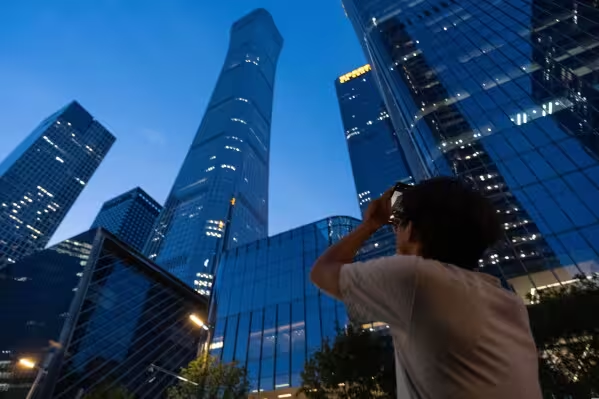
A small aircraft crashed into Beijing’s tallest skyscraper, the CITIC Tower, shortly before 6:00 p.m. local time on Friday, June 26, 2026, triggering an evacuation and a major emergency response in the city’s central business district.
While official statements from the Chinese government remain absent, flight tracking data and eyewitness accounts provide a harrowing look at the event that has shaken the metropolis.
Flight Data and Aircraft Identification of the Beijing Crash
According to the global flight tracking service Flightradar24, the aircraft involved in the collision was a Sunward SA 60L Aurora.
Tracking data indicates that the plane departed from an airport approximately 50 kilometers east of Beijing. The aircraft proceeded westward, with its flight path ending abruptly just east of the East Third Ring Road.
Investigators and aviation enthusiasts have noted that wreckage images circulating online show a partial registration number “B-12,” which corresponds to the full registration B-12PP.
The Sunward SA 60L Aurora is a small aircraft, described by bystanders at the scene as being roughly the size of a car, which explains the localized nature of the impact despite the immense height of the skyscraper.
Damage to the CITIC Tower and Impact on the Business District
The CITIC Tower, also widely known as China Zun due to its architectural resemblance to an ancient Chinese wine vessel, stands as one of the most iconic structures in Beijing’s skyline. Reaching more than 1,700 feet across 108 storeys, the skyscraper serves as the headquarters for the state-owned CITIC Group.
Reports from the scene and photographic evidence indicate that the impact caused visible damage to the building’s exterior. Specifically, at least two glass panels on a high floor were shattered, leaving a hole in the glass facade.
An anonymous source working within the building confirmed that the aircraft’s impact triggered the building’s fire alarms, leading to a rapid evacuation of personnel from the skyscraper.
Heavy Police Presence and Information Control in Beijing
Following the crash, the area surrounding the CITIC Tower was immediately cordoned off by security forces. Dozens of police cars, several fire trucks, and ambulances lined the roads of the business district, creating a massive security perimeter.
Police officers were observed preventing passers-by from filming the wreckage and, in some instances, demanding that witnesses delete photos and videos already captured on their mobile devices.
The incident has been met with a characteristic wave of digital censorship. Posts regarding the crash were quickly scrubbed from domestic Chinese social media platforms. On the Xiaohongshu app, searches for the building’s name yielded no results dated after Thursday, suggesting a coordinated effort to remove mentions of the event from the “walled-off” internet. However, footage and images of the debris have managed to bypass the Great Firewall, circulating widely on international platforms such as X.com.
Airspace Regulations and Potential Causes
The cause of the crash remains unknown, but the event raises significant questions regarding airspace security in Beijing.
The capital city maintains some of the strictest airspace controls in the world. Only a month prior to this incident, Beijing authorities had implemented new, more stringent curbs on the operation and sale of consumer drones within the city.
The fact that a manned aircraft—even a small one like the Sunward Aurora—was able to penetrate the airspace of the central business district and strike a state-owned conglomerate’s headquarters is an anomaly that will likely be the focus of a rigorous internal investigation. As of the latest updates, there has been no official word on the condition or identity of the pilot, nor has there been any confirmation of ground casualties.
Summary of Current Situation
- Incident: Small aircraft (Sunward SA 60L Aurora) crashed into CITIC Tower.
- Location: Central Business District, Beijing, China.
- Time: Approximately 6:00 PM local time, Friday, June 26, 2026.
- Damage: Broken glass facade on high floors; building evacuations triggered.
- Response: Heavy police presence, road closures, and strict censorship of social media.
Frequently Asked Questions
What building was hit in the Beijing aircraft crash?
The aircraft crashed into the CITIC Tower, also known as China Zun. It is the tallest building in Beijing and serves as the headquarters for the state-owned CITIC Group.
What type of plane was involved in the incident?
Flight tracking data from Flightradar24 identifies the aircraft as a Sunward SA 60L Aurora with the registration number B-12PP.
Were there any casualties in the CITIC Tower crash?
There has been no official confirmation regarding casualties on the ground or the status of the pilot. Reports indicate the building was evacuated after fire alarms were triggered.
Why is there so little official information about the crash?
The Chinese government and state media have not yet issued a formal statement. Additionally, images and discussions about the incident have been systematically removed from domestic social media platforms.
Where did the aircraft take off from?
According to flight data, the plane took off from an airport located approximately 50 kilometers east of Beijing before heading west toward the city center.