The Australian federal government has announced plans to strengthen the social media ban for under 16s including doubled penalties for technology companies that fail to stop children from accessing their platforms. The announcement comes as Prime Minister Anthony Albanese and Communications Minister Anika Wells acknowledge that “big tech” companies are not doing enough to adhere to the landmark laws introduced in December.
With the government aiming to pass these tougher measures before the parliamentary winter break on July 2, the focus is now on ensuring that platforms like TikTok, Instagram, and Snapchat move beyond the “bare minimum” to secure their digital environments.
New Penalties for Australia’s Under 16 Social Media Ban
Under the proposed changes, the maximum penalties for companies that fail to implement reasonable steps to prevent under 16s from signing up or maintaining accounts will double from $49.5 million to $99 million.
Communications Minister Anika Wells criticized the current approach of tech giants, suggesting they are employing “tricks straight out of the big tech playbook” to avoid full adherence to the law.
By doubling the fines, the government intends to send a clear message that the financial burden of ignoring Australian law will outweigh the benefits of ignoring age restrictions. This move is specifically targeted at some of the wealthiest companies in the world, ensuring that the penalties are substantial enough to compel a change in corporate behavior.
Also Read – Australia to Toughen Under-16 Social Media Ban as Teens Bypass Restrictions
Expanded Powers for the eSafety Commissioner for implementing Social Media Ban
Beyond financial deterrents, the government is equipping the eSafety Commissioner, Julie Inman Grant, with a more robust set of investigative tools. Previously, the regulator expressed frustration that the existing legislation did not provide “potent powers” necessary to hold platforms accountable. The new legislation aims to rectify this by granting the Commissioner the authority to:
- Force social media companies to provide concrete evidence of the measures they have implemented to block under 16s.
- Compel third-party providers, including those offering age-verification technology and app-store operators, to disclose information.
- Demand documentation to validate and test the claims made by platforms regarding their compliance efforts.
Additionally, the penalties for failing to comply with information-gathering notices issued by the eSafety Commissioner will also be doubled, ensuring that the investigative process cannot be easily obstructed by corporate legal teams.
University of Newcastle Study Reveals High Rates of Circumvention
The push for stronger legislation follows a damning observational study conducted by the University of Newcastle and published in the British Medical Journal. The research, which tracked 408 adolescents aged 12–17, found that Australia’s age restrictions have had a limited early impact on actual usage patterns.
According to the study, more than 85 percent of the cohort under 16 years old continued to use restricted social media platforms three months after the ban took effect. The researchers highlighted a significant “substantial circumvention” of the rules, noting that approximately two-thirds of these users stayed online by:
- Using self-declared ages to bypass filters.
- Uploading selfies that the platform’s AI accepted as being over 16.
- Creating fake accounts or using accounts belonging to friends and family.
Lead investigator Courtney Barnes noted that while there is international momentum for such bans, the evidence base remains uncertain regarding their practical feasibility and unintended consequences.
Impact of the Social Media Age Restriction Laws
Despite the findings of the University of Newcastle study, the federal government maintains that the laws are making a difference.
Official government estimates suggest that since the ban began in December, more than five million accounts belonging to under 16s have been removed, deactivated, or restricted across various platforms.
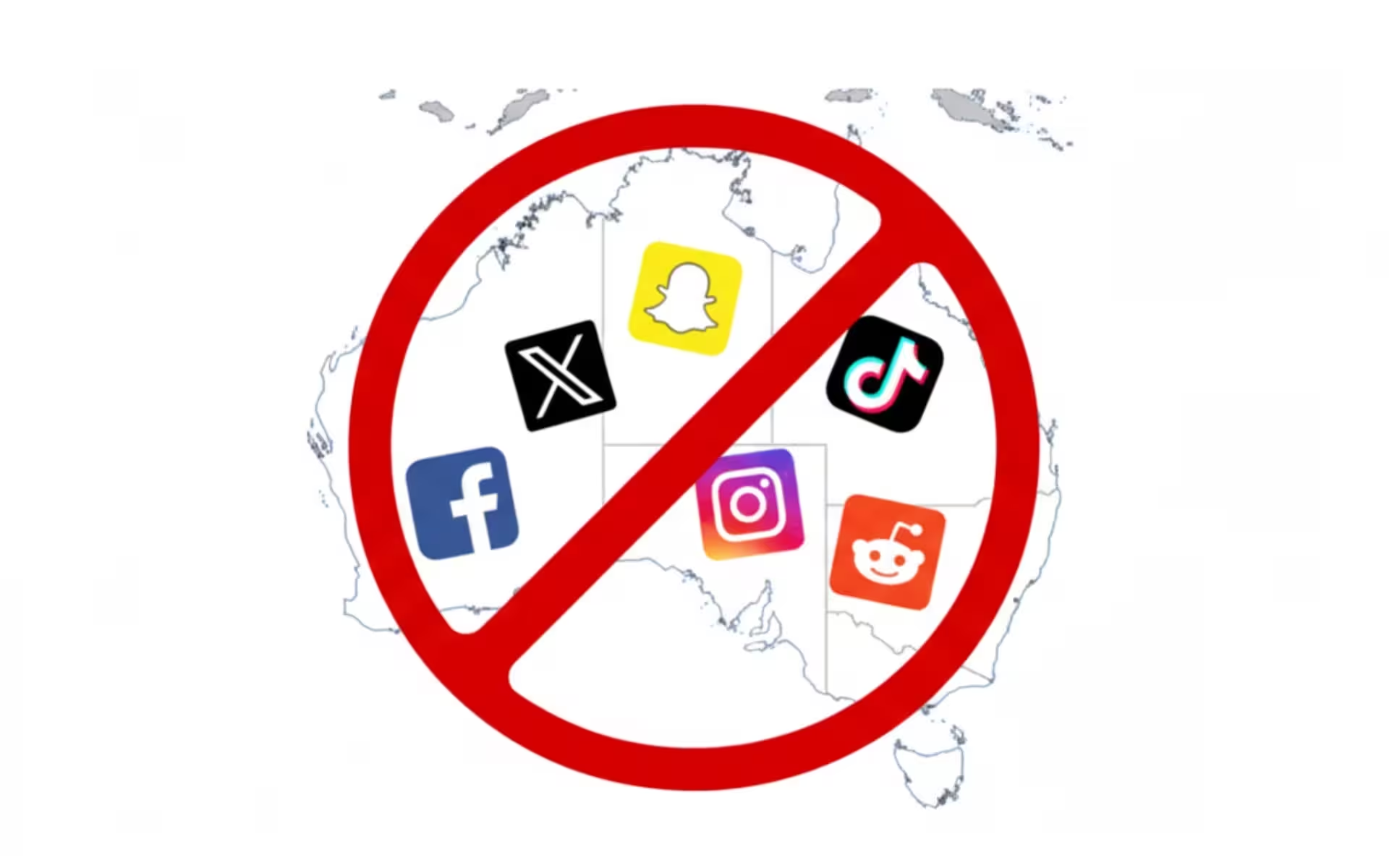
Currently, the eSafety Commissioner is actively investigating five major platforms for potential non-compliance. The list of platforms subject to these strict regulations includes Facebook, Instagram, TikTok, Snapchat, YouTube, Reddit, Twitch, and others. The government’s resolve is further tested by legal challenges, including a High Court case brought by Reddit, which remains in preliminary hearings.
Global Trends in Youth Online Safety Legislation
Australia’s approach to the social media ban for young people is being closely monitored globally. As concerns over youth mental health and physical well-being rise, other nations are seeking to emulate or exceed the Australian model.
For instance, the United Kingdom recently unveiled plans for its own under 16 social media ban, with some proposals suggesting even broader restrictions that would include gaming and live-streaming platforms.
The Australian government believes that by refining its laws and increasing penalties, it can set a global standard for how nations hold powerful technology companies accountable for the safety of the youngest users.
Frequently Asked Questions (FAQ)
What are the new penalties for social media companies breaking the under 16 ban?
The maximum penalties for tech companies that fail to prevent children under 16 from accessing their platforms will double from $49.5 million to $99 million.
Which social media platforms are affected by the Australian age ban?
The ban covers major platforms including TikTok, Facebook, Instagram, Snapchat, YouTube, Reddit, Twitch, and other social media services accessible to the public.
How is the eSafety Commissioner’s role changing?
The eSafety Commissioner will receive strengthened powers to compel social media companies and third-party age-verification providers to provide evidence and documentation of their compliance efforts.
Do the age restrictions actually work?
While the government reports 5 million accounts have been removed or restricted, a University of Newcastle study found that over 85% of under 16s in their sample continued using these platforms, often by self-declaring a false age.
When will these new laws come into effect?
The Labor government intends to legislate these tougher penalties and expanded powers before the parliamentary winter break on July 2.