
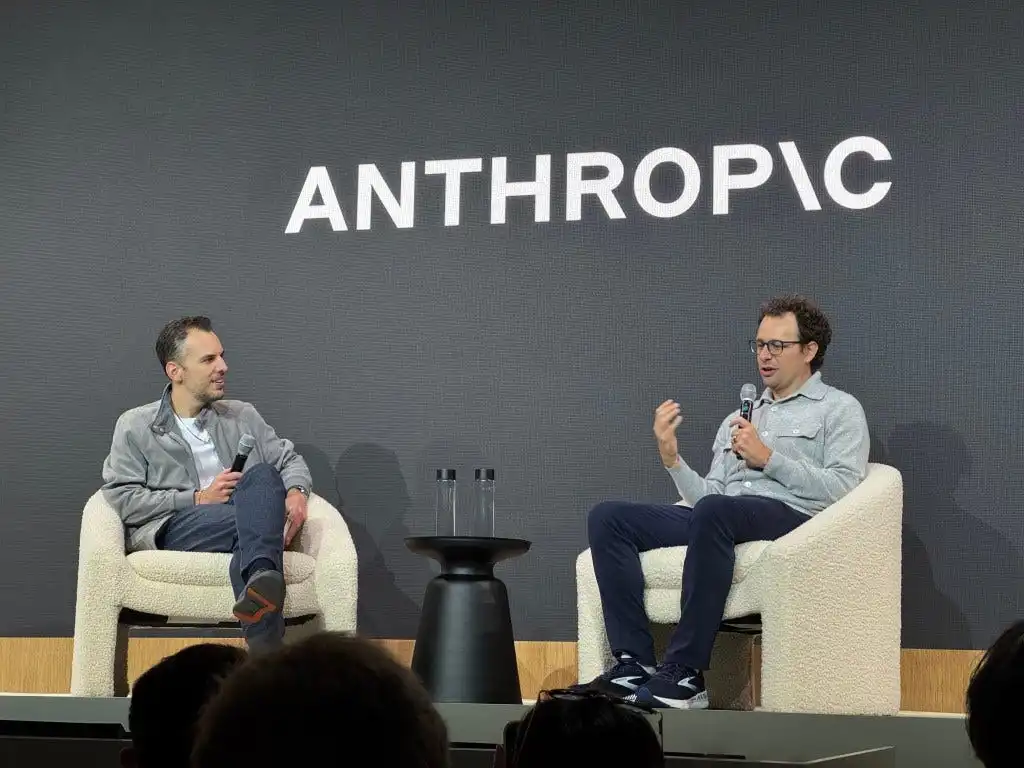
Anthropic has reignited the debate over AI development after raising concerns about the rapid pace of artificial intelligence advancement.
Recent discussions emerged after Anthropic, the company behind the AI assistant Claude, published a detailed article highlighting how modern AI systems are becoming increasingly capable of contributing to their own development. While some reports suggested the company was demanding a worldwide halt to AI progress, its actual position is more nuanced.
Why Anthropic Is Concerned About Rapid AI Growth
In its latest publication, Anthropic explained that AI models are no longer limited to following human instructions. According to the company, advanced systems can now assist in writing code, designing experiments, and improving various stages of AI development.
The report emphasized that human involvement is gradually shrinking as AI becomes more capable. Anthropic suggested that if there were a practical way to slow down AI development through international cooperation, it could provide society with valuable time to adapt to the technology’s impact.
However, achieving such global coordination remains highly unlikely. Any meaningful agreement would require participation from major technology powers and geopolitical rivals, making a worldwide slowdown difficult to implement.
Anthropic’s Most Powerful AI Model Remains Restricted
At the same time, Anthropic revealed the existence of a highly advanced AI model known as Mythos. The company described it as exceptionally skilled in cybersecurity-related tasks, including capabilities that could potentially be used for sophisticated hacking activities.
Because of the risks associated with releasing such technology publicly, Anthropic chose to limit access to a small group of trusted organizations and security experts. The objective is to strengthen defensive cybersecurity measures before similar capabilities become widely available elsewhere.
This initiative operates under a program called Project Glasswing, a private network designed to help selected organizations prepare for future AI-driven security threats.
Project Glasswing and the Strategic AI Advantage
Project Glasswing recently expanded to include a number of companies from democratic nations, including organizations in Australia, Europe, Japan, and the United States.
Anthropic CEO Dario Amodei has repeatedly stressed the importance of ensuring that democratic countries remain competitive in the global AI race. Although specific countries are rarely mentioned directly, much of the discussion centers around growing technological competition with China.
The project represents a significant shift in how advanced AI technologies are managed. Unlike major international initiatives of the past that were led by governments, Project Glasswing is operated by a private company with enormous influence over the future of artificial intelligence.
The Historical Connection Between Computing and AI
The current AI revolution can be traced back to some of the earliest breakthroughs in computing.
During World War II, pioneers such as Alan Turing and Tommy Flowers helped develop Colossus, widely regarded as the world’s first programmable electronic computer. Originally created to support military codebreaking efforts, Colossus laid the foundation for modern computing.
Over the following decades, governments funded much of the technological research that eventually gave rise to personal computers and the internet. Later, innovation shifted into the private sector, leading to the rise of companies such as IBM, Apple, Microsoft, Google, Amazon, and Facebook.
Today, AI companies like Anthropic and OpenAI are building on that legacy, creating systems that may ultimately transform every industry and aspect of daily life.
AI Investment Boom Gains Momentum
The artificial intelligence sector has also become one of the most powerful drivers of global financial markets.
After a period of market uncertainty, AI-related stocks have experienced another major surge. Investors are increasingly convinced that AI will become an essential technology for businesses, governments, and consumers around the world.
As demand for AI services grows, companies are investing heavily in the infrastructure required to support these systems. Massive data centers, advanced networking equipment, and next-generation computing hardware are all seeing unprecedented levels of investment.
This trend has significantly benefited semiconductor manufacturers, whose chips provide the processing power needed to train and operate modern AI models.
Why Semiconductor Companies Are Thriving
AI systems require enormous computational resources. Every AI-generated response depends on complex calculations performed by specialized processors.
As a result, major semiconductor manufacturers have become some of the biggest beneficiaries of the AI boom. Companies producing memory chips, GPUs, and high-performance processors are experiencing strong demand as technology firms race to expand their AI capabilities.
The growing need for computing power is expected to continue as AI adoption spreads across industries.
Is the AI Market Heading Toward a Bubble?
One of the biggest questions facing investors is whether the current AI enthusiasm could eventually lead to a market correction.
Historically, periods of extreme concentration in a small number of technology stocks have often preceded major market downturns. Some analysts believe similar warning signs are appearing today.
However, there is a key difference compared with previous technology bubbles. Many leading AI companies are generating substantial revenue and investing heavily in infrastructure. Unlike speculative booms of the past, today’s AI leaders are supported by real products, real customers, and significant cash flow.
The challenge will be determining whether current profit levels can be maintained as competition increases.
How the AI Industry May Evolve
Industry experts increasingly view the future AI economy as a three-layer ecosystem.
1. Infrastructure and Foundation Models
This layer includes chip manufacturers, cloud computing providers, and developers of large language models. These businesses provide the core technology that powers AI applications.
As competition grows, these services could eventually resemble utilities, with pricing pressures reducing profit margins over time.
2. Intelligent Middleware
The second layer consists of tools that connect AI models with external data sources and business systems.
Technologies such as Retrieval-Augmented Generation (RAG), AI orchestration platforms, and specialized industry models help improve accuracy and performance. Companies operating in this area may achieve stronger margins by offering unique capabilities.
3. AI-Powered Applications
The highest-value layer is expected to be end-user applications.
These include AI assistants, workflow automation platforms, productivity tools, industry-specific software, and future AI-powered robots. Customers typically pay for outcomes rather than computing resources, creating opportunities for significantly higher profitability.
The Future of AI Business
While foundation models such as Claude, ChatGPT, and Gemini currently dominate public attention, competition from open-source alternatives—particularly those emerging from China—could reduce their profit margins over time.
The greatest long-term value may ultimately come from products built on top of these models rather than the models themselves.
AI-powered agents, workplace automation tools, personal assistants, and intelligent robotics are expected to become major growth areas in the coming years. As the technology matures, businesses that successfully transform AI capabilities into practical solutions may capture the largest share of future profits.
The race to develop artificial intelligence is no longer just a technological competition—it is becoming a battle for economic leadership, national security, and global influence. The decisions made today by companies such as Anthropic, OpenAI, and others could shape the future of society for decades to come.
Frequently Asked Questions (FAQs)
What is Anthropic Mythos?
Anthropic Mythos is an advanced AI model developed for complex cybersecurity tasks. Due to its powerful capabilities, Anthropic has restricted public access and is using it primarily for security research and defense preparation.
What is Project Glasswing?
Project Glasswing is Anthropic’s initiative that gives selected organizations access to advanced AI technologies to help them prepare for future cybersecurity and AI-related risks.
Why is Anthropic concerned about AI development?
Anthropic believes AI is advancing rapidly and could outpace society’s ability to manage its risks. The company supports stronger AI safety measures and responsible development practices.
Is the AI market in a bubble?
Some experts see signs of an AI investment bubble due to soaring stock prices and heavy spending. Others argue that strong demand and real business growth justify the industry’s expansion.