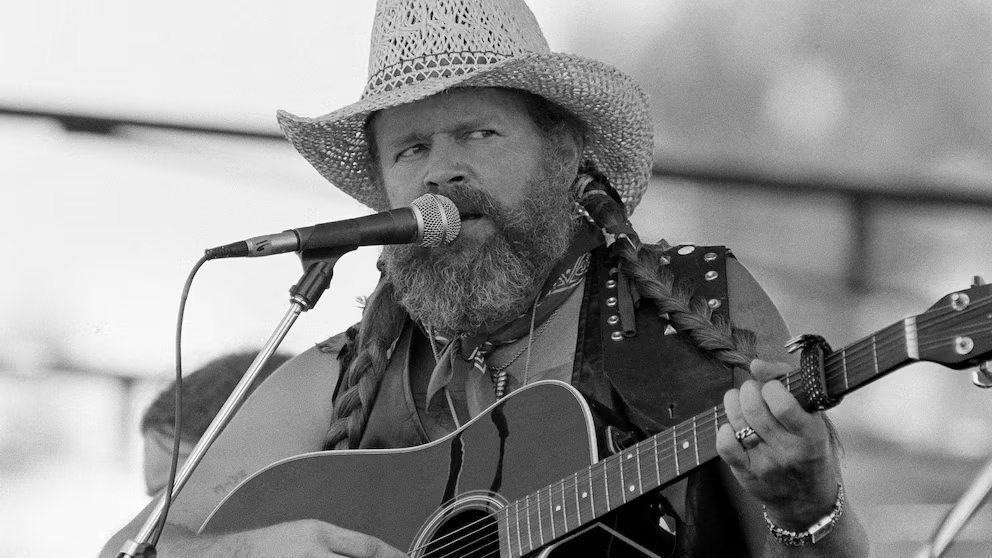
Country Music Legend David Allan Coe has died at the age of 86, marking a significant moment in country music history. A defining voice of the outlaw country movement, Coe built a reputation not through mainstream dominance, but through authenticity, controversy, and a fiercely loyal fanbase. His passing was confirmed by the Country Music Hall of Fame.
A Pioneer of the Outlaw Country Movement
During the 1970s, outlaw country emerged as a response to the polished Nashville sound. Alongside figures like Waylon Jennings and Willie Nelson, Coe became part of a movement that valued artistic freedom over commercial expectations.
His music stood out for blending country with rock and blues influences. While he never dominated charts, Coe achieved eight Top 40 hits on the Country Singles chart. Songs such as “You Never Even Called Me By My Name,” “The Ride,” and “Long Haired Redneck” remain staples among fans of traditional country.
David Allan Coe early life and struggles
Born in Akron, Ohio, in 1939, Coe’s early life was marked by hardship. Raised in a troubled household, he was sent to reform school at a young age and later spent years in correctional facilities, including the Ohio Penitentiary.
It was during incarceration that Coe discovered music—a turning point that would define his future. After his release in 1967, he moved to Nashville to pursue songwriting and performing.
Also Read – Ray J made shocking claims of sleeping with 12500 different women
Songwriting Success and Industry Recognition
Though his solo career had modest commercial success, Coe’s songwriting earned widespread recognition. Tanya Tucker recorded his song “Would You Lay with Me (In a Field of Stone)”, which became a No. 1 hit in 1973. Similarly, Johnny Paycheck found success with “Take This Job and Shove It,” a track that later inspired a feature film.
Coe also gained attention for his unconventional lifestyle, including reportedly living in a hearse near the Ryman Auditorium—a story that added to his mystique.
Controversies That Defined His Career
Coe’s career was often overshadowed by controversy. His explicit albums, Nothing Sacred and Underground Album, sparked criticism and accusations of offensive content—claims he denied.
Legal troubles followed him into later life, including issues with the IRS. Despite these challenges, Coe remained active in music, continuing to tour and record.
Cross-Genre Influence and Collaborations
Coe’s influence extended beyond country music. He collaborated with members of Pantera, including Dimebag Darrell, in the project Rebel Meets Rebel—blending country with heavy metal elements.
He also worked with Kid Rock, appearing in collaborations and joining his tours. Later in his career, Coe featured in projects with The Moonshine Bandits, demonstrating his continued relevance across genres.
Expert Insight: Why David Allan Coe Still Matters
Music experts often describe Coe as one of the most authentic voices in outlaw country. His work resonated with listeners who valued raw storytelling and emotional honesty over commercial polish.
While his controversies limited mainstream appeal, they also reinforced his outsider identity—making him a symbol of artistic independence.
FAQs
Who was David Allan Coe?
David Allan Coe was an American country singer-songwriter known for his role in the outlaw country movement and his unconventional life story.
What are his most famous songs?
His popular songs include “The Ride,” “You Never Even Called Me By My Name,” and “Mona Lisa Lost Her Smile.”
Why was David Allan Coe controversial?
He faced criticism for explicit albums and legal issues, along with a turbulent personal history.
How David Allan Coe died ?
The reason of David Allan Coe death has not been disclosed yet.
Did David Allan Coe influenced other artists?
Yes, his songwriting and rebellious style influenced many artists across country and rock genres.