
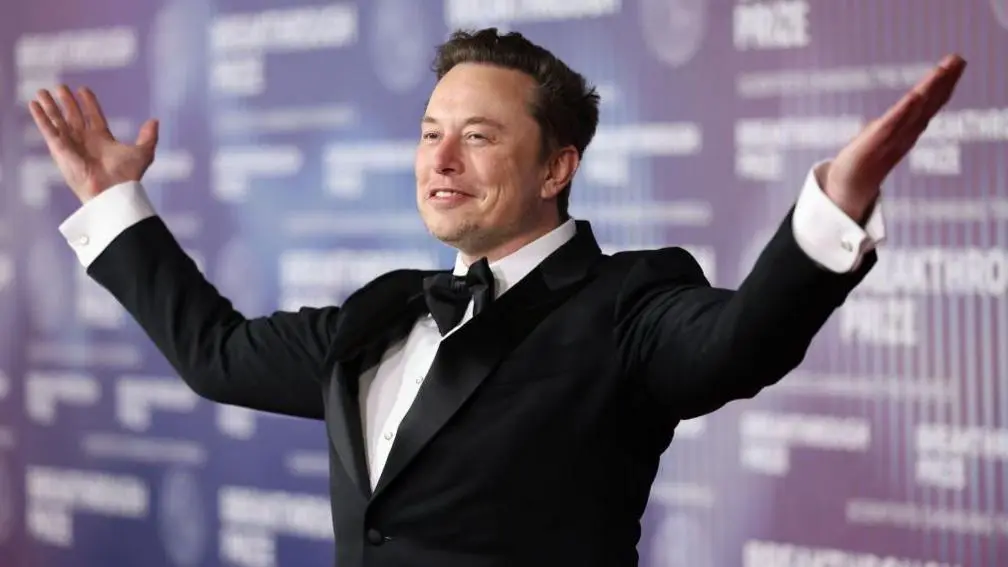
Elon Musk has officially become the world’s first trillionaire after SpaceX made its highly anticipated debut on the Nasdaq stock exchange. The company’s record-setting initial public offering (IPO) propelled Musk’s personal wealth beyond $US1.1 trillion (approximately A$1.5 trillion), placing him in a financial category unlike any individual before him.
The historic listing instantly transformed SpaceX into one of the most valuable companies in the world, while significantly increasing the value of Musk’s majority ownership stake.
SpaceX Shares Surge on Market Debut
SpaceX entered public trading under the ticker symbol “SPCX” at $US150 per share, exceeding the expected IPO price of $US135. Investor demand remained strong throughout the trading session, with shares climbing to approximately $US165 by midday.
The sharp rise pushed SpaceX’s market capitalization to around $US2.2 trillion, making it one of the largest publicly traded companies globally. The valuation places the aerospace and technology giant alongside market leaders such as Apple, Microsoft, Alphabet, and NVIDIA.
The IPO generated more than $US75 billion, surpassing Saudi Aramco’s previous record-setting public offering of $US29.4 billion in 2019.
Musk Reflects on SpaceX’s Early Challenges
Speaking before the opening bell, Musk reflected on the company’s uncertain beginnings and acknowledged that he initially believed the chances of success were relatively low.
He emphasized that the goal of creating a new space company was never solely about business success but also about advancing humanity’s ability to become a spacefaring civilization.
Despite the public offering, Musk continues to maintain firm control of the company through his ownership of roughly 82 percent of SpaceX shares.
Thousands of Employees Stand to Benefit
The successful market debut is expected to create substantial paper wealth for current and former employees. Industry estimates suggest that more than 4,000 SpaceX employees holding company stock could become millionaires based on current share prices.
Many long-term investors and early supporters of the company are also expected to see significant gains following the public listing.
Analysts Raise Questions About Valuation
While investors celebrated the stock market debut, some financial analysts expressed concerns about SpaceX’s valuation.
Research firm Morningstar suggested that the company may be trading at levels that exceed its underlying fundamentals and advised investors to exercise caution during the early stages of public trading.
The firm also questioned certain figures disclosed in regulatory filings, arguing that some reported revenue numbers appeared inconsistent with its own estimates.
Political Scrutiny Intensifies
The IPO has also attracted political attention in the United States.
Senator Elizabeth Warren criticized the regulatory approval process, arguing that questions surrounding SpaceX’s financial disclosures should have received greater scrutiny before the company was allowed to go public.
Her comments added to an ongoing debate about the oversight of major public offerings involving some of the world’s most influential technology entrepreneurs.
Wealth Greater Than Many National Economies
Musk’s new trillionaire status places his fortune above the economic output of numerous countries.
Reports indicate that his net worth now exceeds the combined wealth of several of the world’s richest business figures, including Google co-founders Larry Page and Sergey Brin, Oracle founder Larry Ellison, and Amazon founder Jeff Bezos.
If Musk’s fortune were compared to national economies, it would rival the GDP of countries such as Poland and surpass those of Ireland, Sweden, Norway, the United Arab Emirates, and South Africa.
His wealth is also larger than the economy of New South Wales and approaches the combined economic output of New South Wales and Western Australia.
SpaceX Expands Beyond Rockets
Founded by Musk in 2002, SpaceX has evolved from a private rocket startup into a major force in space technology, satellite communications, and artificial intelligence.
The company operates the rapidly expanding Starlink satellite internet network, which now consists of more than 10,000 satellites in orbit. Coinciding with its stock market debut, SpaceX launched another Falcon 9 mission carrying 29 Starlink satellites into space.
SpaceX has also integrated Musk’s artificial intelligence venture, xAI, which develops the Grok chatbot and competes with companies such as OpenAI and Anthropic.
Investors Betting on Long-Term Vision
Much of SpaceX’s massive valuation is tied to future growth expectations rather than current profits.
The company reported revenue of $US18.7 billion during 2025 but also recorded a net loss of approximately $US4.9 billion, largely due to heavy investment in artificial intelligence infrastructure and future technologies.
Executives have consistently emphasized a long-term strategy focused on ambitious projects, including expanding satellite internet services, developing advanced AI capabilities, building infrastructure in space, and ultimately enabling human settlement on Mars.
SpaceX President Gwynne Shotwell stated that investors should view the company through a long-term lens rather than focusing on short-term quarterly performance.
A Landmark Moment for Global Markets
The record-breaking IPO represents one of the most significant events in stock market history and highlights continued investor confidence in Musk’s vision despite ongoing controversy surrounding his political views and public statements.
Demand for SpaceX shares reportedly exceeded available supply by more than four times, demonstrating strong interest from both institutional and retail investors.
As the first major artificial intelligence and space technology company to reach public markets at this scale, SpaceX’s debut could influence future IPO plans for other leading AI firms, including OpenAI and Anthropic.
With a valuation exceeding $US2 trillion and Elon Musk becoming the world’s first trillionaire, the SpaceX listing marks a historic milestone for both the technology sector and global financial markets.
Frequently Asked Questions (FAQs)
1. How did Elon Musk become the world’s first trillionaire?
Elon Musk became the world’s first trillionaire after SpaceX’s public listing on the Nasdaq significantly increased the value of his ownership stake in the company. With SpaceX’s valuation surpassing $US2.2 trillion and Musk owning approximately 82% of the company, his net worth crossed $US1.1 trillion.
2. What is SpaceX’s valuation after its IPO?
Following its Nasdaq debut, SpaceX reached a market capitalization of approximately $US2.2 trillion, making it one of the most valuable companies in the world.
3. What was the IPO price of SpaceX shares?
SpaceX shares were priced at $US135 during the IPO. However, they opened trading at $US150 and later climbed to around $US165 during the first day of trading.
4. What stock ticker does SpaceX trade under?
SpaceX trades on the Nasdaq stock exchange under the ticker symbol “SPCX.”
5. How much money did the SpaceX IPO raise?
The SpaceX IPO raised more than $US75 billion, making it the largest initial public offering in history.
6. How much of SpaceX does Elon Musk own?
Elon Musk owns approximately 82% of SpaceX shares, allowing him to retain control of the company even after the public offering.
7. How many SpaceX employees could become millionaires from the IPO?
Industry estimates suggest that more than 4,000 current and former SpaceX employees with company stock holdings could become paper millionaires following the IPO.



One thought on “Elon Musk becomes World’s First Trillionaire After Record-Breaking SpaceX IPO”