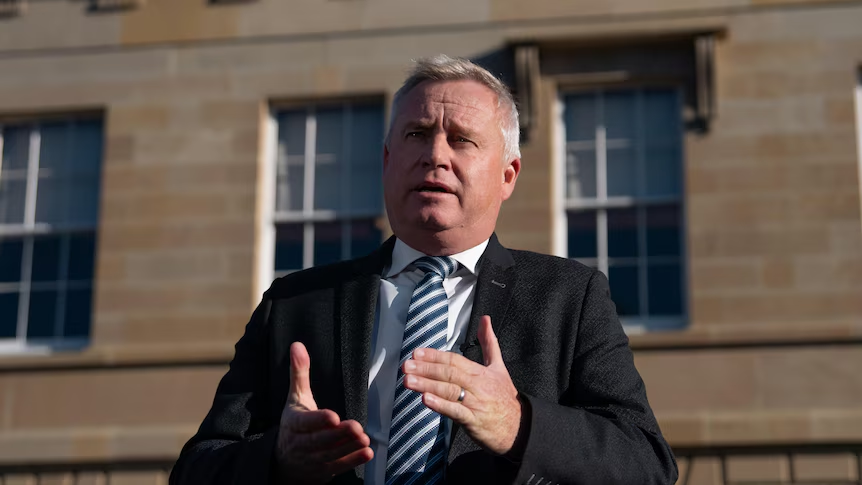
In a historic first for the state, Tasmanian Premier Jeremy Rockliff has been censured by parliament following a series of political scandals involving his cabinet. The censure motion against Jeremy Rockliff passed on Wednesday night with a vote of 16 to 12, marking a significant blow to the Premier’s authority and reflecting a growing crisis of confidence regarding government integrity and transparency.
What Happened
The Tasmanian Parliament has officially passed a censure motion against Premier Jeremy Rockliff, making him the first person to hold the state’s highest office to be formally censured. The motion was introduced by the Greens and received critical support from the Labor Party and a significant bloc of independent members. While the motion is symbolic and does not carry a legal penalty or force the Premier to resign, it serves as a formal reprimand and a public declaration of the parliament’s dissatisfaction with his leadership.
The vote reflected a divided house. Support for the motion came from the Greens, the Labor Opposition, and five independents: Peter George, Kristie Johnston, Craig Garland, Helen Burnet, and David O’Byrne. Opposing the motion were government ministers, independent George Razay, and Shooters, Fishers and Farmers MP Carlo Di Falco.
Key Details behind the Jeremy Rockliff Censure Motion
The censure motion is the culmination of several weeks of turmoil within the Rockliff government, primarily centered on allegations that ministers misled parliament and breached the Ministerial Code of Conduct.
Opposition parties argued that the Premier failed to uphold accountability standards after questions emerged about ministerial conduct and the handling of legal indemnity arrangements.
Premier Rockliff has issued an apology, admitting that he failed to “interrogate the issue further” regarding Minister Ogilvie’s clarifications on her involvement in Supreme Court matters. In response to the backlash, the Premier has pledged to implement reforms aimed at strengthening the transparency of legal indemnities for government officials.
Legal Fees Controversy and Minister Resignations Explained
Central to the scandal are revelations regarding the expenditure of hundreds of thousands of dollars in public funds to cover ministers’ legal fees. These payments were related to previously secret Supreme Court proceedings. The Greens have argued that these details only became public due to the scrutiny provided by the current minority parliament, alleging a concerted effort to cover up the legal matters.
The controversy intensified following the resignations of two high-profile ministers, Jane Howlett and Madeleine Ogilvie, who stepped down shortly after allegations surfaced that they had provided misleading information to the house.
The stability of the Rockliff government has been under immense pressure as it navigates a minority parliament where the crossbench holds significant power. The tension reached a breaking point as the opposition and independents demanded greater adherence to the Ministerial Code of Conduct.
The Greens have been particularly vocal, asserting that the Premier’s failure to maintain integrity standards has left his reputation “in tatters.” They argue that the government’s handling of the legal fees scandal demonstrates a pattern of avoiding accountability.
Reactions from Labor, Greens and Independent MPs
Following the successful vote, Greens leader Dr. Rosalie Woodruff stated that the motion confirms the Premier’s behavior has been “unacceptable.” She emphasized that integrity must be demonstrated through action rather than words, noting that the censure serves as a caution to the Premier to be more attentive to the behavior of his ministers.
Labor leader Josh Willie echoed the sentiment that the motion sends a “strong message,” though he cautioned that the political fallout for Mr. Rockliff is far from over. Willie expressed disappointment that the Premier attempted to dismiss parliamentary accountability as political maneuvering, stating that such “feeble attempts” are no longer effective.
In his own defense during the parliamentary session, Premier Rockliff argued that the threshold for a censure motion should remain high to avoid setting a dangerous precedent. He contended that such motions should not be used as “signalling devices” or tools for political pressure, but should only be deployed under extraordinary circumstances.
The political atmosphere has been described as volatile, with the Premier previously characterizing the efforts to hold him accountable as “toxic” or “gotcha” politics—a stance that has drawn further criticism from opposition leaders.
What’s next for Premier Jeremy Rockliff?
Despite the symbolic nature of the censure, the Rockliff government faces an immediate need to restore trust. The Premier’s commitment to transparency reforms regarding legal indemnities will be a focal point for future parliamentary debate.
There are ongoing calls from the Greens and Labor for further resignations and more comprehensive disclosures regarding the “cover-up” of Supreme Court proceedings.
The government must now navigate a precarious path to maintain its legislative agenda in a minority environment where the support of independents is crucial. Whether the Premier can successfully pivot toward a “move forward” strategy—as he has indicated—will depend on his ability to convince the crossbench that genuine integrity reforms are being implemented.
Conclusion
The historic censure vote leaves Jeremy Rockliff facing increased pressure to restore confidence in his government and deliver promised transparency reforms. While the motion does not remove him from office, it underscores growing concerns about ministerial accountability and public trust in Tasmania’s minority government.
FAQ’s – (Frequently Asked Questions)
What is a censure motion in the Tasmanian Parliament?
A censure motion is a formal expression of disapproval by the parliament toward a specific member, in this case, the Premier. It is a symbolic gesture used to hold officials accountable for their actions or failures in leadership; it does not automatically remove the person from office or carry a legal penalty.
Why was Premier Jeremy Rockliff censured?
The Premier was censured due to his handling of scandals involving government ministers, specifically regarding the use of public funds for legal fees in secret Supreme Court cases and allegations that ministers misled parliament and breached the Ministerial Code of Conduct.
Which ministers were involved in the controversy?
Ministers Jane Howlett and Madeleine Ogilvie both resigned following allegations that they had misled parliament, which triggered the broader investigation into government integrity and the subsequent censure motion.
Who supported the motion against the Premier?
The motion passed with the support of the Tasmanian Greens, the Labor Party, and five independent MPs: Peter George, Kristie Johnston, Craig Garland, Helen Burnet, and David O’Byrne.
What reforms has the Premier promised?
Premier Rockliff has pledged to introduce reforms to strengthen the transparency of legal indemnities to ensure that the use of public funds for legal matters is more clearly disclosed and managed.