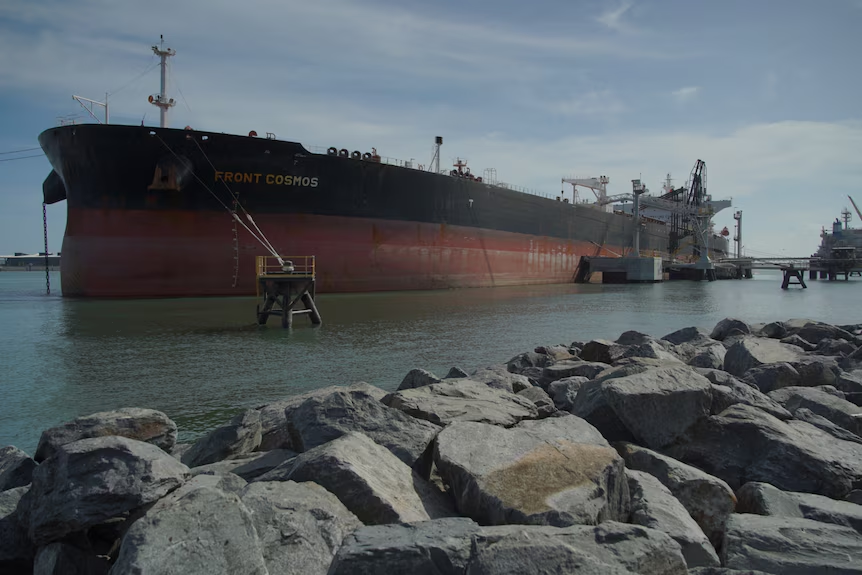
Under the Accelerating Fuel Infrastructure Program, Queensland government has unlocked state-owned land for oil storage and refining projects along the state’s coastline, aiming to strengthen fuel security and reduce reliance on global supply chains.
Queensland Opens Coastal Land for Oil Infrastructure
Under the newly launched Accelerating Fuel Infrastructure Program –
- Land near key ports in Brisbane, Townsville, Mackay, Gladstone, Abbot Point, and Bundaberg will be made available for industry expressions of interest. These sites could be used to develop fuel storage facilities, with the possibility of building oil refineries as well.
- It also includes identifying suitable land through audits, engaging with industry stakeholders, and streamlining approval processes to fast-track development. However, timelines for construction remain uncertain.
Boosting Fuel Security and Sovereign Capability
Queensland Premier David Crisafulli said the initiative is a core component of the state’s Fuel Security Plan. The goal is to tackle rising fuel prices while enhancing Australia’s “sovereign capability” in energy.
According to Crisafulli, strengthening domestic capacity to drill, refine, and store fuel is critical for protecting the nation from global supply disruptions. He emphasized the importance of reducing dependence on international supply chains, particularly given Australia’s geographic position.
The Premier also urged the federal government to reconsider environmental regulations introduced in 2025, which exclude fossil fuel projects from national interest exemptions under the Environment Protection and Biodiversity Conservation (EPBC) Act. He argued that removing these restrictions would encourage investment and accelerate project approvals.
Collaboration with Private Sector
Deputy Premier Jarrod Bleijie highlighted that the initiative mirrors previous land activation efforts used to boost housing development. He noted that the government owns significant land resources and is now seeking partnerships with private industry to unlock their potential for energy infrastructure.
Also Read – Trump rejected Iran’s new peace proposal
What are the concerns behind building new refineries ?
Despite the government’s optimism, some experts remain skeptical about the plan’s effectiveness –
- Tony Wood from the Grattan Institute pointed out that Australia once had eight oil refineries, many of which became economically unviable.
- Wood warned that developing new refining capacity could take more than a decade and would likely require substantial government support.
- Opposition Leader Steven Miles acknowledged the long-term benefits of improving fuel security but criticized the plan for failing to address current cost-of-living pressures.
- Deputy Opposition Leader Cameron Dick stressed that any future fuel production should prioritize local needs rather than benefiting large oil corporations.
Regional Support for the Plan
Regional leaders have expressed support for the plan, particularly for its potential to strengthen fuel access in non-urban areas. Mackay Mayor Greg Williamson said the initiative could:
- Support agriculture, mining, and industrial sectors
- Improve diesel availability
- Boost economic confidence across regional communities
Industries heavily dependent on fuel are expected to benefit from improved supply stability and infrastructure.
Frequently Asked Questions (FAQs)
1. What is the Accelerating fuel infrastructure plan?
The Queensland government’s plan aims to unlock state-owned land near coastal ports for the development of oil storage facilities and refineries. It is part of a broader strategy to improve fuel security and reduce reliance on global supply chains.
2. Which locations are included in the plan?
The proposed sites are near major ports in Brisbane, Townsville, Mackay, Gladstone, Abbot Point, and Bundaberg.
3. What types of infrastructure will be developed?
The plan allows for the construction of fuel storage tanks and, in some cases, oil refineries, depending on the proposals submitted by industry players.
4. What is the goal of Accelerating Fuel Infrastructure Program?
According to Premier David Crisafulli, the primary goal is to enhance fuel security, reduce price volatility, and build “sovereign capability” in Australia’s energy sector.
5. Will this plan reduce fuel prices immediately?
No, the plan is focused on long-term benefits. Opposition Leader Steven Miles has pointed out that it will not provide immediate relief for rising fuel costs.
6. What are the main criticisms of the plan?
Experts like Tony Wood argue that building new refineries may not be economically viable and could take over a decade to deliver results without significant government support.