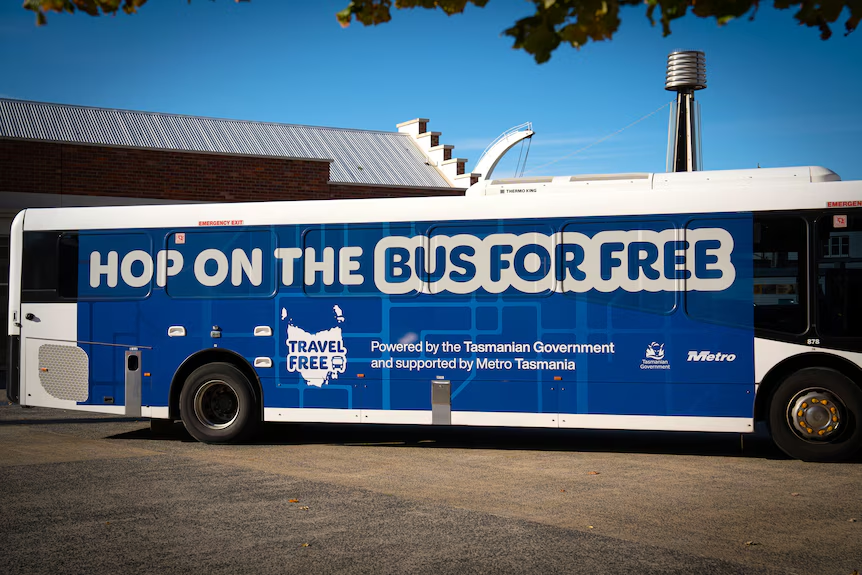
Free public transport in Tasmania will continue until July 2027 after the state government committed $24 million in funding to extend the scheme covering buses and ferries statewide. Tasmanians can continue riding buses and ferries at no cost for another 12 months. The extension keeps fares free until July 2027, providing ongoing financial relief amid widespread cost-of-living pressures across Australia.
The Tasmanian state government has supported the program, building on the success of what began as a short three-month trial launched in late March in response to surging fuel prices.
Why Did Tasmania Extend Free Public Transport?
The original trial was intended as a temporary cost-of-living measure, but ridership data made a compelling case for continuation.
Premier Jeremy Rockliff confirmed the extension, citing impressive uptake figures:
- Metro bus patronage rose by approximately 37%
- Kinetic bus services saw ridership jump by around 46%
“This is a significant investment but, in my view, a worthy investment,” Premier Rockliff said, describing the results as a strong vote of confidence in public transport from everyday Tasmanians.
Beyond easing household budgets, the government also highlighted reduced traffic congestion on Tasmania’s roads as a key benefit of the continued initiative.
Which Services Are Covered Under Free Public Transport?
The free travel scheme applies to the following public transport services across Tasmania:
- All Metro Tasmania bus routes
- Kinetic-operated bus services
- The Derwent Ferry service
Private charter services are excluded from the scheme. The initiative covers not only urban routes but also services into regional Tasmania, making it accessible to communities well beyond Hobart and Launceston.
How Are Tasmanians Benefiting?
Everyday Commuters Save Time and Money
Catherine Udovicic, a regular bus user from Mount Stuart, described the extension as “absolutely marvellous.” She noted that the removal of fares had made boarding faster and more convenient.
“People can just jump on really quickly — we just get straight on the bus and we’re on the way,” she said. She also highlighted how the scheme had enabled family members from regional areas to travel to visit loved ones without worrying about transport costs.
Bus Drivers Notice the Difference Too
Metro Tasmania driver Leone Burston, who has worked in the role for two decades, reported a noticeable increase in passenger numbers — particularly families and older residents during off-peak hours.
She noted that not collecting fares had simplified her role, and that passengers appeared more relaxed and positive.
“They’re happier because they’re not having to find that extra money to go out and meet their friends and do other enjoyment activities,” she said.
Benefits for Senior Tasmanians
Minister for Ageing Bridget Archer highlighted the particular value of the scheme for older residents, who may rely more heavily on public transport to maintain their independence and social connections.
“For senior Tasmanians this can be a great way to get around — not just in the cities but right into regional Tasmania,” Ms Archer said.
She stressed the importance of ensuring older Tasmanians remain connected to their communities, especially during periods of financial pressure.
What Do Critics and Supporters Say?
Support for the extension has come from across the political spectrum, though with some conditions attached.
Greens MLC Cassy O’Connor welcomed the move as one of the few positive elements in the state budget, while calling on the government to improve service frequency and reliability so Tasmanians can fully take advantage of the opportunity.
She also urged the government to treat the next 12 months as a formal long-term trial, with a view to making free public transport a permanent policy.
Premier Rockliff indicated the government is open to that possibility, saying officials will examine further expansions — including making the scheme permanent — over the coming year.
Could Free Public Transport Become Permanent in Tasmania?
The question of permanency is now firmly on the table. With ridership growth exceeding expectations and broad community support, Premier Rockliff confirmed the government would evaluate the long-term case for free fares during the extension period.
If ridership trends hold and the financial case remains strong, Tasmania could become a national leader in fare-free public transit — a model other Australian states may look to replicate.
Frequently Asked Questions
Is public transport free across all of Tasmania?
Yes, all non-charter public buses — including Metro and Kinetic routes — as well as the Derwent Ferry, are free to use until July 2027.
Do I need a card or ticket to board?
No fare payment is required. Passengers can simply board any eligible service without tapping a card or purchasing a ticket.
Will free public transport become permanent in Tasmania?
The government has indicated it will consider making the scheme permanent after reviewing usage data during the 12-month extension period.
Why did Tasmania introduce free public transport?
The initiative began in late March as a three-month response to high fuel prices and cost-of-living pressures. Its success prompted the government to extend it.