Australia has confirmed that securing three second-hand submarines was always its preferred outcome under the AUKUS deal, according to evidence provided during Senate estimates hearings.
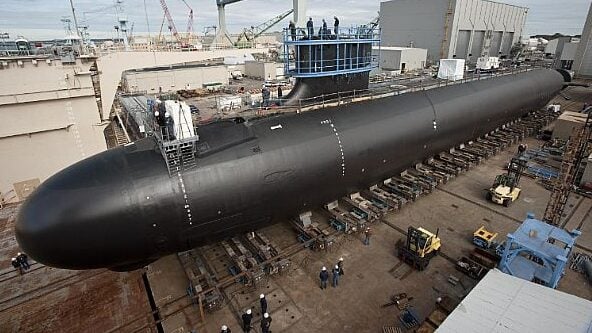
The disclosure comes after Australia, the United States, and the United Kingdom announced changes to the submarine delivery arrangement. Under the revised plan, Australia will acquire three used Virginia-class submarines from the United States rather than two used vessels and one newly built submarine.
The adjustment to the AUKUS submarine pact has renewed political debate over the agreement’s cost, delivery timeline, and long-term viability.
Also Read – What is AUKUS Deal ? New Under Sea Drone Projects confirmed by AUKUS
Australia Defends Changes to AUKUS Submarine Plan
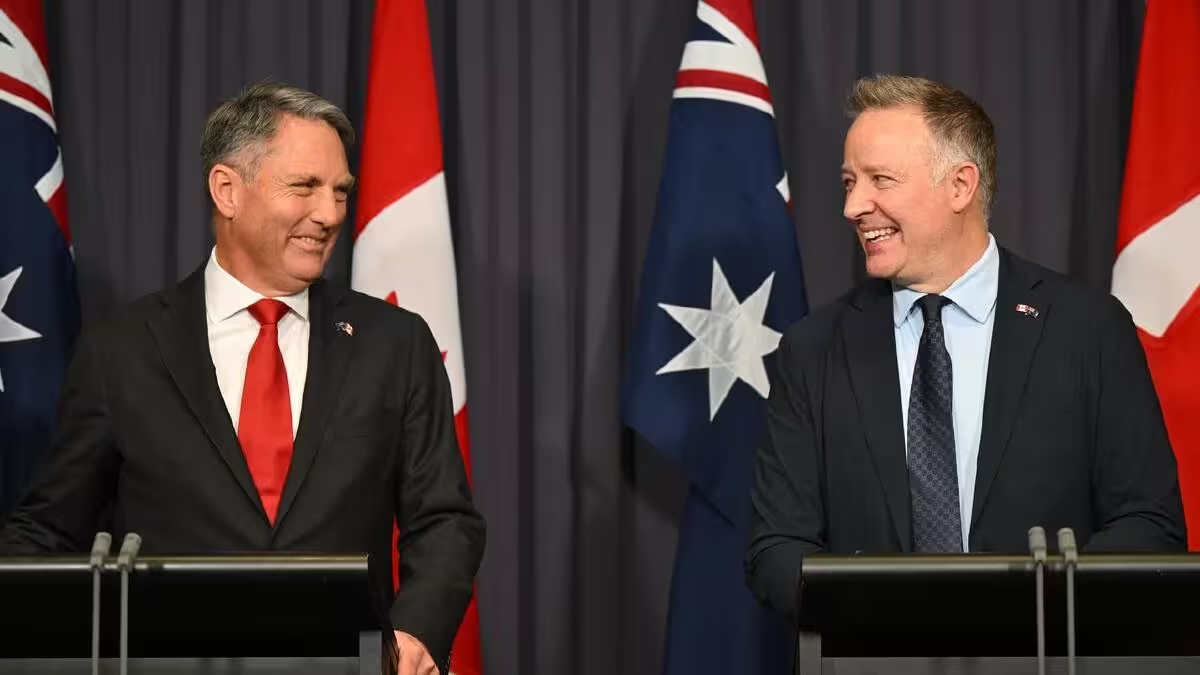
Defence Minister Richard Marles reaffirmed Australia’s commitment to the AUKUS deal following talks with US Defence Secretary Pete Hegseth in Singapore. The two officials confirmed support for the trilateral security partnership while outlining the revised submarine delivery model.
Mr Marles described the decision to acquire three used submarines in the 2030s as a move intended to simplify an arrangement he characterised as highly complex.
During Senate estimates, Defence Department Secretary Meghan Quinn said the revised approach was developed jointly between partners in the agreement.
“Australia’s position is that we would have always had a preference for three in service,” Ms Quinn told the hearing.
Her comments indicated that Australia’s preference for three operational submarines had been part of discussions surrounding the AUKUS submarine pathway.
When questioned by Liberal Senator James Paterson about whether the United States had effectively added another submarine to the agreement, Ms Quinn rejected that interpretation.
She stated that the arrangement was the result of long-term collaboration between alliance partners working to deliver a defence capability important to Australia’s national security.
According to Ms Quinn, ongoing negotiations contributed to a model that is expected to be simpler and potentially lower in cost.
She also noted that the Virginia-class submarines involved in the arrangement would be transferred during the early stages of their operational life and could remain in Australian service for decades.
Labor Figures Raise Questions Over AUKUS Delivery
The revised submarine arrangement has intensified scrutiny inside the Labor Party.
Labor MP Ed Husic argued that Australia should examine whether the AUKUS deal can realistically be delivered and consider renegotiation or alternative strategies.
While not confirming reports that he raised concerns during a Labor caucus meeting, Mr Husic said changes to the agreement justified reassessing the current pathway.
He pointed to production challenges in US shipyards as a significant concern. American submarine production remains below targets, with efforts underway to increase output from just over one Virginia-class submarine per year to more than two annually.
The production increase is considered central to the United States’ ability to supply submarines to Australia while maintaining growth in its own naval fleet.
Mr Husic said practical constraints surrounding production capacity could ultimately force a reconsideration of the agreement.
He also questioned what contingency planning exists if submarine deliveries fail to proceed as expected.
Government Reaffirms Commitment to AUKUS Deal
Despite criticism, the federal government has maintained its support for the AUKUS submarine pact.
Defence Industry Minister Pat Conroy stated that the government’s position on AUKUS has been consistently presented to voters and endorsed through internal party processes.
According to Mr Conroy, the agreement has received support from Labor caucus and backing at the party’s national conference, with the government continuing to emphasise the defence and employment benefits associated with the program.
Opposition and Greens Demand Greater Clarity
The Coalition has used the internal debate to question Labor’s unity on national defence policy.
Shadow Defence Minister James Paterson argued that the government should address dissent within its ranks and demonstrate full support for the AUKUS arrangement.
He also questioned why the revised model was not adopted earlier if the new approach is expected to be less costly and easier to implement.
The Greens have likewise sought more transparency regarding the updated submarine plan.
Greens Senator David Shoebridge called for greater scrutiny of the agreement and criticised the government’s handling of negotiations with the United States.
Public Inquiry Initiative Adds to Pressure on AUKUS Pact
Debate over the AUKUS deal is expanding beyond parliament, with a group of critics and sceptics launching what they describe as a public inquiry into the agreement.
The initiative is being led by former Labor minister Peter Garrett and includes former Chief of the Defence Force Chris Barrie among its participants.
The group plans to invite public submissions and conduct hearings focused on questions including value for money, strategic implications, and the feasibility of delivering the submarine program.
Mr Garrett described the AUKUS decision as one of the most consequential and expensive policy commitments made by an Australian government in recent history.
The inquiry aims to encourage broader public discussion regarding the costs, defence implications, and long-term outcomes associated with the AUKUS submarine pact.
As Australia proceeds with plans to acquire second-hand Virginia-class submarines, questions about delivery schedules, production capacity, political support, and strategic alternatives are likely to remain central to the national debate over the future of AUKUS.
FAQ: Australia’s AUKUS Submarine Deal
Why is Australia buying second-hand submarines under AUKUS?
Australia plans to acquire used Virginia-class submarines from the United States as part of the AUKUS submarine pathway. The revised arrangement allows Australia to purchase three second-hand submarines rather than a mix of used and new vessels. It is intended to simplify the delivery process.
How many submarines will Australia receive under the revised AUKUS plan?
Under the revised plan, Australia is expected to purchase three second-hand Virginia-class submarines from the United States during the 2030s.
Why did Australia change the original AUKUS submarine arrangement?
Australian defence officials have said the revised plan was developed jointly with alliance partners and reflects a preference for having three submarines in operational service. The government has stated that the updated arrangement could be simpler and potentially lower in cost.
What concerns have been raised about the AUKUS deal?
Critics and some political figures have raised concerns about submarine production capacity in US shipyards, delivery timelines, costs, and whether the agreement can be completed as planned. Questions have also been raised about contingency options if production targets are not achieved.
What are Virginia-class submarines?
Virginia-class submarines are nuclear-powered attack submarines operated by the United States Navy. They are designed for missions including intelligence gathering, surveillance, anti-submarine warfare, and strike operations.
Why are some Australian politicians calling for a review of AUKUS?
Some politicians and critics argue that production challenges, changing delivery arrangements, and strategic uncertainties justify re-examining the agreement. Calls for reassessment have included suggestions to explore alternative defence options or contingency plans.
What is the proposed public inquiry into AUKUS?
A group of AUKUS critics and sceptics has launched a public inquiry initiative aimed at examining the agreement’s cost, strategic impact, and deliverability. The initiative plans to seek public submissions and conduct hearings on issues related to the submarine program.