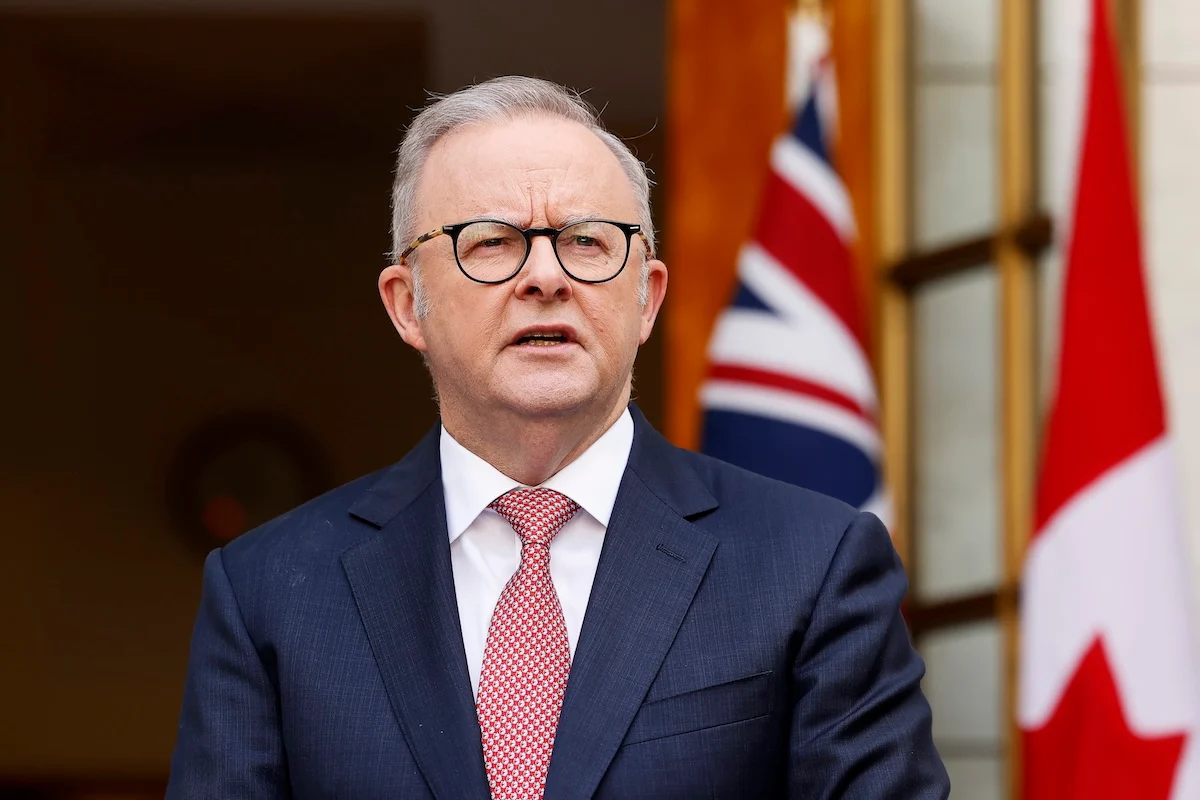
Anthony Albanese ‘Very Worried’ as US Strikes on Iran Escalate and Global Markets Face Uncertainty
Australian Prime Minister Anthony Albanese has expressed serious concern over the latest US strikes on Iran, warning that the escalating conflict is creating humanitarian risks and economic uncertainty across the world.
The comments come after the United States launched fresh military strikes against Iranian targets following the downing of a US helicopter near the Strait of Hormuz, a critical global shipping route. The growing US-Iran tensions have intensified fears of further instability in the Middle East and disruptions to international markets.
US Launches New Strikes on Iran After Helicopter Incident
The United States said the latest military action was a direct response to what it described as “unjustified Iranian aggression” after an American helicopter was brought down while operating near the Strait of Hormuz off the coast of Oman.
The two crew members aboard the aircraft were rescued safely from the water.
Although Iranian Foreign Minister Abbas Araghchi did not specifically address the helicopter incident, he warned that Iran’s military would respond to any attacks or threats directed at the country.
Hours after Mr Albanese’s remarks, Iran’s Islamic Revolutionary Guard Corps (IRGC) announced it had launched a drone attack against a US Navy base in Bahrain, further escalating the Iran conflict.
Anthony Albanese Warns of Human and Economic Consequences
Speaking to the ABC, Mr Albanese said Australia was increasingly concerned about both the humanitarian impact of the war and its effect on the global economy.
The Prime Minister noted that the conflict, now entering its third month, continues to place pressure on financial markets and international trade.
According to Mr Albanese, ongoing uncertainty surrounding military developments and diplomatic negotiations is making it difficult for businesses and investors to respond effectively.
He warned that the economic consequences of the conflict could worsen if tensions continue to escalate.
Donald Trump’s Peace Deal Statements Create Market Uncertainty
Mr Albanese also addressed repeated statements from US President Donald Trump regarding potential peace agreements involving the United States, Israel and Iran.
While acknowledging that President Trump has publicly stated his desire to end the conflict, the Prime Minister said there remains uncertainty over whether any proposed agreements will hold.
This uncertainty has created challenges for global markets, which often react immediately to major geopolitical announcements.
Investors have been forced to navigate rapidly changing developments as reports of progress toward peace are frequently followed by new military actions.
Strait of Hormuz Remains a Key Concern
The Strait of Hormuz remains one of the most important strategic waterways in the world, carrying a significant portion of global oil exports.
Mr Albanese highlighted the confusion surrounding reports about whether the strait remains fully operational, noting that updates on its status have changed frequently.
The uncertainty surrounding the Strait of Hormuz has increased concerns about energy supplies, shipping routes and fuel prices worldwide.
Australia, like many other countries not directly involved in the conflict, continues to feel the economic impact of disruptions in the region.
Australia Calls for a Lasting Ceasefire
The Australian government has repeatedly called for a permanent ceasefire and a long-term diplomatic solution to the conflict.
Mr Albanese stressed that a durable peace agreement is essential because the consequences of the war extend far beyond the countries directly involved.
Even nations that are not participating in the conflict are experiencing higher economic risks, increased market volatility and concerns about future energy costs.
Mike Johnson Defends US Military Response
US House Speaker Mike Johnson defended the latest US strikes on Iran, describing them as proportionate and limited military actions.
According to Mr Johnson, the strikes targeted Iranian radar systems, missile sites and command-and-control facilities.
He said the operation was defensive in nature and intended to protect American personnel and military assets in the region.
Fuel Excise Relief Remains Under Review
As global energy markets remain volatile, questions have emerged about whether Australia will extend its temporary fuel excise relief measures.
Mr Albanese said the government has not yet made a final decision on extending the fuel excise cuts beyond their scheduled expiry later this month.
Nationals leader Matt Canavan said the policy had provided some relief for Australian motorists but had also placed pressure on the federal budget.
He suggested the government should continue monitoring fuel prices closely and consider additional fuel excise relief if prices rise sharply due to ongoing Middle East tensions.
Growing US-Iran Tensions Continue to Impact Global Economy
The latest US strikes on Iran have added another layer of uncertainty to an already fragile geopolitical situation.
With military activity increasing, concerns over the Strait of Hormuz, global oil supplies and international financial markets remain high.
As the conflict continues, Australia and other nations will closely monitor developments, hoping diplomatic efforts can prevent further escalation and minimise the impact on the global economy.