
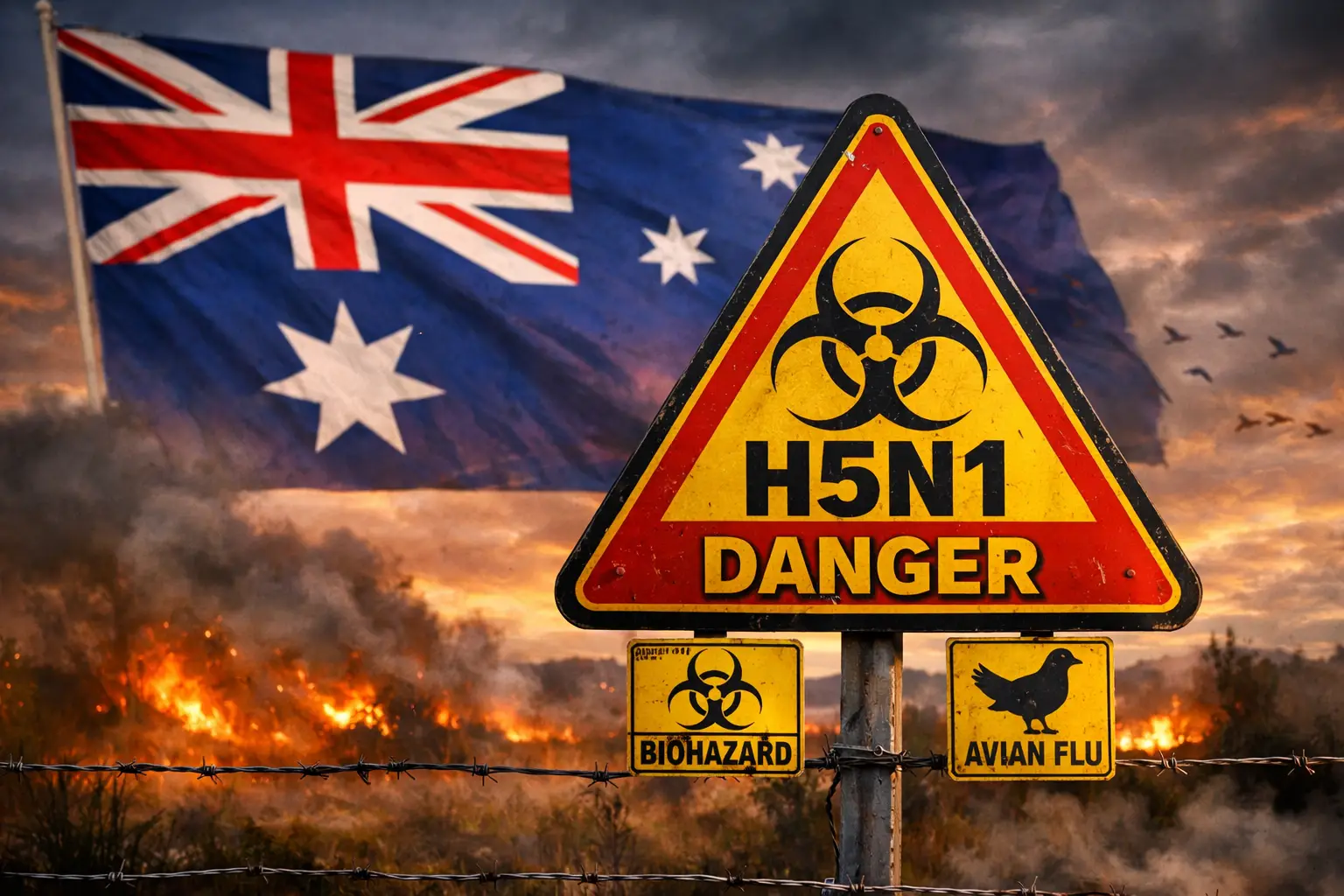
Australia has confirmed its first mainland case of H5N1 bird flu, marking the arrival of the deadly avian influenza strain on the continent. The virus was detected in a migratory brown skua found in Cape Le Grand National Park near Esperance in Western Australia, ending Australia’s status as the last continent free of the highly pathogenic H5 variant.
Immediate Biosecurity Response and Surveillance Efforts
The Australian government has moved swiftly to contain the threat. Prime Minister Anthony Albanese described the situation as a “serious concern” and pledged that the government would act decisively to restrict any further spread. Chief Veterinary Officer Beth Cookson stated that the Consultative Committee for Emergency Animal Disease convened immediately to coordinate a national response.
Current surveillance and containment measures include:
- Coastal Monitoring: Authorities are conducting widespread surveillance across the Australian coastline to determine if the virus has established itself in other wild populations.
- Testing: Samples from the infected birds have been sent to the CSIRO centre in Geelong to confirm the specific strain and its correlation with the Heard Island outbreak.
- Public Warnings: The government is urging citizens to avoid all contact with sick or dead birds and marine mammals.
- Reporting Protocols: Any sightings of distressed wildlife should be reported immediately to the Emergency Animal Disease Hotline at 1800 675 888.
Also Read – First Suspected Case of H5N1 Bird Flu Detected in Mainland Australia
Protecting the Australian Poultry Industry
A primary objective for the Department of Agriculture is the protection of the domestic poultry industry. While Minister Julie Collins emphasized that there is currently no evidence of infection in poultry or mass mortalities, the risk remains a critical concern. This is particularly poignant as the industry is still recovering from a massive H7 variant outbreak that resulted in the culling of over two million laying hens and caused severe egg shortages across the country.
To prevent a similar catastrophe, Western Australia’s Chief Veterinary Officer Michelle Rodan highlighted several key protection strategies:
- Housing Orders: Authorities may implement housing orders, requiring free-range birds to be kept indoors to prevent contact with wild birds.
- Feed and Water Security: Farmers are being urged to strictly manage the water and feed sources that wild birds might access.
- Biosecurity Buffers: Early reports suggest the infected birds were found hundreds of kilometres away from major commercial poultry operations, providing a temporary geographic buffer.
Understanding the H5N1 Strain and Global Impact
The H5N1 strain of avian influenza is highly pathogenic, meaning it is likely to cause severe disease or death in infected animals. Emerging in China in the late 1990s, the virus has since spread globally via migratory bird patterns. It predominantly affects seabirds, waterfowl, and scavengers, but has shown a dangerous ability to “spill over” into other mammal populations.
Overseas data indicates that marine mammals, such as seals and sea lions, are particularly susceptible. In Australia, Threatened Species Commissioner Fiona Fraser warned that local populations of black swans, blue-billed ducks, and little penguins are at high risk due to their tendency to gather in high-density breeding sites. The virus has also been detected globally in domestic pets like cats and dogs, as well as foxes and dairy cows.
Public Health Risks and Human Transmission
While the primary threat is to wildlife and agriculture, the potential for human infection is a point of close monitoring. Chief Veterinary Officer Beth Cookson noted that there is generally a low risk of infection for humans associated with this strain. Human cases globally remain uncommon and typically occur only after close, unprotected contact with infected birds or livestock.
Health authorities emphasize that there has been no confirmed human-to-human transmission of the H5 bird flu. However, because the virus has the potential to mutate, the government continues to collaborate with medical experts to ensure public safety.
Australia’s Long-term Preparedness Strategy
The detection of H5N1 comes after years of strategic planning. Australia has invested heavily in biosecurity, including
- $95 million in funding allocated last October, with an additional $11.2 million provided shortly before the mainland detection. This investment has funded the development of vaccination programs for vulnerable species and the tightening of farm biosecurity protocols.
- The National Emergency Management Agency (NEMA) has also conducted “war-game” crisis scenarios. These hypothetical exercises involve stakeholders from emergency services, supermarkets, health, and transport sectors to simulate the recovery process from a catastrophic outbreak.
Deputy coordinator-general Joe Buffone explained that these simulations are based on the worst-case realities of previous outbreaks, ensuring that all agencies can connect efficiently during a real-world incursion.
Symptoms to Watch for in Wildlife
Wildlife Health Australia and local veterinary experts advise the public to look for specific signs of illness in birds and mammals. Symptoms of H5N1 can vary, but often include:
- Physical Appearance: Birds may appear “puffed up” or be unable to fly.
- Neurological Distress: Animals may exhibit seizures, incoordination, or appear unresponsive.
- Respiratory Issues: Visible breathing difficulties are common in advanced stages.
- Sudden Death: In some cases, the virus causes death so rapidly that no prior signs of ill health are observed.
Frequently Asked Questions
Is the H5N1 bird flu dangerous to humans in Australia?
Currently, the risk to the general public is considered low. Human infections are rare and usually result from direct contact with infected animals. There is no evidence of human-to-human transmission at this time.
What should I do if I find a dead bird on the beach?
Do not touch or approach the bird. Immediately report the sighting to the Emergency Animal Disease Hotline at 1800 675 888 to assist authorities in surveillance and containment.
How does H5N1 affect the poultry and egg industry?
H5N1 is highly contagious among poultry and can lead to mass mortality, requiring the culling of flocks to prevent spread. This can disrupt food supplies and increase the price of eggs and poultry meat.
Which animals are most at risk in Australia?
Migratory seabirds, waterfowl, and marine mammals (like seals) are most susceptible. Specific local species at risk include the black swan, blue-billed duck, and little penguin.
What are the government’s current containment measures?
Measures include increased coastal surveillance, strict biosecurity protocols for farms (such as housing birds indoors), and the use of the Consultative Committee for Emergency Animal Disease to coordinate the response.
News Source – ABC News, Nine, BBC



3 thoughts on “H5N1 Bird Flu Australia: First Mainland Case Confirmed in Western Australia”