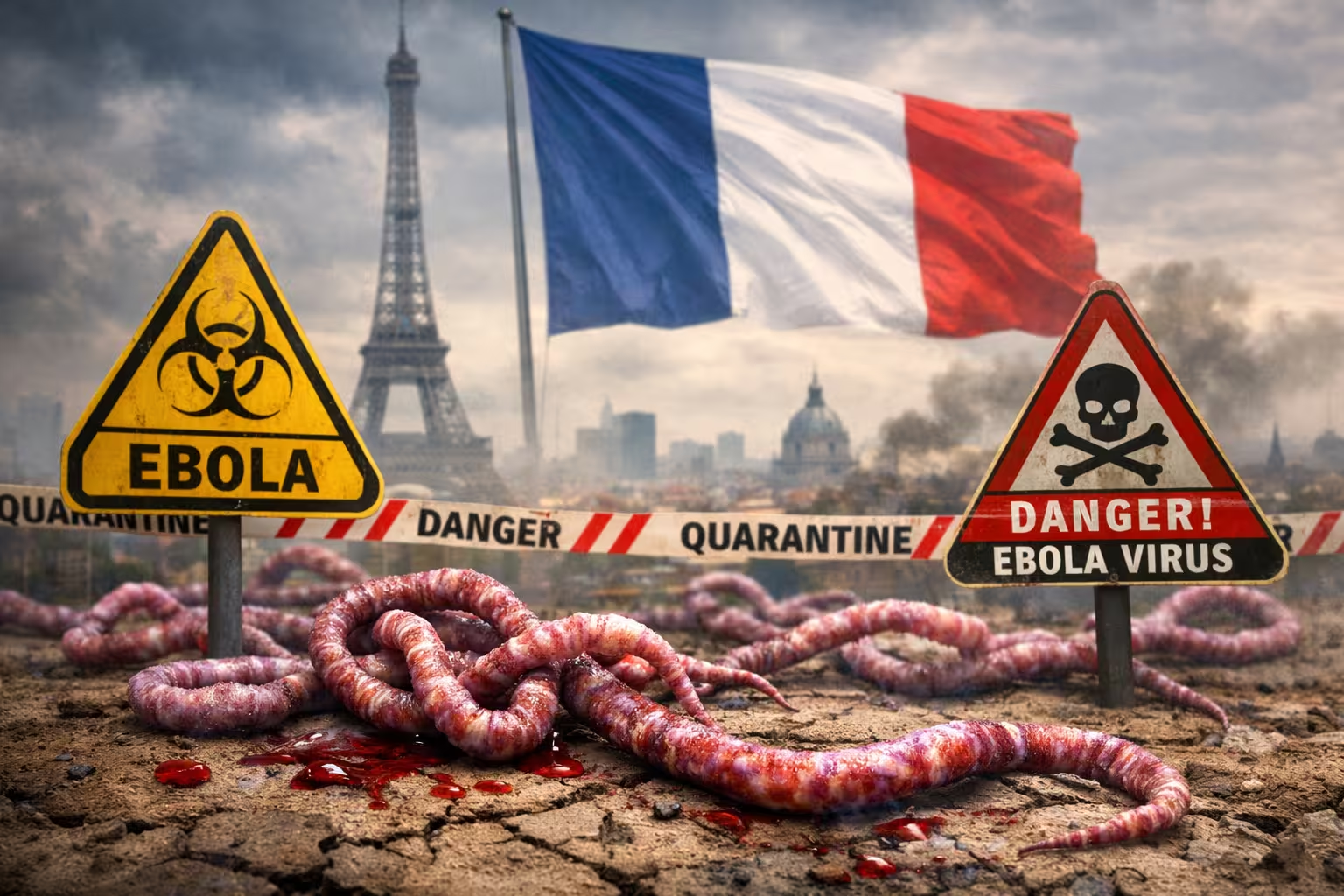
The French Health Ministry has confirmed the first case of Ebola on national territory, marking the first time the deadly virus has been detected within France. The patient, a doctor who had been serving on a humanitarian mission in the Democratic Republic of the Congo (DRC), tested positive after returning to Paris via a commercial flight from Kinshasa. The first Ebola case in France has prompted enhanced surveillance measures for travelers and humanitarian workers returning from affected regions.
While the news has sparked international attention, health authorities are emphasizing that the risk to the general public remains very low.
Who Was the Patient Who Tested Positive for the Ebola Virus in France?
The patient is identified as a member of the international medical humanitarian organization ALIMA (The Alliance for International Medical Action). According to official reports, the doctor was almost asymptomatic upon departure, experiencing only headaches. However, the patient’s condition slightly deteriorated during the flight, leading to immediate isolation upon landing in Paris. The doctor was swiftly transferred to a specialized facility under secure conditions to prevent any potential contamination and is currently reported to be in stable condition with a very low viral load.
Understanding the Bundibugyo Ebola Strain and Treatment Challenges
The current outbreak is particularly concerning to global health experts because it involves the Bundibugyo species of the Ebola virus. Unlike the more common Zaire strain, there is currently no approved vaccine or standard treatment for Bundibugyo Ebola, increasing concerns among healthcare workers and public health agencies.
What Is the Bundibugyo Ebola Strain?
The Bundibugyo Ebola virus is a rare and severe species of Ebolavirus that causes hemorrhagic fever. It was first identified in Uganda in 2007 and is considered one of the less common Ebola virus species responsible for outbreaks in Africa.
How Does the Bundibugyo Ebola Virus Spread?
The virus spreads through direct contact with the blood or bodily fluids of an infected person.
How Severe Is the Bundibugyo Ebola Virus?
The severity of the situation is underscored by data from the World Health Organization (WHO), which noted that 17 of 75 health workers who contracted the virus in the DRC have already died.
The absence of a specific medical countermeasure means that clinical care focuses on supportive therapies and experimental treatments, as seen in the case of an American surgeon who recently recovered after being treated at a hospital in Berlin.
Ebola Outbreak 2026: Growing Crisis in the Democratic Republic of Congo (DRC)
The patient contracted the virus during a massive outbreak in the Democratic Republic of the Congo, which was officially declared by the WHO on May 15.
This marks the DRC’s 17th Ebola outbreak since the virus was first detected in the country in 1976. Experts believe the virus had been circulating undetected for several weeks before the formal declaration, suggesting the scale of the crisis may be larger than official figures indicate.
As of late June, the DRC health ministry has recorded 1,048 confirmed cases and 267 deaths, resulting in a fatality rate of approximately 25%.
The epicenter of the transmission is the eastern Ituri province, which accounts for more than 90% of all confirmed infections. The outbreak has also crossed borders, with neighboring Uganda confirming 20 cases and two deaths.
The response effort in the DRC is facing significant hurdles. Conflict in the North and South Kivu provinces, where the Rwanda-backed M23 rebel group maintains control over large territories, has made it extremely difficult for aid workers to reach affected populations.
Furthermore, the WHO has highlighted that the outbreak has seen the highest number of confirmed cases within its first month of any Ebola outbreak on record. While local resistance—including the burning of treatment centers—is reportedly waning, the security situation remains a primary barrier to containment.
Also Read – H5N1 Bird Flu Australia: First Mainland Case Confirmed in Western Australia
Global Risk Assessment and Containment Measures in Europe
Following the confirmation of the case in France, the French Health Ministry and the European Centre for Disease Prevention and Control (ECDC) have maintained that the risk of infection for European residents is low, and “very low” for the general population.
WHO Director-General Tedros Adhanom Ghebreyesus has urged the public not to panic, noting that in the last 50 years, fewer than 30 cases of Ebola have been detected outside of Africa.
To mitigate any further risk, French authorities have implemented the following protocols:
- Contact Tracing: Exhaustive efforts are underway to identify and trace all individuals who may have been in contact with the doctor.
- Mandatory Isolation: All identified contacts are required to isolate at home for a period of 21 days, the standard incubation window for the virus.
- Specialized Monitoring: France has established a dedicated monitoring system specifically for aid workers and travelers returning from the DRC.
The U.S. Centers for Disease Control and Prevention (CDC) has warned that if left unchecked, this could potentially become one of the largest outbreaks in history, rivaling the devastating West African outbreak of 2014-2016 that infected over 28,000 people.
Symptoms and Transmission of Ebola Virus Disease
Ebola is a severe hemorrhagic fever that typically jumps from animals to humans—believed to be via infected African fruit bats—before spreading through human-to-human transmission. The disease is characterized by a progression of severe symptoms:
- Early Stage: Fever, extreme exhaustion, muscle pain, headaches, and sore throat.
- Advanced Stage: Vomiting, diarrhea, abdominal pain, and the appearance of a skin rash.
- Critical Stage: Impaired kidney and liver function, often leading to internal and external bleeding.
Because the Bundibugyo strain lacks a vaccine, early detection and strict isolation remain the only effective tools for preventing international spread.
Frequently Asked Questions (FAQ)
Is There a Vaccine for the Current Ebola Outbreak in France?
No. The current outbreak is caused by the Bundibugyo strain of the Ebola virus, for which there is currently no approved vaccine. Existing Ebola vaccines are only effective against the Zaire strain.
How High Is the Risk of Ebola Spreading in Europe?
Health authorities, including the WHO and the ECDC, state that the risk to the general European population is “very low” due to the relatively low contagiousness of the virus and the immediate isolation of the confirmed case.
What Are the Common Symptoms of an Ebola Infection?
Initial symptoms include fever, headache, muscle pain, and exhaustion. As the disease progresses, it can cause vomiting, diarrhea, abdominal pain, and severe organ failure.
Which Regions Are Most Affected by the Current Ebola Outbreak?
The outbreak is centered in the Democratic Republic of the Congo, specifically the Ituri province, with additional cases reported in North Kivu, South Kivu, and neighboring Uganda.
How Is the Ebola Virus Transmitted Between Humans?
Ebola is spread through direct contact with the blood or other bodily fluids (such as saliva, sweat, or vomit) of an infected person or a deceased victim of the disease.
News Sources – ABC News, BBC, The Guardian