
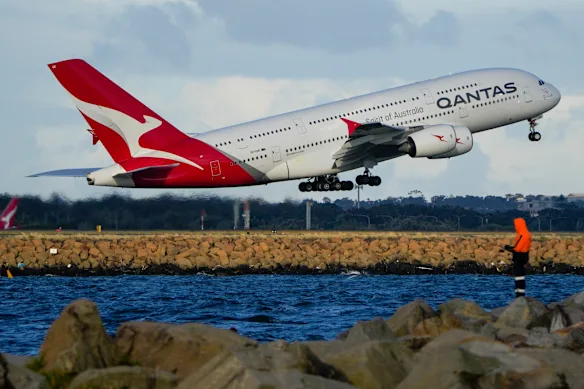
Airbus A380 aircraft operated by Emirates and Qantas are undergoing urgent safety inspections after cracks were discovered in a key wing structure, prompting an emergency directive from European Union Aviation Safety Agency (EASA). The cracks were identified in a structural beam that is essential for maintaining the aerodynamic load during flight, raising concerns regarding the long-term structural integrity of the affected jets.
The directive specifically targets aircraft with a shared production history. Of the 16 planes identified for inspection, 15 are operated by Dubai-based Emirates—which manages the world’s largest fleet of A380s—and one is operated by Australia’s national carrier, Qantas. While the situation has triggered emergency protocols, the regulator has not grounded the entire global A380 fleet, indicating that the risk is currently contained to a specific group of aircraft.
Airbus A380 Wing Cracks: Why EASA Ordered Emergency Inspections
The European Union Aviation Safety Agency (EASA) issued the airworthiness directive after cracks were spotted during routine maintenance checks.
What is the focus of these inspections?
The focus of these inspections is the wing mid-spar, a vital internal component of the wing box designed to distribute the immense stresses generated during takeoff, cruise, and landing. According to Airbus, these cracks could potentially reduce the structural integrity of the wing if not addressed promptly.
Expected Timeline of 16 A380 flights inspections-
- The directive issued this week requires five Emirates aircraft to undergo inspections immediately.
- The remaining 11 aircraft must be inspected before their 13th flight, defined as 25 cycles (where one cycle consists of a takeoff, flight, and landing).
This rigorous timeline ensures that no aircraft in the high-risk group continues to operate beyond a safe threshold without a thorough engineering review.
What does this mean for passengers?
Despite the Airbus A380 wing cracks discovery, EASA has not ordered any aircraft to be grounded. Emirates and Qantas have both indicated that operations continue normally while inspections are carried out. Passengers scheduled to fly on affected routes are not expected to face widespread disruptions, although airlines may adjust maintenance schedules as a precaution.
A380 Fleet Maintenance – What is the Impact on Emirates and Qantas Operations?
Emirates, which operates more than half of all active A380s globally, bears the brunt of this safety directive. The airline’s massive reliance on the superjumbo for its long-haul network makes these emergency checks a significant operational priority.
Airbus is currently in discussions with EASA to determine if the identified cracks require permanent repairs or if the current inspection protocol is sufficient to ensure safety.
In Australia, Qantas has confirmed that one of its A380 aircraft requires additional inspections. However, the airline stated that there has been no impact on scheduled flights. A Qantas spokesperson noted that the affected aircraft was already undergoing scheduled maintenance, allowing the airline to comply with the airworthiness directive without disrupting passenger travel.
History of A380 Wing-Related Issues
This is not the first time the world’s largest passenger jet has faced scrutiny regarding its wing structure.
In 2012, EASA ordered widespread inspections after cracks were found in the brackets that link the wing skin to the internal ribs. That incident affected the entire global fleet and necessitated a costly and comprehensive repair program.
Airbus eventually resolved the 2012 issue through design modifications for aircraft produced in later batches. The current discovery of cracks in the structural beam suggests a different point of failure, though it underscores the challenges of maintaining the aging A380 fleet.
Since Airbus ended production of the superjumbo in 2021, the responsibility for ensuring the continued airworthiness of these giants falls heavily on strict adherence to regulatory directives and precision maintenance.
Wider Challenges for Airbus and European Aviation
These safety concerns arrive at a turbulent time for the Toulouse-based manufacturer. Beyond the A380 inspections, Airbus is grappling with significant supply chain bottlenecks, particularly a shortage of engines from Pratt & Whitney. This has resulted in completed aircraft sitting idle at facilities in Hamburg and Toulouse, unable to be delivered to customers.
Furthermore, the company is facing increased regulatory pressure. EASA has recently tightened maintenance requirements for the A330 and is overseeing updates to the A320 family following concerns regarding flight control computers and solar radiation interference.
Airbus CEO Guillaume Faury has expressed frustration with the European regulatory environment, suggesting that administrative complexities and high energy costs are hindering the continent’s industrial competitiveness.
Frequently Asked Questions
Are all Airbus A380 planes grounded due to wing cracks?
No. Only 16 specific aircraft—15 operated by Emirates and one by Qantas—have been singled out for urgent inspections based on their production history. The rest of the global A380 fleet continues to operate normally.
What is a wing-spar and why is it important?
The wing-spar is a primary structural beam that runs along the length of the wing. It is critical because it carries the majority of the aerodynamic loads and stresses during flight, ensuring the wing remains stable and attached to the fuselage.
Will the A380 wing cracks affect my flight with Qantas or Emirates?
Currently, there are no reports of widespread flight cancellations. Qantas has stated there is no impact on its flights, as their affected aircraft was already in maintenance. Emirates is managing the inspections of its fleet to minimize operational disruption.
How are the inspection timelines determined?
EASA has categorized the urgency into two tiers: five aircraft require immediate inspection, while the other 11 must be checked before they complete 25 flight cycles (roughly 13 flights).
Has Airbus fixed this problem before?
While Airbus addressed similar wing-bracket issues in 2012 through design changes, the current issue involves a different component (the structural beam). The company is currently working with EASA to determine the necessary repair path for this specific occurrence.
News Sources – ABC News, The Guardian

One thought on “Airbus A380 Wing Cracks Trigger Emergency Inspections of Emirates and Qantas Jets”