
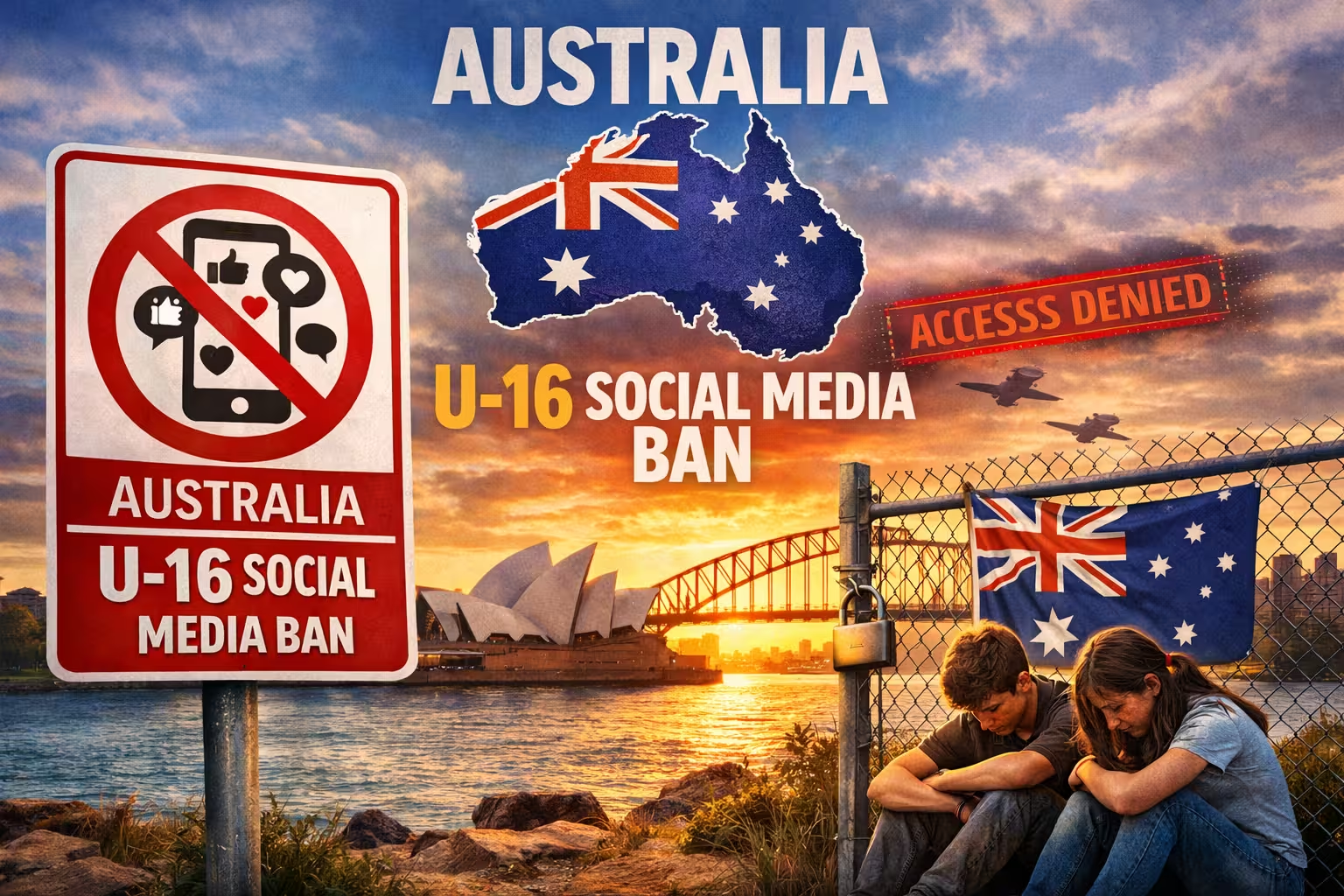
Australia will strengthen its under-16 social media ban after evidence showed many teenagers continue to access platforms despite strict age restrictions. Prime Minister Anthony Albanese said tougher enforcement measures are needed to hold tech companies accountable and better protect children from severe online harms.
Prime Minister Anthony Albanese revealed during Question Time that the current legislative framework requires urgent strengthening after evidence emerged that a significant number of young Australians are continuing to access restricted platforms despite world-first laws intended to block them.
Why Is Australia’s Under-16 Social Media Ban Difficult to Enforce?
Since December 2025, social media platforms including TikTok, Instagram, Facebook, Snapchat, YouTube, X, Twitch, and Kick have been legally required to implement reasonable steps to prevent users under the age of 16 from creating accounts.
Despite the threat of massive fines—reaching up to $49.5 million—the government admits that the “extraordinary power” of these platforms has proven difficult to regulate, leading to a push for more potent enforcement tools and a broader digital duty of care.
The effectiveness of the current ban has come under intense scrutiny from both regulators and academic researchers.
Australia’s eSafety Commissioner, Julie Inman Grant, recently described the existing legislation as having “very thin scaffolding,” suggesting that the laws were developed too quickly to provide the regulator with the “potent powers” necessary for strict enforcement.
While the eSafety Commission reported a 37% drop in under-16 accounts over the first three months of the ban, compliance data indicates that roughly 70% of children who held accounts prior to the legislation are still active on major platforms.
How Are Teens Bypassing Australia’s Under-16 Social Media Ban?
A comprehensive observational study conducted by the University of Newcastle further highlighted these failures. The research, published in the BMJ, tracked 408 adolescents aged 12 to 17 and found that more than 80% of participants were still using social media three months after the ban took effect.
The study concluded that there was “insufficient evidence” to suggest the legislation had any substantial early effect on adolescent usage, primarily due to inadequate age verification processes.
- Ineffective Verification: Only 5% of 12- to 13-year-olds and 11% of 14- to 15-year-olds were required to provide official government ID.
- Common Loopholes: Most platforms relied on simple “selfie” uploads or asking users to manually enter their birth date.
- Active Circumvention: Roughly 15% to 19% of teens used fake accounts, while some employed VPNs to bypass regional restrictions.
Proposed Digital Duty of Care and Algorithmic Regulation
To address these gaps, Prime Minister Albanese is championing a digital duty of care. This proposed legal framework would shift the regulatory approach from a reactive “take-down” model to a proactive risk-management strategy.
Under these rules, tech companies would be legally obligated to identify and mitigate foreseeable harms before they affect users.
A central focus of this new strategy is the regulation of algorithms—the complex code that filters and ranks content to maximize engagement.
The Prime Minister warned that these systems often push users, including children and adults, toward extreme positions. He noted a dangerous trajectory where users start with mainstream topics of faith or ethnicity and are eventually funneled toward “Nazi-level propaganda” and calls for violence.
The government is also exploring the possibility of allowing Australians to opt out of online algorithms entirely, moving away from customized feeds back toward a chronological display of content to reduce the “rabbit hole” effect of AI-driven recommendations.
Addressing Severe Online Harms and AI Risks
The push for tougher legislation is driven by an alarming rise in digital harms. The Prime Minister highlighted the emergence of AI-powered “nudify” applications, which create non-consensual sexually explicit images, as a primary concern.
He linked the normalization of violent and sexually explicit content online to a rise in physical violence and severe injuries among young women, stating that parliament must be “courageous” in tackling these issues.
By establishing a digital duty of care, the government hopes to hold platforms accountable for the design of their services, including the role of bots and recommendation engines that may expose minors to pornography or violent material.
This holistic approach aims to prevent the normalization of abusive behavior that the Prime Minister described as “anything but normal.”
Global Influence and the Future of Age Verification
Australia’s pioneering approach to social media age limits has set a global precedent. Prime Minister Albanese stated that 16 other countries are now pursuing similar bans, including the United Kingdom, which plans to introduce its own restrictions by 2027.
However, the findings from the University of Newcastle serve as a cautionary tale for international policymakers, suggesting that a “performative ban” without robust verification technology is unlikely to improve teenage mental health or wellbeing.
While the eSafety Commissioner is currently investigating five major platforms—Facebook, Instagram, Snapchat, TikTok, and YouTube—for potential breaches, no fines have been issued to date.
The government is expected to make a significant announcement within days regarding the specific mechanisms that will be used to strengthen the ban and enhance the powers of the eSafety Commissioner.
Conclusion
Australia’s under-16 social media ban has become one of the world’s most closely watched online safety initiatives. As evidence shows many teenagers continue to access restricted platforms, the government is preparing tougher enforcement measures aimed at strengthening age verification, increasing platform accountability, and reducing online harms for young Australians.
Frequently Asked Questions
What platforms are covered under the Australian social media ban?
The ban applies to major social media platforms including TikTok, Instagram, Facebook, Snapchat, YouTube, X (formerly Twitter), Twitch, and Kick. These companies are legally required to take reasonable steps to prevent users under 16 from signing up.
What are the penalties for tech companies that fail to enforce the ban?
Social media platforms that fail to prevent Australians under the age of 16 from accessing their services can face significant financial penalties, with fines reaching up to $49.5 million.
Why is the government introducing a “digital duty of care”?
A digital duty of care is designed to move regulation from reacting to harmful content after it is posted to requiring companies to proactively prevent foreseeable harms. This includes managing the risks associated with algorithms, platform design, and AI-generated content.
How effective has the under-16 ban been so far?
While there has been a decrease in the total number of under-16 accounts, research from the University of Newcastle suggests that over 80% of teens continue to use these platforms due to weak age verification and the use of fake accounts or VPNs.
What are “nudify” apps and why are they a concern?
“Nudify” apps use artificial intelligence to generate sexually explicit images of people without their consent. The Australian government views these as a severe digital harm that contributes to the normalization of sexual violence.
Will Australians be able to opt out of social media algorithms?
The federal government is currently considering laws that would give users the ability to opt out of algorithmic sorting, potentially returning feeds to a chronological order to prevent the spread of extremist content.
News Sources – ABC News, The Guardian

One thought on “Australia to Toughen Under-16 Social Media Ban as Teens Bypass Restrictions”