
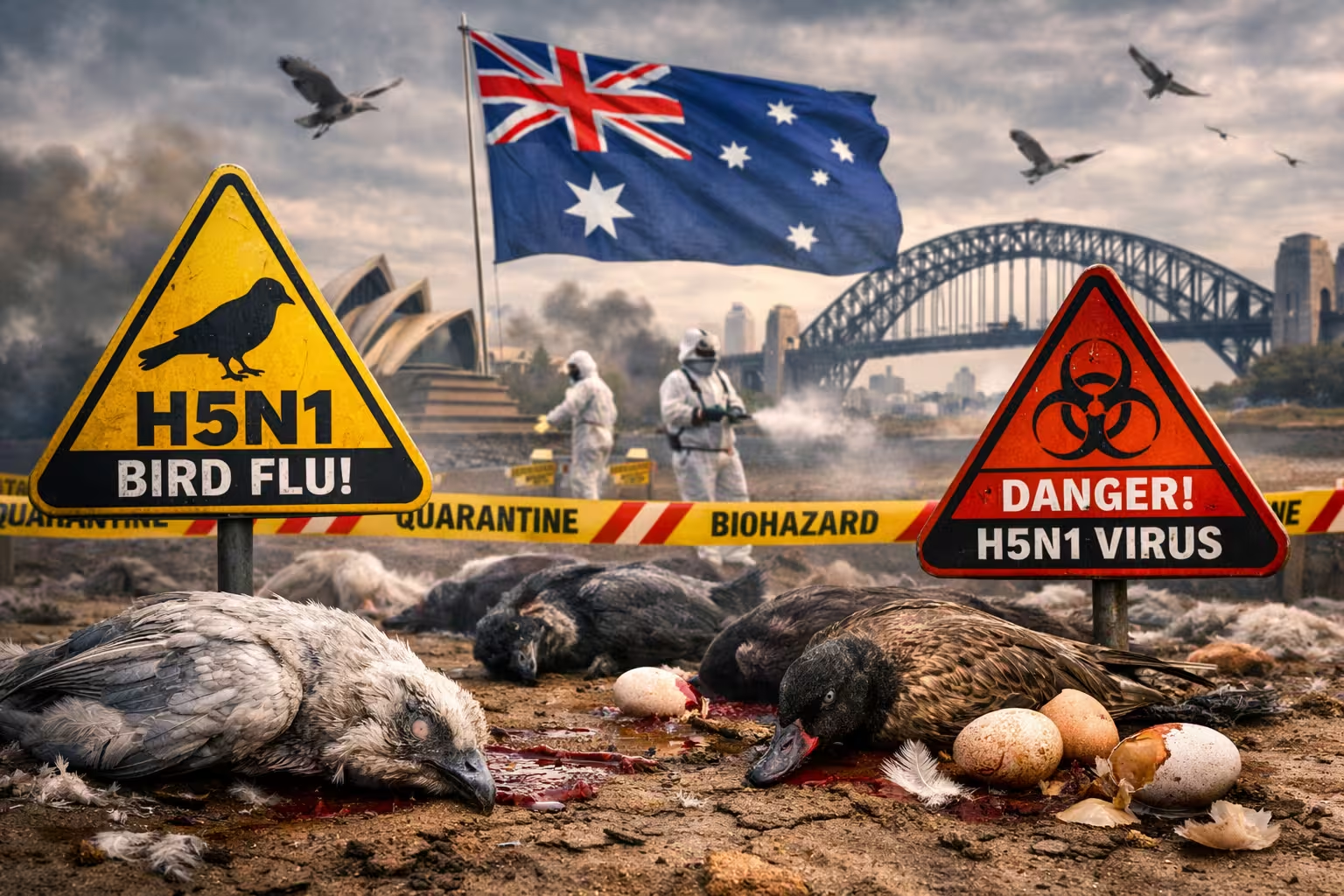
Australia’s H5N1 bird flu outbreak has expanded to a second mainland state after authorities confirmed a new case of highly pathogenic avian influenza (HPAI) in South Australia. The infected bird, a migratory giant petrel found along the state’s southern coastline, tested positive for the H5 strain of avian influenza, raising concerns among wildlife experts and biosecurity officials.
The latest development follows earlier confirmed H5N1 bird flu cases in Western Australia, highlighting the growing challenge posed by migratory seabirds carrying the virus into Australian waters. Despite the spread, authorities continue to stress that the risk to human health and commercial poultry operations remains low.
Key Facts
- H5N1 bird flu has now been detected in two Australian states.
- South Australia confirmed its first case in a migratory giant petrel.
- Western Australia has reported multiple confirmed and suspected infections.
- Authorities say there is no evidence of spread within commercial poultry farms.
- Human health risk remains low, according to government officials.
H5N1 Bird Flu Confirmed in South Australia
The latest confirmed case in South Australia occurred at Knights Beach on the Fleurieu Peninsula. South Australian Premier Peter Malinauskas revealed that a giant petrel, which had been in the care of a local wildlife rescue group since June 14, tested positive for the H5 strain. The bird was eventually euthanized after the CSIRO confirmed the result on Wednesday.
While the discovery in South Australia is alarming, officials have been quick to clarify that this does not represent a domestic transmission. Premier Malinauskas emphasized that the virus did not spread from the previously infected birds in Western Australia to South Australia; rather, it was carried by a migratory bird arriving from overseas.
This suggests multiple points of entry along the Australian coastline as migratory birds travel from subantarctic regions.
Meanwhile, the situation in Western Australia continues to evolve. A third suspected case of H5N1 bird flu has been reported near the tourist town of Dunsborough (specifically in the Quindalup area), where another southern giant petrel was found dead.
This sample has been sent to the CSIRO for final confirmation. If verified, this would bring the total number of suspected or confirmed infections in the region to four.
How H5N1 Bird Flu / Avian Influenza Reached Australia
Genomic sequencing has provided critical insights into how avian influenza H5N1 reached Australian shores.
Dr. Beth Cookson, the country’s chief veterinary officer, stated that the first confirmed case in Western Australia—a brown skua—was linked to an outbreak on the Heard Island and McDonald Islands.
These subantarctic territories have recently suffered devastating losses, including thousands of southern elephant seal pups and hundreds of adult king penguins throughout 2025 and 2026.
The fact that these birds are migratory explains the disparate locations of the findings, ranging from Esperance in WA to the Fleurieu Peninsula in SA. This pattern indicates that the virus is being imported via the “migratory highway” rather than spreading through local wildlife populations at this stage.
Poultry Industry Responds to Bird Flu Threat
The arrival of the virus has triggered immediate responses within the Australian poultry industry.
Inghams Group, the nation’s largest poultry producer, has implemented strict precautionary measures across all Western Australian sites, including a complete lockdown of processing operations and farms to prevent any potential contamination.
Federal Agriculture Minister Julie Collins has assured the public that there is currently no evidence of mass mortalities or infection within the agricultural production system.
She noted that approximately 97% of chicken meat is consumed domestically, and emphasized that chicken and eggs prepared normally remain perfectly safe for human consumption.
The international economic impact was felt almost immediately when Papua New Guinea (PNG) temporarily suspended imports of Australian poultry and eggs. However, following diplomatic discussions, Minister Collins confirmed that PNG has since lifted the suspension, with only a few remaining exceptions.
Risk Assessment for Wildlife and Human Health
Environmental advocates are expressing deep concern over the long-term implications for native species. Carol Booth, policy director for the Invasive Species Council, warned that while the government response is serious, the real danger lies in how native bird and mammal populations will cope if the virus becomes endemic. The council has called for an additional $200 million in funding to bolster conservation measures.
Can H5N1 Bird Flu Spread to Mammals?
Regarding mammal transmission, WA chief veterinary officer Michelle Roden explained that this specific strain is unlikely to spread from mammal to mammal.
Typically, mammals become infected by consuming infected birds. In a precautionary move, samples were taken from a dead porpoise found washed ashore near Esperance to determine if the virus had jumped species.
Human Health Risk Remains Low
For humans, the risk remains low. However, as a safety measure, South Australian authorities are offering antiviral medication, such as Tamiflu, to volunteers who handled the infected birds.
Public Safety: What To Do If You Find a Sick or Dead Bird
Government agencies are urging the public to exercise extreme caution around dead or distressed wildlife. With low-pressure systems forecast to batter the coast, more sick seabirds may wash ashore, increasing the likelihood of human encounters.
Citizens are advised to follow the “Avoid, Record, and Report” protocol:
- Avoid: Do not touch, handle, or get close to sick or dead birds.
- Record: Take a photo and note the exact location of the animal.
- Report: Use the official hotline at 1800 675 888 to alert authorities.
While authorities continue to describe the risk to humans and Australia’s poultry industry as low, the detection of H5N1 bird flu in both South Australia and Western Australia highlights the growing challenge posed by migratory birds. Biosecurity officials will continue monitoring wildlife populations as Australia works to prevent the virus from becoming established on the mainland.
Also Read – Explained – H5N1 Bird Flu Reaches Australia, How it Spread, Symptoms, Risks and Impact
Frequently Asked Questions
Is the H5 bird flu dangerous to humans in Australia?
Currently, health authorities state there is a low risk to human health. Most infections in mammals occur through the consumption of infected birds. As a precaution, some wildlife volunteers have been offered antiviral medication.
Can I still eat chicken and eggs?
Yes. Federal Agriculture Minister Julie Collins has confirmed that chicken meat and eggs, when prepared normally, are perfectly safe to eat. There is currently no evidence of the virus infecting commercial poultry flocks.
Where did the bird flu in Australia originate?
Genomic testing indicates the virus was brought to Australia by migratory birds, specifically linked to outbreaks in the subantarctic Heard Island and McDonald Islands.
What should I do if I find a dead bird on the beach?
You should not touch or handle the bird. Instead, record the location and take a photo, then report the sighting immediately to the official hotline at 1800 675 888.
Has the bird flu spread to Australian mammals?
While tests are being conducted on found animals (such as a dead porpoise in WA), there is currently no confirmed evidence that the virus has spread to native Australian mammals or wildlife populations.
News Sources – The Guardian, Nine, ABC