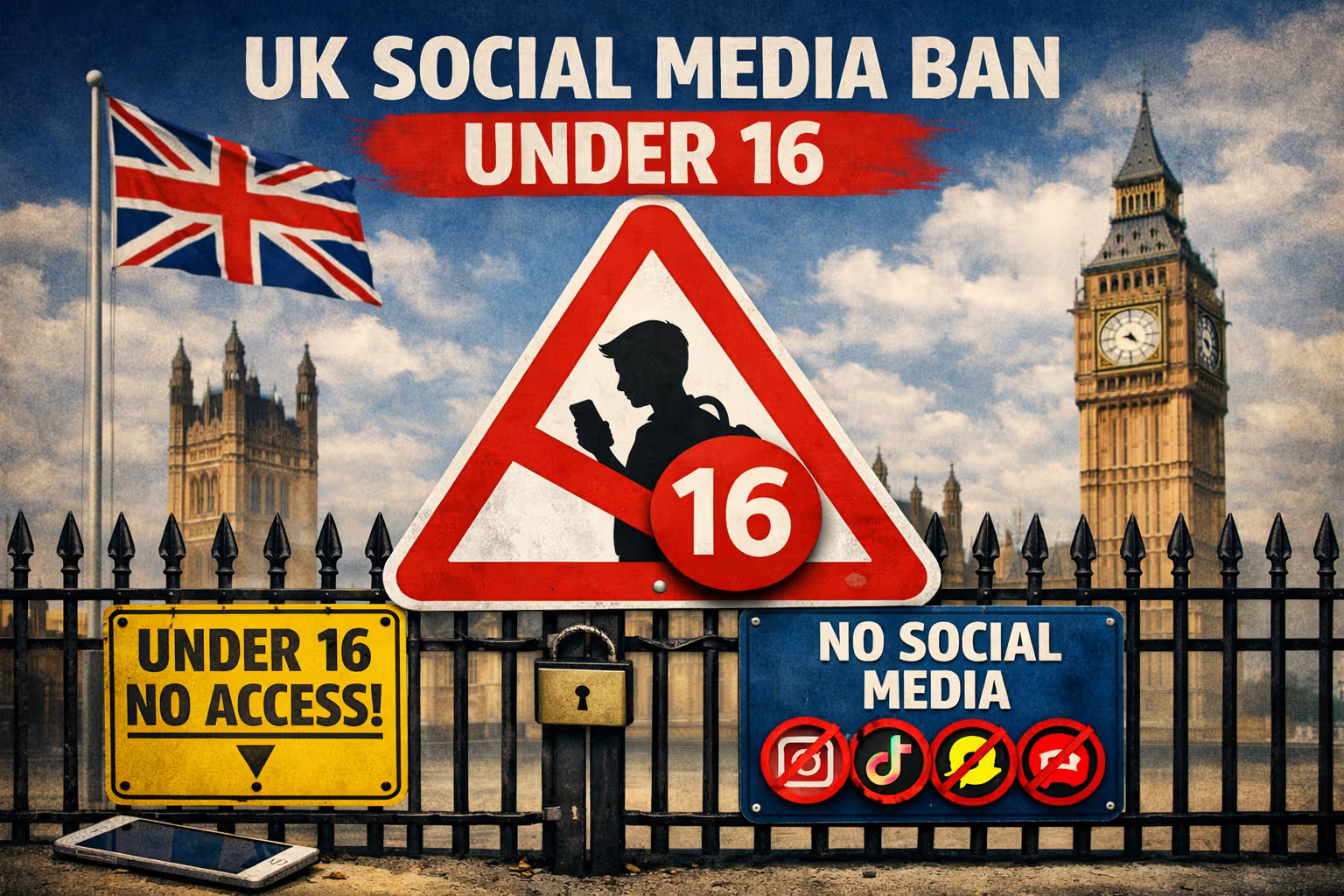
In a decisive move to combat the mental health crisis and addictive nature of digital platforms, British Prime Minister Sir Keir Starmer has announced a comprehensive ban on social media access for children under the age of 16. This landmark policy, described as a “line in the sand” against Big Tech, aims to reclaim childhood for millions of young people by restricting access to platforms designed for social interaction and algorithmic engagement.
The initiative marks some of the most stringent online safety regulations globally, extending beyond a simple age ban to target specific harmful features across the broader internet ecosystem.
A Comprehensive Strategy to Protect Minors Online
The UK government’s strategy is not merely a blanket prohibition but a multi-layered approach to digital safety. While the core of the plan is a ban on social media for those under 16, the administration is implementing a “no half measures” framework to close loopholes and address the nuances of how children interact with technology.
Who and What is Affected?
The ban specifically targets “user-to-user” platforms characterized by social interaction, user-generated content, and algorithmic feeds. This includes global giants such as TikTok, Instagram, Facebook, Snapchat, X (formerly Twitter), and YouTube. However, the government has explicitly clarified that private messaging services, such as WhatsApp and Signal, will not be included in the social media ban.
Beyond social media, the restrictions extend to gaming platforms and livestreaming services. The government intends to block functionalities that allow children to communicate with strangers, arguing that the same safety standards applied to the physical world must apply to the digital one.
When will social media ban start in UK?
The legislative process is moving rapidly. The government intends to bring the necessary measures before Parliament before Christmas 2026. Under the existing powers of the Children’s Wellbeing and Schools Act, the first set of regulations is expected to take effect in Spring 2027. Additional detailed guidelines regarding overnight curfews and “infinite scrolling” limits for those under 18 are expected to be released in July.
Also Read – China can now attack Australian Mainland – Lowy Institute Warns
Why Now?
The decision follows an extensive national consultation involving teachers, industry experts, and families, yielding over 116,000 responses. The data was overwhelming: 90% of responding parents supported a minimum age of 16 for social media, and 83% believed the risks associated with these platforms outweighed the benefits. Prime Minister Starmer cited a growing awareness of mental health risks and the addictive design of these apps as primary drivers for the policy.
How Will It Be Enforced?
Drawing lessons from Australia’s recent implementation of similar laws, the UK will introduce Highly Effective Age Assurance (HEAA) measures. The communications regulator, Ofcom, has been tasked with conducting a rapid study on the most effective ways to verify age without utilizing overly invasive methods. The Secretary of State has also requested an urgent review of Ofcom’s enforcement capabilities to ensure tech companies cannot simply ignore the mandates.
Expanding Protections for Teenagers
To prevent a “cliff-edge” effect where 16-year-olds are suddenly exposed to all risks at once, the government will implement default protections for 16- and 17-year-olds. These include restricted communication with strangers and limited livestreaming capabilities.
Furthermore, the government is taking a hard line on Artificial Intelligence. AI “romantic companion” chatbots—those designed to simulate sexual relationships or roleplay—will be strictly limited to users 18 and older. Intimate functionalities on AI platforms more broadly will also be restricted for all minors.
Global Context and Local Controversy
The UK is following a global trend toward stricter regulation. Australia led the way in December 2025, and other nations like Canada, Brazil, and Indonesia have proposed or enacted similar restrictions. Australian Prime Minister Anthony Albanese praised the UK’s move, noting that collective international action is the only way to hold borderless tech giants accountable.
Despite the government’s confidence, the plan faces criticism. Some psychologists argue there is insufficient evidence that a ban will improve mental health, while others warn it may push teenagers toward the “dark web” or less regulated corners of the internet. Political opponents, including Reform UK leader Nigel Farage, have questioned the practicality of the ban due to the prevalence of Virtual Private Networks (VPNs) and suggested that “feature-limited” handsets are a more realistic solution than digital IDs.
Also Read – US Iran reached historic peace deal to reopen Strait of Hormuz
Conclusion
The UK’s move to ban social media for under-16s represents a fundamental shift in the relationship between the state, the family, and the technology industry. By prioritizing child wellbeing over the growth models of Big Tech, the Starmer administration is attempting to engineer a cultural shift in how the next generation grows up. Whether through the implementation of strict age verification or the curbing of addictive design features, the goal is clear: to reduce screen time and encourage a return to traditional childhood activities, from sports and arts to nature and play.
Frequently Asked Questions (FAQ)
Which platforms are included in the UK social media ban?
The ban targets platforms like TikTok, Instagram, Facebook, Snapchat, X, and YouTube. It specifically focuses on sites with social interaction and algorithmic feeds.
Will WhatsApp and Signal be banned for under-16s?
No. The UK government has stated that messaging services like WhatsApp and Signal are not included in the social media ban.
When will the ban officially start?
Legislation is expected to be presented to Parliament by the end of 2026, with the first regulations likely taking effect in Spring 2027.
How will the government verify the age of users?
Ofcom is conducting a study on “Highly Effective Age Assurance” (HEAA) to find secure and effective ways to verify that users are over 16.
What other restrictions are being introduced?
The government is targeting “addictive” features like infinite scrolling, implementing overnight curfews for minors, and banning romantic AI chatbots for anyone under 18.